

Journey Highlights
- Skógafoss and Seljalandsfoss on the south coast, one you photograph face-on, one you walk behind.
- Reynisfjara’s black-sand beach, with its basalt columns and offshore sea stacks under a grey Atlantic sky.
- Jökulsárlón glacier lagoon and Diamond Beach, where clear ice sits on black sand like glass.
- A glacier tongue up close — Vatnajökull’s blue ice, crevasses and the grey moraine that carries it.
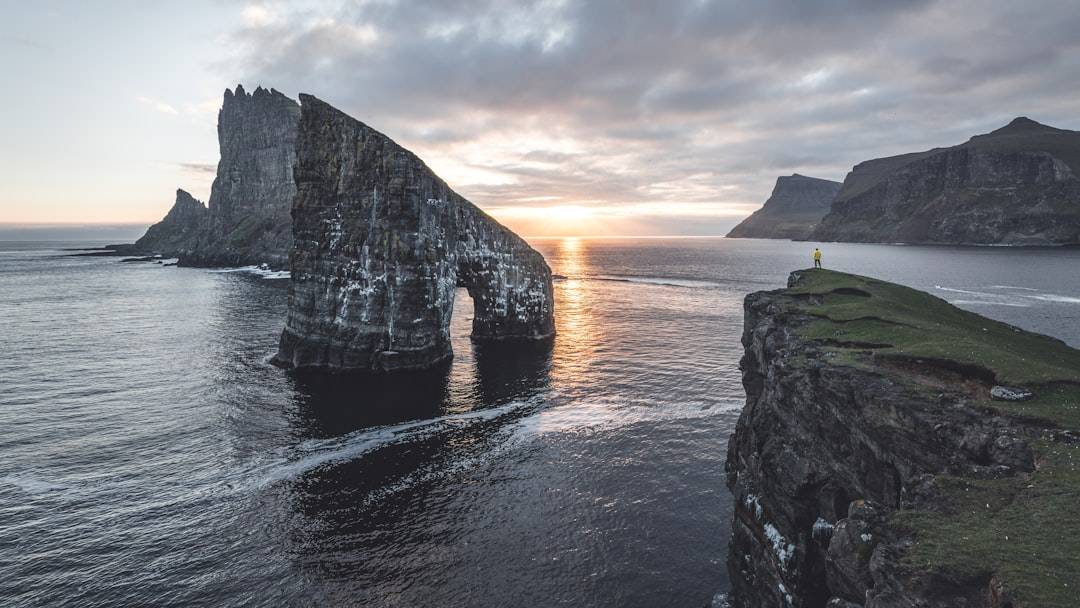
- The Faroe Islands’ sheer sea cliffs, waterfalls dropping straight into the ocean, and tiny grass-roofed villages.
- Long summer light that stretches golden hour for hours, plus storms that can rewrite the day’s plan.
- A driver-guide who reads the coastal weather and moves you to whatever coast the light favours.
 Iceland & Faroe Islands
- 8 Nights / 9 Days


Experience Overview
Two North Atlantic worlds, shot back to back. Iceland’s south coast delivers waterfalls, black beaches and a glacier lagoon within easy reach of the ring road; the Faroe Islands add sheer sea cliffs and turf-roofed villages almost nobody photographs. Eight nights across a summer of near-endless light, a small group of eight to fourteen, weather-led throughout.
You work Iceland’s south first: Seljalandsfoss, which you walk behind, then Skógafoss head-on; Reynisfjara’s basalt and black sand; Jökulsárlón’s drifting icebergs and the polished ice on Diamond Beach; a walk onto a Vatnajökull glacier tongue. Then you fly to the Faroes for cliff edges, the sea-stack views and grass-roofed hamlets folded into green slopes.
Summer light is the draw. In June and July the sun barely sets, so golden hour stretches across late evening and early morning and you shoot when others sleep. The trade-off is weather: Atlantic fronts roll through fast, rain and wind arrive without much notice, and the Faroes are cloudier still. We plan loose and chase the breaks.
Some moments are built for lingering: standing behind Seljalandsfoss with the water roaring past and the low sun turned to gold through the spray; a slab of thousand-year ice glowing on black sand at midnight, still bright out; a Faroese cliff edge where the grass simply stops and the ocean drops away hundreds of metres below.
For landscape photographers who’ll trade guaranteed sunshine for drama and long light, and don’t mind driving to weather. It is not for anyone who needs warm, settled days, gets restless in rain and wind, or wants the aurora — that’s a separate autumn-to-spring trip, not this summer one.
Everything you
need to know
What gear do I need, and do I have to be an expert?

Beginners and pros both do well. A wide zoom near 16–35mm holds the waterfalls and cliffs; a 24–70mm covers most scenes; a polariser and a set of ND filters let you smooth water and shoot long exposures. Bring a solid tripod and proper rain covers. Your guide sets up the tripod-heavy shots and talks through settings on the spot.
When should we go, and how much does weather get in the way?
What does this cost from India?
Ready to Photograph
Iceland & the Faroes
Picture Seljalandsfoss from behind the curtain of water, low golden sun breaking through the falling spray; Diamond Beach at first light, clear blocks of glacier ice resting on black sand as pale surf slides around them; Reynisfjara’s basalt columns and offshore sea stacks under heavy grey cloud, dark waves rolling in; a Faroese sea cliff dropping to the Atlantic, a thin waterfall falling off its edge with green turf on top; and a grass-roofed village tucked into a Faroese fjord, low houses under steep green slopes and mist on the ridge above.