

Journey Highlights
- Tirupati’s Venkateswara temple at Tirumala, the world’s busiest pilgrimage, entered through a darshan queue system planned in advance.
- Madurai’s Meenakshi temple, its towering gopurams crowded with painted figures, and the nightly ceremony returning Shiva to Meenakshi.
- Rameswaram’s Ramanathaswamy temple, its thousand-pillar corridors the longest of any Hindu temple, and the twenty-two sacred wells.
- Srirangam’s Ranganathaswamy temple near Trichy, the largest working Hindu temple complex, ringed by seven concentric walls.
- Thanjavur’s Brihadeeswara temple, a thousand-year Chola masterpiece in granite and a UNESCO World Heritage site.
- Chidambaram’s Nataraja temple, where Shiva dances as Lord of the cosmos, and the symbolic empty space of Akasha.
- Kanchipuram, the city of a thousand temples and silk, weaving Shiva and Vishnu shrines into a single day.
 Tamil Nadu & Andhra
- Eight to Ten Days


Experience Overview
The temples of the deep south are among the oldest living places of worship anywhere — towering gopurams, granite corridors, deities served daily for a thousand years. This trail links the great ones across Tamil Nadu and Andhra: Tirupati, Madurai, Rameswaram, Srirangam, Thanjavur, Chidambaram and Kanchipuram, each a working shrine and a feat of Dravidian building both.
A common route starts at Tirupati for Venkateswara, drops to Kanchipuram’s temples and silk, then Chidambaram for the dancing Nataraja, Thanjavur for the Chola Brihadeeswara, Srirangam’s island temple at Trichy, Madurai’s Meenakshi and the night ceremony, ending at Rameswaram — the twenty-two wells, the long corridors, the causeway out to the sea.
Each temple has its own rhythm. Tirupati is relentless — hundreds of thousands daily, hair-tonsuring, hours in line. Madurai fills at dusk for the palanquin ceremony. Thanjavur is calmer, more monument than crush, its granite tower glowing at sunset. Camphor smoke, temple bells, bare feet on warm stone, and the heat sits over all of it.
Some moments are built for lingering: the Brihadeeswara tower catching the last sun, a thousand years old and unbothered; the Meenakshi night ceremony, drums and lamps carrying Shiva to his consort; the walk through Srirangam’s painted corridors; the cold water of the twenty-second well at Rameswaram before darshan, the sea just outside the gate.
For devotees and lovers of temple art who want the south’s great shrines done properly, with darshan and craft weighted equally. It is not for anyone unwilling to queue at Tirupati, uncomfortable with strict dress codes and bare feet on hot stone, or hoping for air-conditioned ease throughout.
Everything you
need to know
How does darshan at Tirupati actually work?

Tirupati uses a tiered darshan system — free queues, timed Sarva Darshan slots, and paid special-entry darshan that shortens the wait. Even so, peak days mean many hours in line. We book the appropriate darshan tickets ahead, advise on the tonsure and dress rules, and plan Tirumala around the calmer parts of the day.
What should we know about dress codes and conditions?
What determines the cost of this trail?
Ready to Photograph
South India
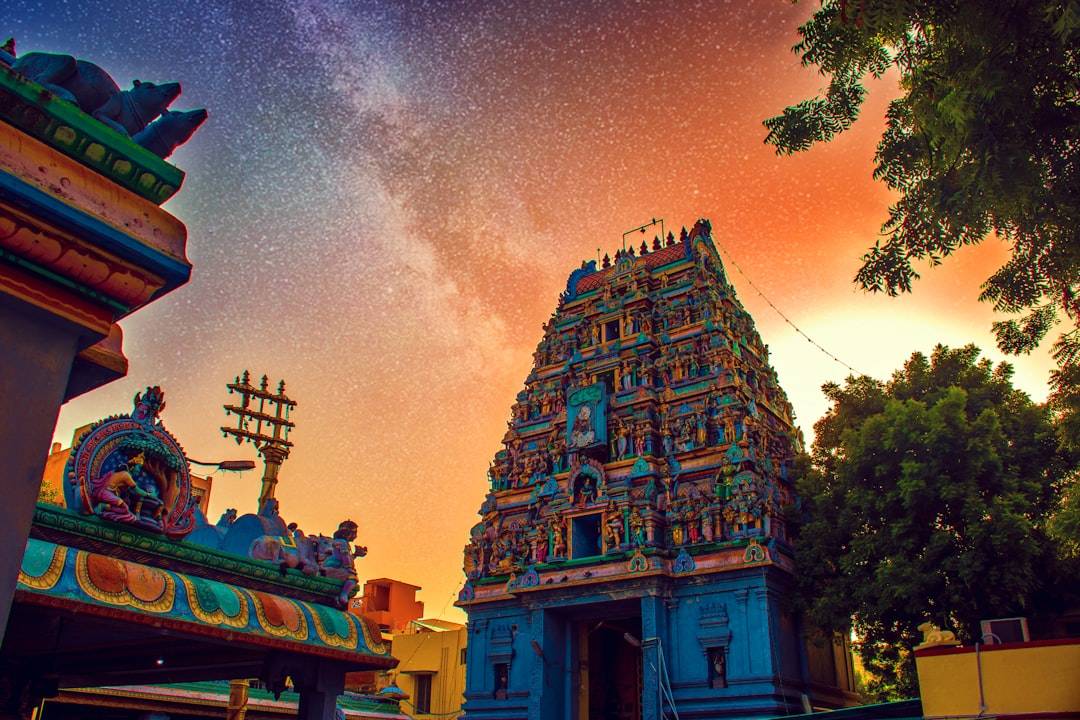
Madurai’s Meenakshi temple gopuram glows at dusk, thousands of brightly painted deities stacked skyward against a darkening sky, while at Thanjavur the Brihadeeswara temple’s granite vimana tower catches amber sunset light, long shadows crossing the courtyard. The thousand-pillared corridor at Rameswaram recedes into stone columns with a lone figure walking barefoot down the aisle, and at Tirumala pilgrims with tonsured heads climb toward the Venkateswara temple past queue barriers with hills behind. At night, Chidambaram’s Nataraja temple lights its oil lamps as a priest performs aarti before the dancing Shiva.