


Choosing an educational tour operator should not start with the cheapest quotation or the most attractive itinerary. A good provider should be able to explain what students will learn, how the trip will be managed, how students will be kept safe and what the school receives before, during and after the journey. This matters because […]

A father in Gurugram once showed me a brochure across a café table with the air of a man producing a winning card. Radcliffe Camera on the cover, that particular blue, a serif typeface doing a great deal of quiet work. Two weeks, a certificate, a personalised letter of recommendation. His daughter was fifteen. He wanted to know whether ₹8 lakh was a reasonable price.
I asked him one question: does it say anywhere in here that it is run by the University of Oxford?
He read the whole thing twice. It did not. It did not say the opposite either, because it did not have to — the cathedral on the cover had already said everything the brochure needed to say without committing to a single verifiable claim.
This is not a scandal. Some of these programmes are very good, well-taught fortnights that children enjoy and remember. But Indian families are paying university prices on the assumption that they are buying a university, and the least I can do is teach you to read the page.
Are Oxford summer schools actually run by the University of Oxford?
Some are, most are not. The University of Oxford runs three summer schools of its own through Oxford Lifelong Learning — Inspiring Oxford, The Oxford Experience, and the Oxford University Summer School for Adults — and all three are adult-only. For under-18s, the clearly University-badged route is the Saïd Business School’s Future of Business Summer School, at £8,995 for two weeks, which carries University of Oxford certification. Programmes such as Oxford Summer Courses, Oxford Royale Academy and Oxford Scholastica Academy are private companies operating in the city, not University departments.
The distinction matters less than families think for the quality of the fortnight, and much more than they think for what it is worth afterwards.
What the University actually sells, and to whom
Oxford’s own summer schools are a real business and an interesting one. Inspiring Oxford starts from around £1,800, The Oxford Experience from around £1,600, and the Summer School for Adults from around £1,300. Oxford’s student newspaper, Cherwell, reported in August 2026 that these programmes generated over £3.1 million in a year, and that the surplus subsidises concessionary fees on the University’s open-access courses — which is to say, adults from around the world pay to spend a week in an Oxford college, and part of what they pay lets someone in Oxfordshire study for less.
None of it is for teenagers. If your child is fifteen and you are looking at something with Oxford’s name on it, you are looking at either the Saïd Business School programme or a private provider.
What the private providers say about themselves
The honest ones say it clearly, and the clearest of them is worth crediting. Oxford Scholastica Academy states that it has “no formal connection with The University of Oxford.” That is on their own material. Read it, believe it, and then decide on the merits.
Their 2027 programme runs in three two-week sessions — 4–17 July, 18–31 July and 1–14 August 2027, at £7,495 each — with four-week combinations at £14,690 and non-residential options at £6,995 and £13,690. Age bands are 12–14 and 15–18. The fee includes classes, accommodation, breakfast and dinner, activities, day trips to Blenheim and Windsor, a graduation certificate and a personalised letter of recommendation. It excludes lunches and international flights, which for an Indian family means adding a return long-haul fare and about fourteen lunches to the number on the page.
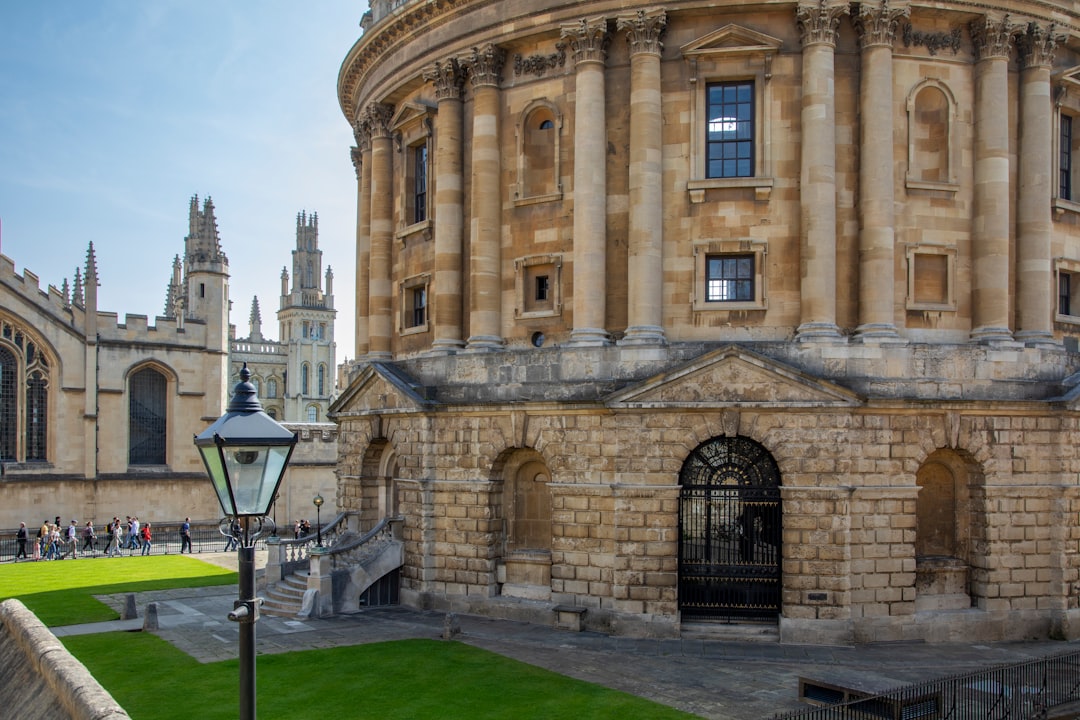
Oxford Summer Courses sits in a similar band, roughly £5,495 to £9,995 for two weeks. Cherwell‘s reporting raised the concern that the visual language these companies use — the Radcliffe Camera, the Oxford blue — leaves families believing they are buying an affiliation that is not being claimed in words.
I want to be fair here. A fortnight in Oxford with small-group teaching, a tutor who reads your child’s essays, and dinner in a hall with a hundred teenagers from thirty countries is not a con. It is a good experience at a high price. It is simply not admission-adjacent, and the price is set by the postcode.
The letter of recommendation
This is the line item I get asked about most, and it is the one worth being blunt on.
A letter of recommendation issued by a private summer programme carries no weight in an Oxford or Cambridge admissions decision. Cherwell flagged this explicitly as an equity concern — that families are paying for a document they believe will move an admissions needle that it does not touch. Oxbridge admissions run on academic record, the admissions test where one applies, the personal statement, the school’s reference, and the interview. A certificate from a company that rents college rooms in August is not in that list.
So what is the fortnight actually worth? Three things, and I say all three to parents.
It is worth something to the child, who spends two weeks reading hard in a room full of people who also want to. It is worth something as a decision-making tool — a fifteen-year-old who spends a fortnight doing law and discovers she hates it has saved everyone three years and a great deal of money. And it is worth something as an early, controlled experience of living away from home, which is not nothing for a child who will otherwise arrive at a foreign university at seventeen having never made a bed.
None of those are the reason on the brochure. All three are real.
Cambridge, and the timing problem
The University of Cambridge runs its International Summer Programme through PACE, its professional and continuing education arm. As of August 2026 the 2027 dates had not been published — the page says details will follow in due course — which is normal for University-run programmes and awkward for Indian families, who need to plan around visas, school terms and a payment schedule.
That gap creates the real trap, and it is a timing one. Private programmes typically open enrolment in September to November for the following July and August, and the popular sessions fill by February or March. University-run programmes tend to publish later, in the autumn, with deadlines in spring. So the family that waits for Cambridge to announce can find that the private alternatives have also sold out.
My working rule for Indian families: have a decision by November 2026 for a July 2027 programme. The UK visa is not the constraint — the published service standard for a Standard Visitor application from outside the UK is three weeks, which after dealing with US consular queues feels almost impolite. The scarce thing is the seat, not the stamp.
The four questions
When a brochure lands on your table, ask these, in this order.
Who runs it? Not “who is it associated with”, not “where is it held” — who is the legal entity taking your money, and does it say so plainly? A programme confident of its answer states it on page one.
Where does the teaching come from? Named tutors with named institutions, or “expert instructors”? Ask for the tutor list for your child’s subject. Good providers send it.
What is genuinely included? Read the exclusions before the inclusions. Lunches and flights are the two that most often move an Indian family’s total by a third.
What does the certificate do? If a provider claims or implies admissions advantage, that is the moment to be sceptical about everything else on the page. If they say plainly that it doesn’t, they have just told you they are honest, and you can trust the rest of the brochure more.
I did not tell the father in Gurugram not to send his daughter. I told him what he was buying, which was a very good fortnight and not a foot in a door. He sent her. She came back wanting to study history instead of economics, which is the most useful ₹8 lakh anybody in that family ever spent, for entirely the wrong reason.
Frequently asked questions
Does attending an Oxford summer school help with admission to Oxford?
No. Oxbridge admissions rest on academic record, admissions tests where applicable, the personal statement, the school reference and the interview. A certificate or letter of recommendation from a private summer programme is not part of that assessment, and Oxford’s own student newspaper has raised this as a concern about how such programmes are marketed to families.
Which Oxford summer programmes are actually run by the University?
Oxford Lifelong Learning runs Inspiring Oxford, The Oxford Experience and the Oxford University Summer School for Adults — all three adult-only. For under-18s, the Saïd Business School’s Future of Business Summer School, at £8,995 for two weeks, carries University of Oxford certification. Oxford Summer Courses, Oxford Royale Academy and Oxford Scholastica Academy are private companies operating in the city.
What does an Oxford summer school cost for an Indian family in 2027?
Oxford Scholastica’s 2027 two-week sessions are priced at £7,495 residential and £6,995 non-residential, with four-week combinations at £14,690. Oxford Summer Courses sits roughly between £5,495 and £9,995 for two weeks. The Saïd Business School programme is £8,995 for two weeks. To all of these an Indian family should add a return long-haul fare, the UK visa, lunches where excluded, and personal spending.
When should we apply for a July 2027 summer school?
Aim to decide by November 2026. Private providers typically open enrolment between September and November for the following summer, and popular sessions fill by February or March. University-run programmes announce later and close in spring. The UK Standard Visitor visa has a published three-week service standard from outside the UK, so the visa is rarely the binding constraint — the seat is.
Are these programmes worth the money at all?
They can be, for reasons that are not the ones on the cover. Two weeks of small-group teaching in a subject a teenager is considering is a genuinely useful way to test that interest before committing three years to it, and a supervised fortnight away from home is good preparation for a child who will move abroad at seventeen or eighteen. Judge the programme on the teaching, the tutors and the fit, and price it as an educational experience rather than an admissions investment.
What is the difference between Cambridge’s programme and Oxford’s?
Cambridge’s International Summer Programme is run by PACE, the University’s professional and continuing education arm, and is University-operated. As of August 2026 its 2027 dates and fees had not been published. Oxford’s University-run summer schools are adult-only, which pushes under-18 families towards either the Saïd Business School programme or a private provider. In both cities, always check whether the entity taking your payment is the University or a company.
Our UK summer school and Oxbridge journey is built around programmes we can name and verify, with the family logistics — flights, guardianship arrangements, the weekend either side — handled separately from the academic fee. Families looking further ahead usually pair it with our UK universities and leadership journey.
Bring us the brochure at the thumbprint, whoever produced it. We will read the small print with you before you read the price.
Continue Reading


A history teacher's account of taking thirty Indian students to Rome: the 30-day ticket alarm, why under-18s go free, and the day at Ostia that beat the Colosseum.

Planning an international STEM education trip is not simply a matter of choosing a country and filling a week with science museums. The strongest trips start with the learning objective, then work backwards into the right institutions, destination, dates, itinerary and budget. For Indian schools, it is also important to account for academic calendars, visas, […]