


Choosing an educational tour operator should not start with the cheapest quotation or the most attractive itinerary. A good provider should be able to explain what students will learn, how the trip will be managed, how students will be kept safe and what the school receives before, during and after the journey. This matters because […]
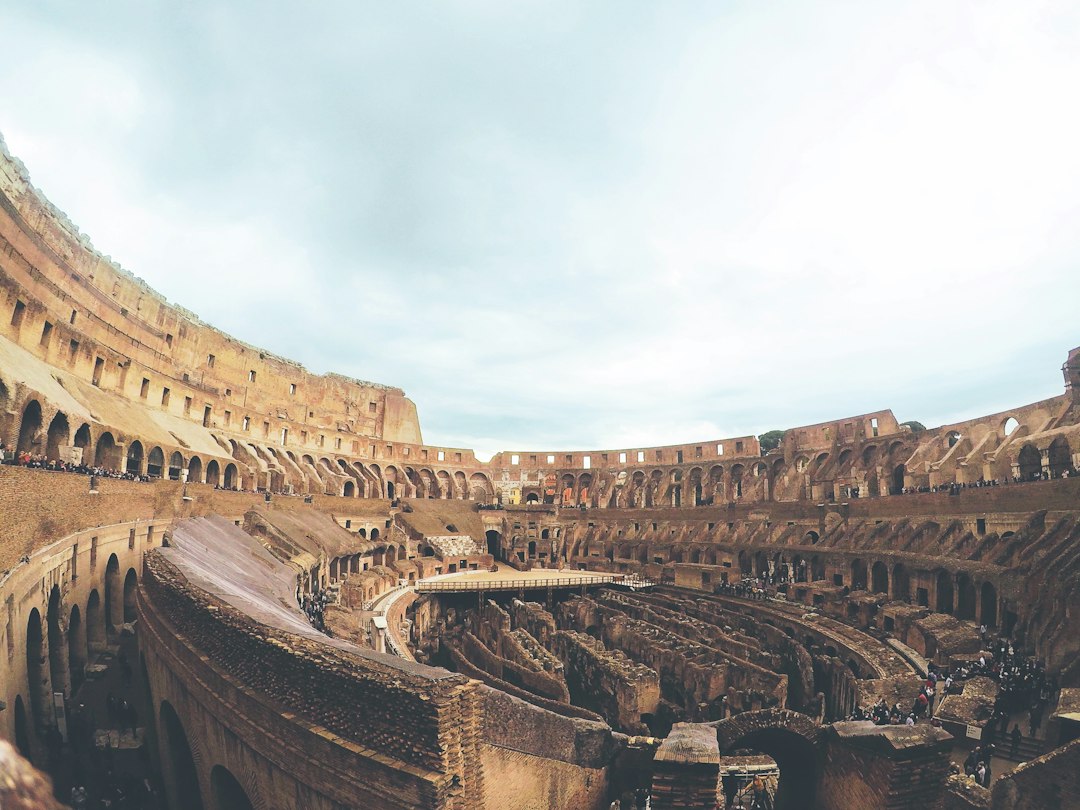
I have taught history for twenty-two years and I had wanted to take a group to Rome for about fifteen of them. Last October I finally did: thirty students between fifteen and seventeen, three colleagues, eight days.
I want to write down what I learned, because almost none of it was in the books I had been teaching from, and about a third of it would have saved me money.
How do you plan a Rome trip for students?
Three things decide it. Set an alarm for the Colosseum ticket release — tickets go on sale exactly 30 days before the visit date, at 08:45 Rome time (12:15 IST in summer, 13:15 in winter), and the good ones go in minutes. Understand that under-18s of any nationality enter the state archaeological sites free, so your students pay only booking fees. And book a licensed Italian guide, because under a 2023 law only a licensed guida turistica may deliver interpretive commentary at a site — a visiting teacher may accompany a group but not lecture in the Forum.
The ticket, which is where everyone fails
I nearly bought thirty Colosseum tickets from a website that looked entirely official. It was not.
The official seller is ticketing.colosseo.it, and nothing else. This matters more than usual, because the reseller problem here is not a suspicion — it is a finding. In April 2025 the Italian competition authority fined CoopCulture, the long-standing concessionaire, €7 million, in an action totalling nearly €20 million against CoopCulture and six international tour operators. The findings were that it had failed to take effective measures against bot-driven ticket hoarding, and had allocated a substantial share of tickets to bundles with its own guided visits — creating artificial scarcity that pushed visitors onto resale channels at inflated prices. CoopCulture ceased to be the operator in 2024.
So when you find a site offering “guaranteed skip-the-line Colosseum entry” at three times face value, understand the mechanism you are participating in.
The practical detail: tickets release exactly thirty days ahead at 08:45 Rome time, and the Full Experience and Attic slots go within minutes. Get the time-zone conversion right — 08:45 CEST is 12:15 IST, and 08:45 CET, from late October, is 13:15 IST. I got this wrong for a practice run and watched the good slots disappear while I was in a staffroom meeting.
There is a 75-minute limit inside the amphitheatre on the standard ticket, which is enough, and a new access in 2026 — the Corridor of Commodus, the passage linking the Imperial box to the exterior — on the Full Experience guided ticket.
The money fact almost nobody prints
Here it is, and it is worth an entire planning meeting.
Under-18s enter the Colosseum, Forum and Palatine free, regardless of nationality. Public schools from EU countries also go free; non-EU schools, including Indian ones, are not eligible for that. But the under-18 rule is nationality-blind. Which means for a group of thirty Indian students aged fifteen to seventeen, the practical cost at the Colosseum was the accompanying adults plus a booking fee per head.
I had budgeted for thirty full tickets. I did not need to.
Two conditions attach and both matter: the maximum group size is 30, including guides and accompanying adults and free entrants — so thirty students and three teachers is two groups, not one — and reservation is compulsory for school groups; groups holding “open” tickets are not admitted. If you use a third-party booking agent, you must declare it, or you lose the school benefit and are treated as an ordinary commercial group.
School groups also enter the Forum and Palatine only via the Via di San Gregorio entrance. Nobody tells you until you are at the wrong gate with thirty teenagers.
The same generosity turns up elsewhere. Trajan’s Markets and the Museum of the Imperial Fora admit school groups free with teachers, on production of a letter on school letterhead — groups of eleven to twenty-five must reserve by phone. The Catacombs of San Sebastiano give one free teacher per fifteen paying students and are guided-only.
For most student groups, the Roma Pass is not worth it, precisely because the value sits in entry fees that under-18s do not pay. Buy them transit tickets instead. And if an adult does use a Roma Pass at the Colosseum, note that you must still reserve — at least ten days ahead in normal season and twenty in peak. People discover this at the gate.
Where I would spend the teaching, if I could only choose one place
Not the Colosseum. Ostia Antica.
Eighteen euros, valid eight days, free for under-18s, closed Mondays — and you get there on the city transit system: Metro line B to Piramide, cross to the Roma–Lido line, off at Ostia Antica. About forty minutes, on a standard Rome ticket. No Naples day, no coach, no whole logistical tier.
And it teaches better. Pompeii shows you the domus — the house of the wealthy, frozen in AD 79. Ostia shows you insulae — the multi-storey apartment blocks in which most Romans actually lived. If your teaching point is Roman urbanism, class and the economy, Ostia is the better text. The Forum of the Corporations has mosaics laid by trade guilds naming their home ports. There are Mithraea, bath complexes, a theatre, thermopolia — bars with the counters still in them — and an unusually complete religious landscape.
And there is almost nobody there. My students walked into a Roman bar, stood behind the counter, and worked out for themselves what the holes in it were for. You cannot do that at Pompeii with twenty thousand other people.
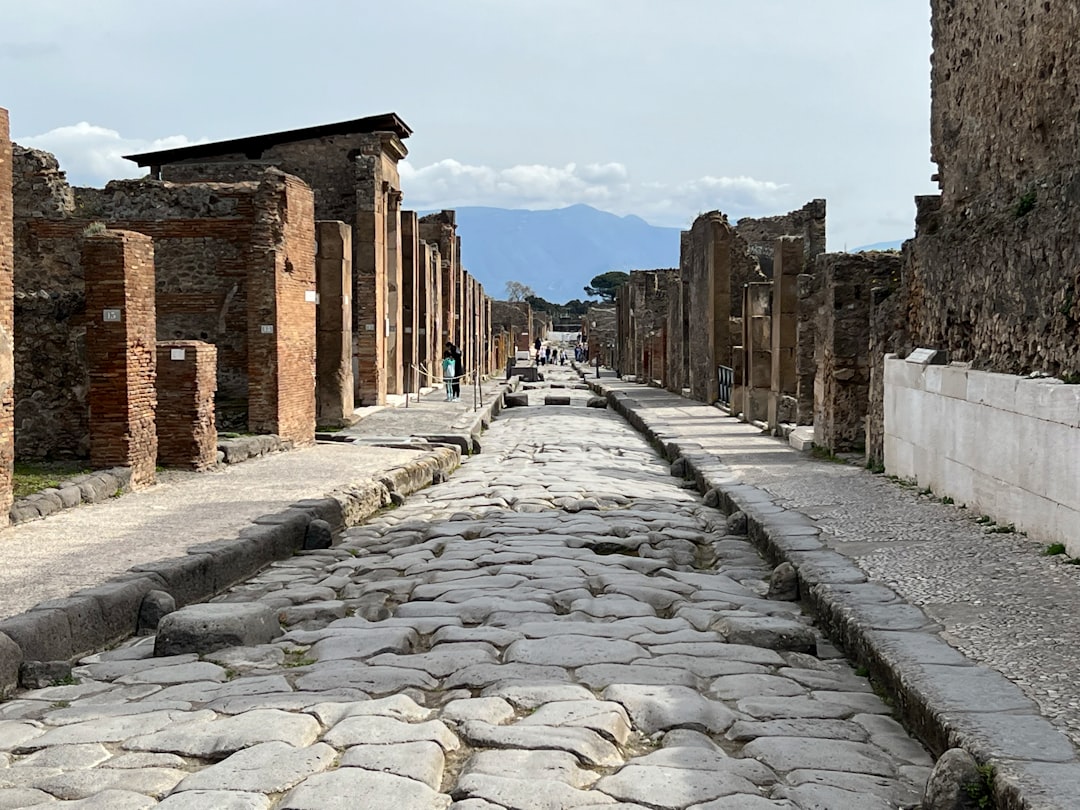
The counter-argument, honestly: Pompeii has the casts, the frescoes, the Villa of the Mysteries and the emotional weight of the eruption. If your trip is about the eruption, go to Pompeii. If it is about Rome, go to Ostia.
And if you do go south: Pompeii has capped admissions at 20,000 a day since November 2024, and all tickets are personalised — every student’s name has to be on a ticket, and ID is checked. Slots split 15,000 in the morning and 5,000 in the afternoon in summer. Herculaneum has no cap, is walkable in two to three hours, and is better preserved — the pyroclastic surge carbonised rather than burned, so wooden beds, doors and upper storeys survive, which they do not at Pompeii. For a school group I would now do Herculaneum in the morning and the archaeological museum in Naples in the afternoon, and I would tell the students in advance that the Alexander Mosaic and the great frescoes everyone assumes are at Pompeii are in fact in Naples.
Three things a historian in your group will insist on
The House of Augustus and the House of Livia, on the Palatine, accessible on the SUPER ticket. Second-style Republican wall painting, in situ, in the house of the first princeps. Most visitors walk past the door because it is a door. My colleague who teaches Latin stood in there and did not speak for several minutes.
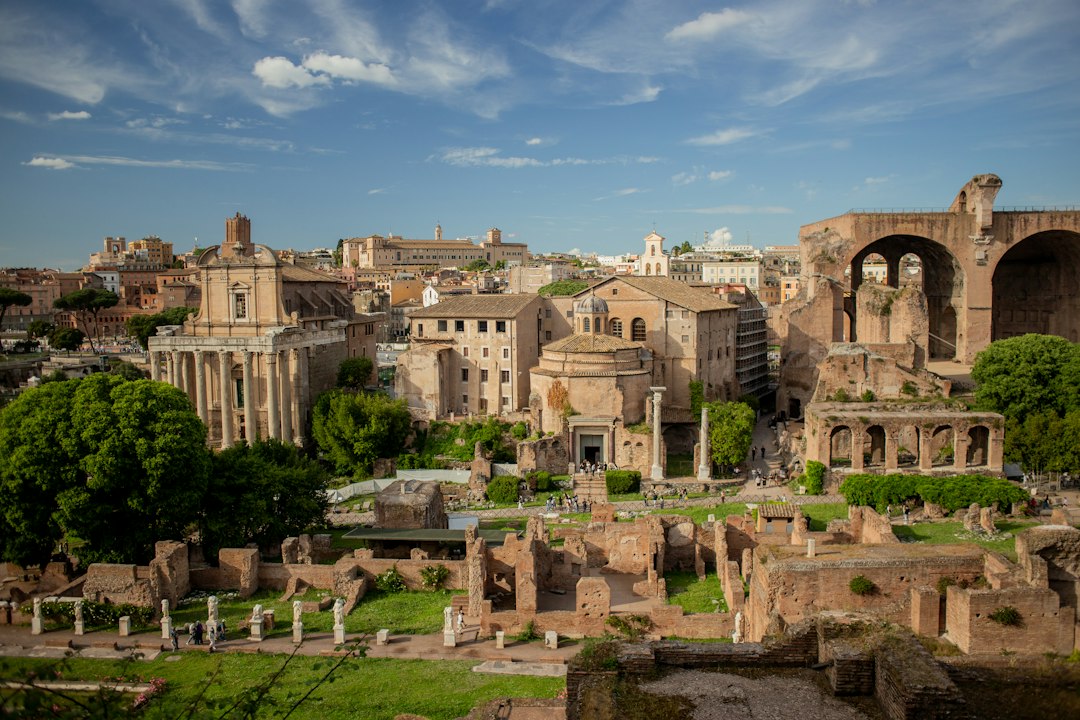
The Domus Aurea, Nero’s golden house, open Fridays to Sundays only, entries every fifteen minutes from 09:15 to 17:00, €26 with an educational tour and VR, or €18 without at 13:00 and 17:00. Take the €26 version. The VR reconstruction of the octagonal room is the entire point, and it is the single most effective piece of teaching technology I have encountered.
The Museo della Forma Urbis, in the Parco Archeologico del Celio, minutes from the Colosseum and opened in January 2024. It holds surviving fragments of the Forma Urbis Romae — the marble map of Rome carved between AD 203 and 211 under Septimius Severus, originally eighteen metres by thirteen — laid out under a glass floor over an eighteenth-century map of the city. You walk across ancient Rome’s own plan. The park is free; the museum is €9, or €6.50 for residents. Almost no group goes and I cannot understand why.
The rule about who may speak
This surprised me and I want other teachers to know it before they arrive.
Italy passed Law 190 of December 2023 establishing a national licensing framework for tourist guides. In practice: a teacher or tour manager may accompany and manage a group, but only a licensed guida turistica may deliver interpretive commentary at a site, and enforcement at the Colosseum and Forum is real.
I had planned to teach my own students in the Forum. I could not. What I did instead — and this worked better — was lecture on the coach on the way in, hand over to our licensed guide at the gate, and then do the questions afterwards over lunch. The students got a Roman guide with thirty years in that Forum, and they got me for the argument. That is a better division of labour than the one I had planned.
Dates, and the days to avoid
Late March to mid-May, or late September to early November. Avoid August: heat, and much of Rome closes.
And avoid, deliberately, the first Sunday of every month, 25 April, 2 June and 4 November — free-admission days at the Colosseum park. You cannot pre-book, so a free day is the single most crowded day, which for thirty teenagers is a bad afternoon.
Watch the winter clock too: from 25 October the Colosseum’s last admission drops to 15:30 and the park closes at 16:30. That halves an afternoon if you have planned it on summer hours.
On 2026 generally: do not expect a post-Jubilee lull. The Vatican recorded record visitor numbers during the 2025 Jubilee, and 2026 is busy partly because people who deferred are arriving now. What has improved is the plumbing — the new Metro C station at Colosseo–Fori Imperiali opened in December 2025, and it is itself a small museum, with excavated ceramics and the remains of a first-century bath displayed in the station. The line took twenty years and roughly seven billion euros, largely because of what they kept finding while digging it. My students found that funnier and more instructive than anything I said.
Visas, and the one thing that caught us out
Italy is Schengen. Apply at least eight to ten weeks ahead for a school group — the appointments have to be arranged, and every student needs the documentation set plus school authorisation and parental consent.
The thing nobody warned me about: the EU Entry/Exit System has been fully operational since 10 April 2026, replacing passport stamps with biometric registration at first entry. Budget serious extra time at Fiumicino for a group of thirty. We were an hour longer through the border than I had planned for, with thirty tired teenagers, and it soured a morning that did not need souring.
What they took home
Not the Colosseum. Every one of them had seen it before, in films, and standing inside a thing you have already seen a hundred times is oddly muted.
It was the bar counter at Ostia, and the marble map under the glass floor, and a fifteen-year-old girl in the House of Livia asking why anyone would paint a fake window on a solid wall.
Twenty-two years of teaching that and I had never had anyone ask it in the room where it is.
Frequently asked questions
How do I buy Colosseum tickets for a school group?
Only through the official site, ticketing.colosseo.it. Tickets release exactly 30 days before the visit date at 08:45 Rome time — 12:15 IST in summer, 13:15 IST from late October — and the best slots sell within minutes. Reservation is compulsory for school groups, and groups holding “open” tickets are not admitted. Maximum group size is 30 including guides, accompanying adults and free entrants. School groups enter the Forum and Palatine only via the Via di San Gregorio entrance. If you book through a third-party agent, you must declare it or you lose the school benefit.
Do Indian students pay for the Colosseum?
Under-18s enter the Colosseum, Roman Forum and Palatine free regardless of nationality, so an Indian school group’s students pay only the booking fee. The separate free-entry scheme for public schools from EU countries does not extend to non-EU schools, but the under-18 rule is nationality-blind and is the one that matters. Trajan’s Markets and the Museum of the Imperial Fora also admit school groups free with teachers on production of a letter on school letterhead, and the Catacombs of San Sebastiano give one free teacher per fifteen paying students.
Is Ostia Antica better than Pompeii?
For teaching Roman urbanism and daily life, yes. Ostia is €18 (free for under-18s), valid eight days, closed Mondays, and is reached in about forty minutes on Rome’s own transit system — Metro B to Piramide, then the Roma–Lido line — with no Naples day required. It shows insulae, the multi-storey apartment blocks most Romans lived in, where Pompeii shows the wealthy domus. It is also usually near-empty. Pompeii wins on scale, the casts, the frescoes and the emotional force of the eruption. If your subject is the eruption, go to Pompeii; if it is Rome, go to Ostia.
What are the Pompeii visitor rules now?
Since 15 November 2024 Pompeii has capped admissions at 20,000 a day, and all tickets are personalised — each visitor’s name must be on a ticket and original ID is checked at the office, which matters for group bookings. In summer, slots are split between a morning maximum of 15,000 and an afternoon maximum of 5,000. For school groups, Herculaneum is often the better choice: no cap, walkable in two to three hours, and better preserved, with carbonised wooden furniture, doors and upper storeys that did not survive at Pompeii.
Can a teacher guide their own students at Roman sites?
No. Italy’s Law 190 of December 2023 established a national licensing framework, and in practice a teacher or tour manager may accompany and manage a group but only a licensed guida turistica may deliver interpretive commentary at a site. Enforcement at the Colosseum and Forum is real. The workaround that improves the trip anyway: lecture on the coach, hand over to a licensed local guide at the gate, and take the students’ questions afterwards.
When should a school group visit Rome?
Late March to mid-May, or late September to early November — walkable temperatures and full opening hours. Avoid August, when Rome is hot and much of it closes. Deliberately avoid the first Sunday of each month, 25 April, 2 June and 4 November: these are free-admission days at the Colosseum park, cannot be pre-booked, and are therefore the most crowded. From 25 October the Colosseum’s last admission drops to 15:30. Apply for Schengen visas at least eight to ten weeks ahead, and budget substantial extra time at Fiumicino — the EU Entry/Exit System, with biometric registration at first entry, has been fully operational since 10 April 2026.
Our Italy journey can be built as a teaching itinerary rather than a sightseeing one, with the licensed guiding, the 30-day ticket window and the group-size rules handled as the constraints they are. Groups adding the Vatican usually work from our Vatican and Rome journey.
Schools: bring us your term dates and your syllabus at the thumbprint. The second one changes the itinerary more than the first.
Continue Reading


Which Oxford summer programmes are run by the University and which are private companies using the city's name. Fees, 2027 dates, and what that letter of recommendation is actually worth.

Planning an international STEM education trip is not simply a matter of choosing a country and filling a week with science museums. The strongest trips start with the learning objective, then work backwards into the right institutions, destination, dates, itinerary and budget. For Indian schools, it is also important to account for academic calendars, visas, […]