


If you have ever wondered how professional football academies train players, the answer is more complex than running drills for a few hours every day. Elite academies build players through a combination of technical training, game-based practice, tactical education, physical development, performance analysis and personal development. The exact system differs by club, age group and […]

An international school trip should be exciting for a child and reassuring for a parent. A proper school trip safety checklist goes beyond permission forms and emergency phone numbers. Parents should understand who supervises students, how accommodation and transport are checked, what happens in a medical emergency, how safeguarding is handled and how the group communicates if plans change.
The goal of educational tour safety is not to promise zero risk. It is to identify realistic risks and put sensible controls around them.
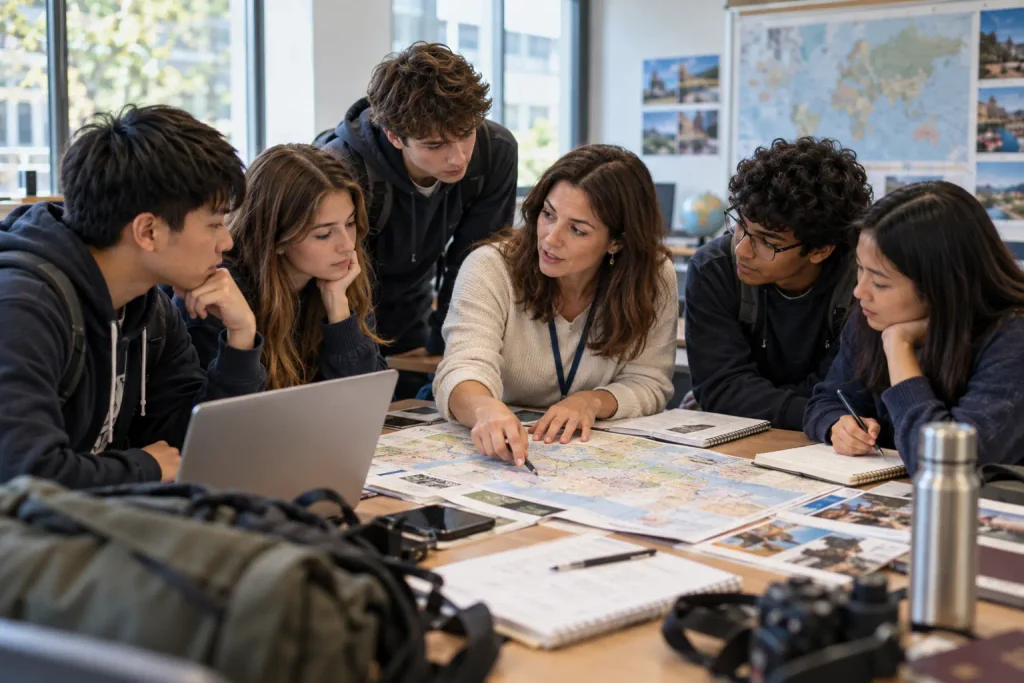
What should parents check before approving a school trip?
Use this checklist before signing a consent form:
| Safety area | What parents should ask |
| Supervision | What teacher-to-student or chaperone ratio applies? |
| Accommodation | Has the hotel or residence been vetted? |
| Transport | How are airport, coach, rail and local transfers managed? |
| Medical care | What happens if a student becomes ill or injured? |
| Insurance | What travel and medical insurance covers each student? |
| Communication | How often will parents receive updates? |
| Safeguarding | Who supervises students and what checks have been completed? |
| Emergency planning | What happens if a student is separated, a flight is delayed or an activity changes? |
| Documents | Who holds passports, consent forms and emergency information? |
These questions reflect principles in official school trip safety guidelines. UK Department for Education guidance, for example, says schools should have emergency-response and communication plans for educational visits and should use proportionate planning based on the actual risks involved.

1. Ask how the school trip risk assessment works
A risk assessment should relate to the actual trip, not simply be a generic document reused for every destination.
The UK Health and Safety Executive (HSE) advises schools to focus on real risks and take a proportionate approach to planning school visits. It also states that supervision levels should be determined through risk assessment, considering the activity and the age and maturity of pupils. There is no single legally prescribed pupil-to-staff ratio for school trips in England.
For parents, that makes one question particularly useful:
“Why is this supervision ratio appropriate for this particular itinerary and age group?”
A museum visit, multi-city international tour, residential sports camp and outdoor adventure programme can all require different arrangements.
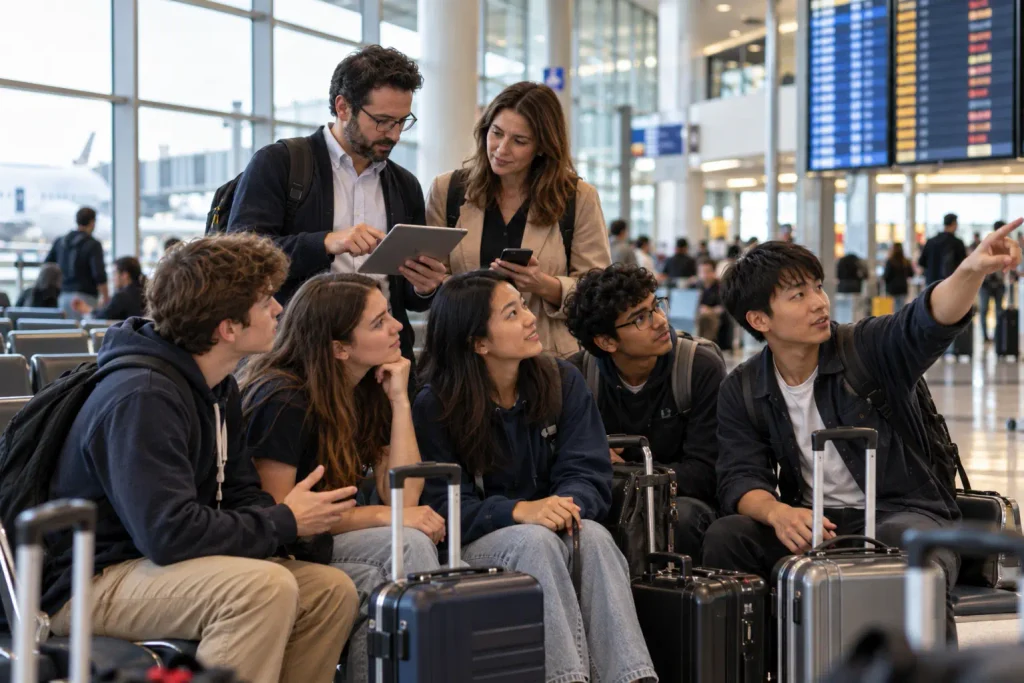
2. Check accommodation and transport, not just the destination
Parents naturally focus on where their children are going. A good safety review should look just as closely at how students will travel and where they will stay.
Ask whether accommodation has been vetted, how rooms are allocated, how students are supervised at night and who is responsible for them outside scheduled activities.
For transport, ask how airport transfers, local coaches, trains or internal flights are managed. Find out whether a named adult or tour manager remains responsible for the group during transfers and what happens if transport is delayed.
Picknic’s stated education safety framework includes vetted stays and transport, defined teacher-to-student ratios agreed with the school, and trained tour managers with groups. It also says parents receive daily WhatsApp updates containing photos, location information and all-well confirmations.
3. Understand the medical and emergency plan
“There’s a hospital nearby” is not, by itself, an emergency plan.
Parents should ask how the programme handles medication, allergies, existing medical conditions, illness and injuries. The operator should be able to explain who makes decisions in an emergency and how medical care is accessed at each destination.
Picknic says its education framework includes medical protocols with nearest-hospital mapping for every stop, travel and medical insurance for every student, and 24×7 trained tour managers supported by a home control room. These are Picknic’s stated standards, so parents should ask to see the arrangements applicable to the specific programme their child will join.
Health preparation should begin before departure too. The US Centers for Disease Control and Prevention recommends consulting a healthcare provider or travel-health specialist at least 4–6 weeks before international travel for destination-specific vaccines, medicines and advice.
That is general travel-health guidance; families should follow advice from their child’s own healthcare professional and check the requirements for the destination.
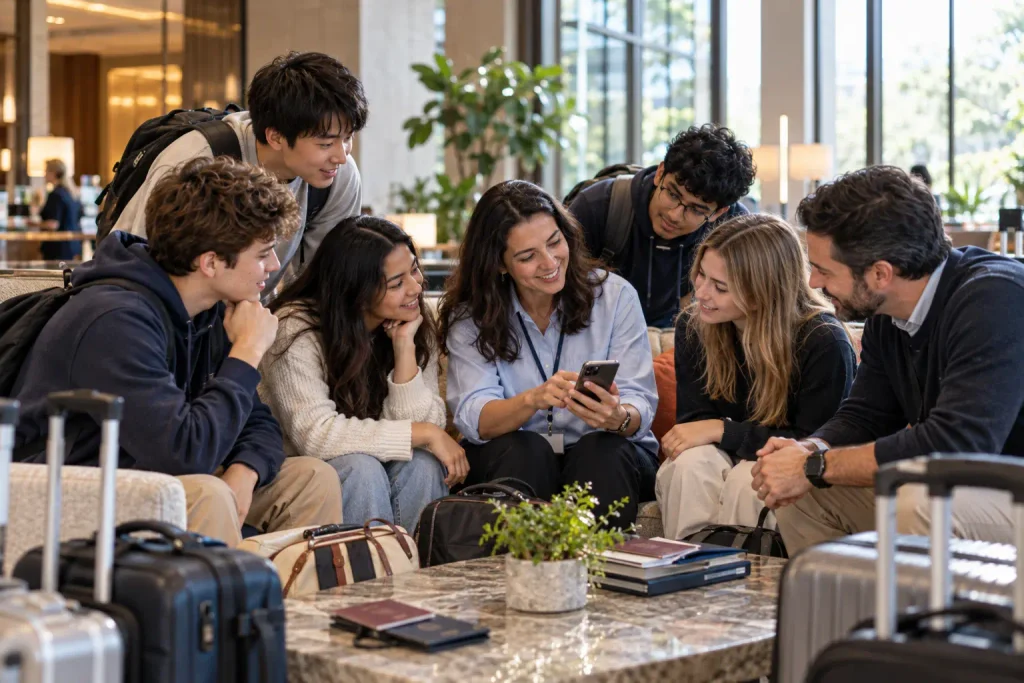
4. Check safeguarding and adult supervision
Safety is not limited to accidents. Parents should understand who has access to students and how children are supervised throughout the journey.
Ask:
- Who are the accompanying adults?
- What background or police checks have been completed?
- Who supervises students during free time?
- What happens during evenings and overnight stays?
- Is there a female chaperone where appropriate?
- What happens if a child becomes separated from the group?
- Who can a student approach if they feel uncomfortable or unsafe?
Picknic states that its education programmes use defined supervision ratios and trained tour managers. Individual Picknic programmes may specify different chaperone ratios depending on student age and itinerary, so parents should confirm the arrangements for the specific trip rather than assume one ratio applies to every programme.
5. Ask what happens when something goes wrong
One of the best tests of school trip safety guidelines is the contingency plan.
Ask what happens if:
- a flight is delayed or cancelled;
- severe weather changes the itinerary;
- a student becomes ill;
- luggage or a passport is lost;
- a student is separated from the group;
- a venue or activity becomes unavailable;
- an emergency requires parents to be contacted.
The important distinction is this:
A safe trip is not one where nothing unexpected happens. It is one where the adults already know what to do when something unexpected happens.

6. Make sure individual student needs are part of the plan
A group safety plan cannot replace individual preparation.
Parents should inform the school about relevant medical conditions, allergies, medication, dietary requirements, accessibility needs or other factors that could affect participation.
This matters even more internationally. Long travel days, unfamiliar food, different weather, time-zone changes and physically demanding activities can affect students differently.
Ask how the school and operator will accommodate those needs—and whether any activities have specific medical or physical requirements.
It is better to identify a limitation before departure than discover it halfway through the itinerary.

7. Don’t confuse “safe” with “risk-free”
Good educational tour safety should allow students to experience new environments while foreseeable risks are managed sensibly.
The HSE estimates that 7–10 million pupil visits take place each year in England, involving educational or recreational activities, and says the overwhelming majority are carried out safely and responsibly. It also recognises that learning outside the classroom can develop risk awareness and confidence.
That is why parents should be cautious about blanket claims such as “100% safe.” A more useful provider is one that can explain its actual procedures, responsibilities and contingency plans.

Picknic’s approach to educational tour safety
Picknic’s education programmes are built around structured learning journeys for schools and institutions.
Its published safety framework includes:
- vetted accommodation and transport;
- defined teacher-to-student ratios;
- 24×7 trained tour managers;
- medical protocols and nearest-hospital mapping;
- travel and medical insurance;
- daily WhatsApp updates for parents.
Picknic also says its planning process includes a proposal covering the itinerary, learning outcomes, safety framework and costs, followed by a parent orientation before departure.
For international tours, Picknic recommends beginning the planning process 4–6 months ahead, allowing time for visas, parent orientation and travel arrangements.
Parents should still request the specific safety framework for their child’s itinerary because requirements can differ according to destination, age group, activities and trip structure.
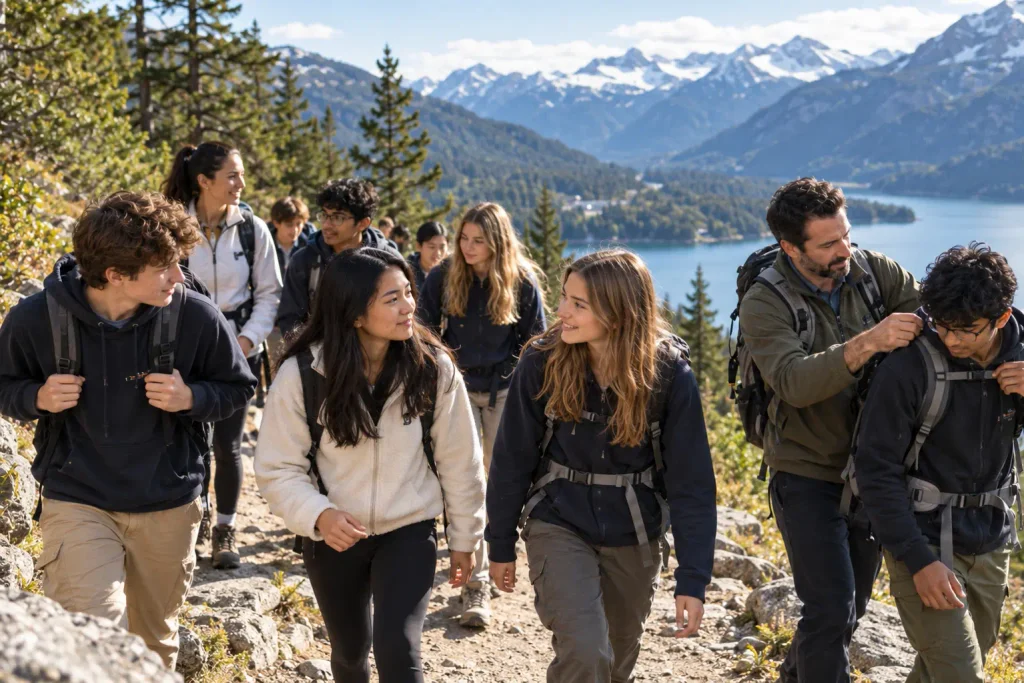
Final school trip safety checklist for parents
Before approving an international school trip, make sure you can answer these eight questions:
- Who is responsible for my child at each stage of the trip?
- What supervision ratio applies to this group?
- Where will students stay, and how has it been vetted?
- How are transport and transfers managed?
- What happens if my child becomes ill or needs emergency care?
- What insurance covers the student?
- How will parents receive updates during the trip?
- What is the emergency plan if the itinerary changes?
If the school or educational travel provider can answer these questions clearly—and explain how the arrangements apply to the actual itinerary—parents have something much more meaningful than a generic safety promise.
For schools planning an international learning journey, Picknic can design the programme around the student group, curriculum objectives, destination and safety requirements, with a proposal prepared for trustees and parents.
Explore Picknic’s educational tours and ask for the safety framework for the specific programme you are considering.
FAQs
1. What should parents check before approving a school trip?
Parents should check supervision ratios, accommodation, transport, medical and travel insurance, safeguarding procedures, communication arrangements and the emergency plan.
2. How are students kept safe during an international school trip?
Student safety can include trained tour managers, appropriate supervision ratios, vetted accommodation and transport, medical protocols, insurance and clear emergency procedures.
3. What should parents ask about medical emergencies on a school trip?
Ask how illness, injuries, allergies and medication are handled, who makes emergency decisions, how medical care is accessed and what insurance coverage applies.
4. What happens if a school trip itinerary changes unexpectedly?
A well-planned trip should have contingency procedures for flight delays, severe weather, illness, lost documents, separated students or unavailable activities.
5. How far in advance should parents prepare for an international school trip?
International school trips should ideally be planned several months ahead to allow sufficient time for passports, visas, medical preparation, insurance, parent orientation and travel arrangements.
Continue Reading

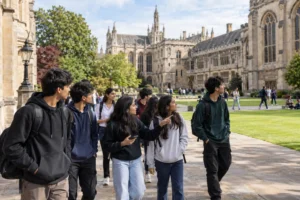
International education trips can help students connect classroom learning with the world beyond it. By visiting universities, science centres, industries and cultural institutions, they can explore subjects in practical settings, ask questions about future pathways and experience different ways of living and working. The benefits of international education trips and career planning can include clearer […]

Speed was once a status symbol. Now, the most discerning travellers are choosing depth over distance — spending longer in fewer places and coming home richer for it. Here's how we design journeys that breathe.