

Journey Highlights
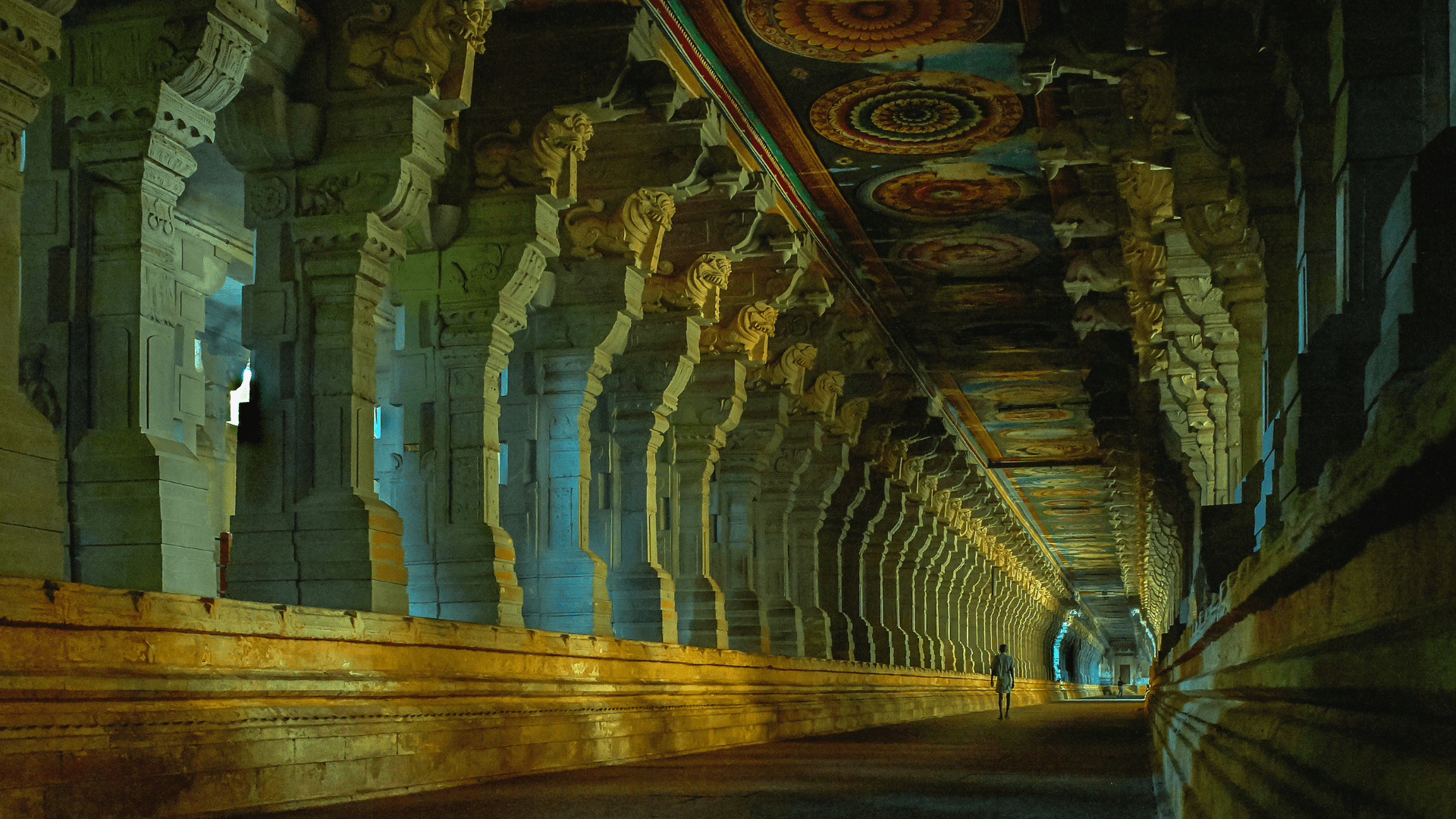
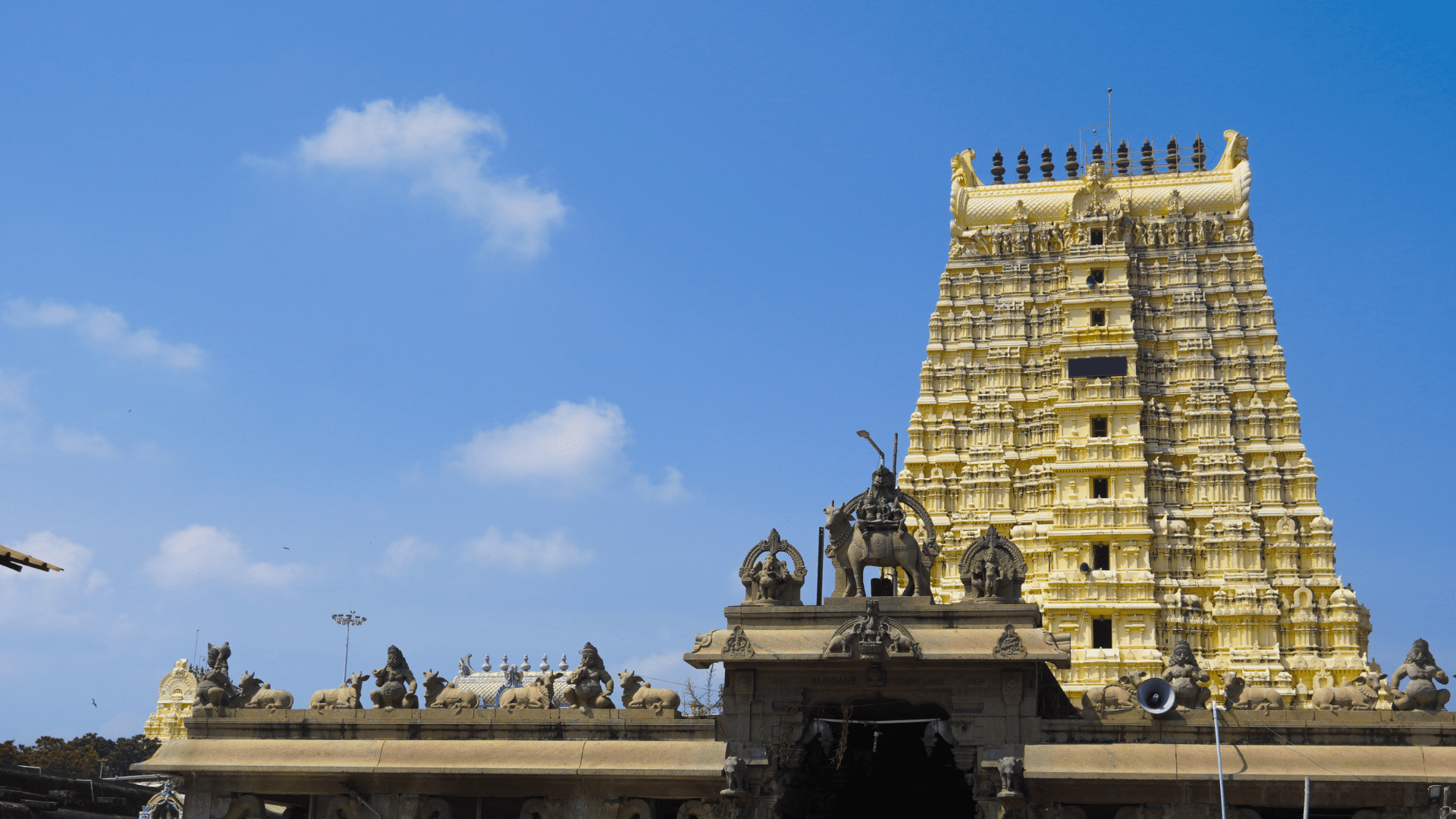
- Walk the longest temple corridor in India at Ramanathaswamy — 1,200 metres of carved pillars, no two quite the same.
- Take the theertham bath — twenty-two sacred wells, a bucket drawn at each, the whole ritual done in wet clothes.
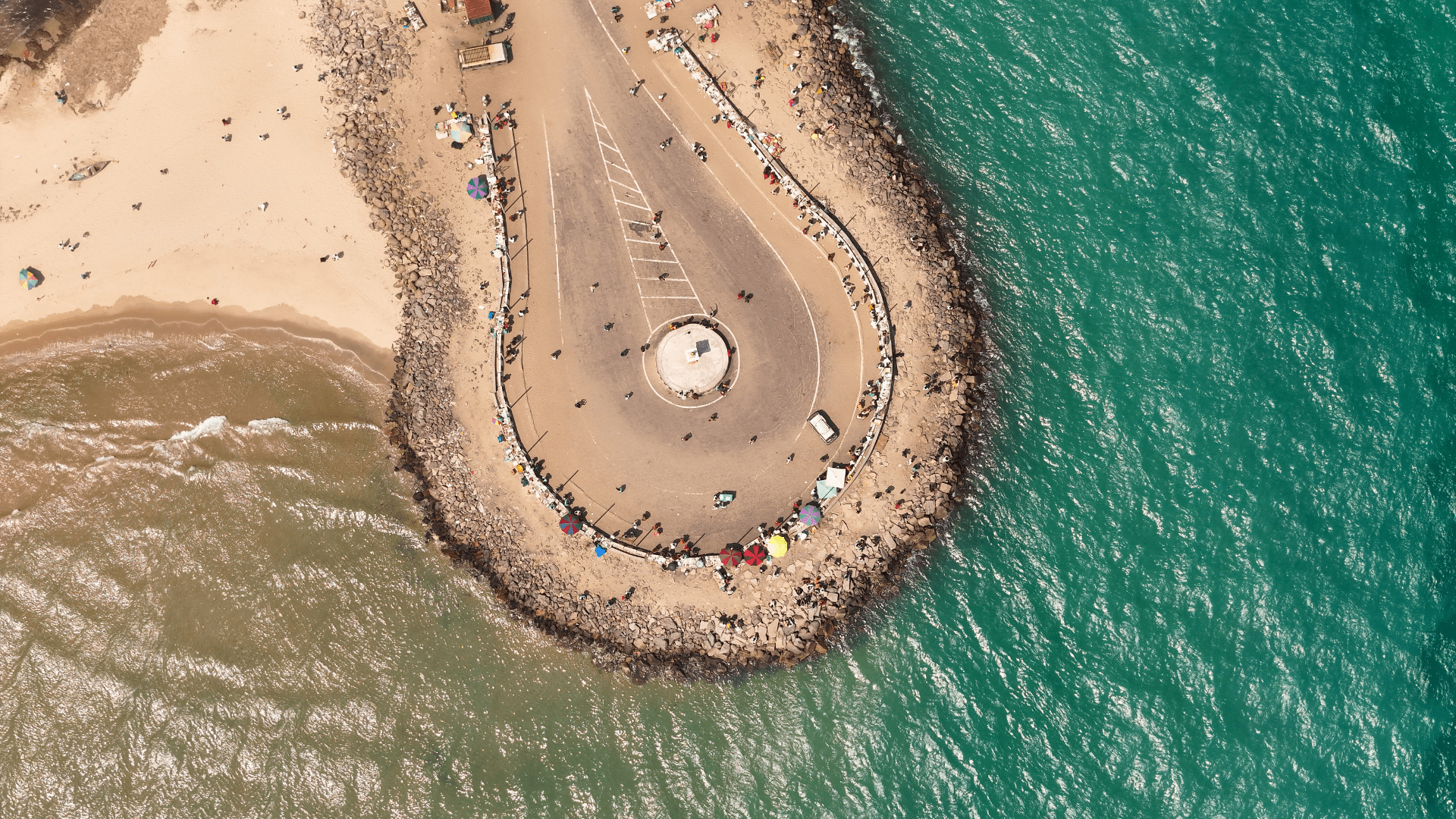
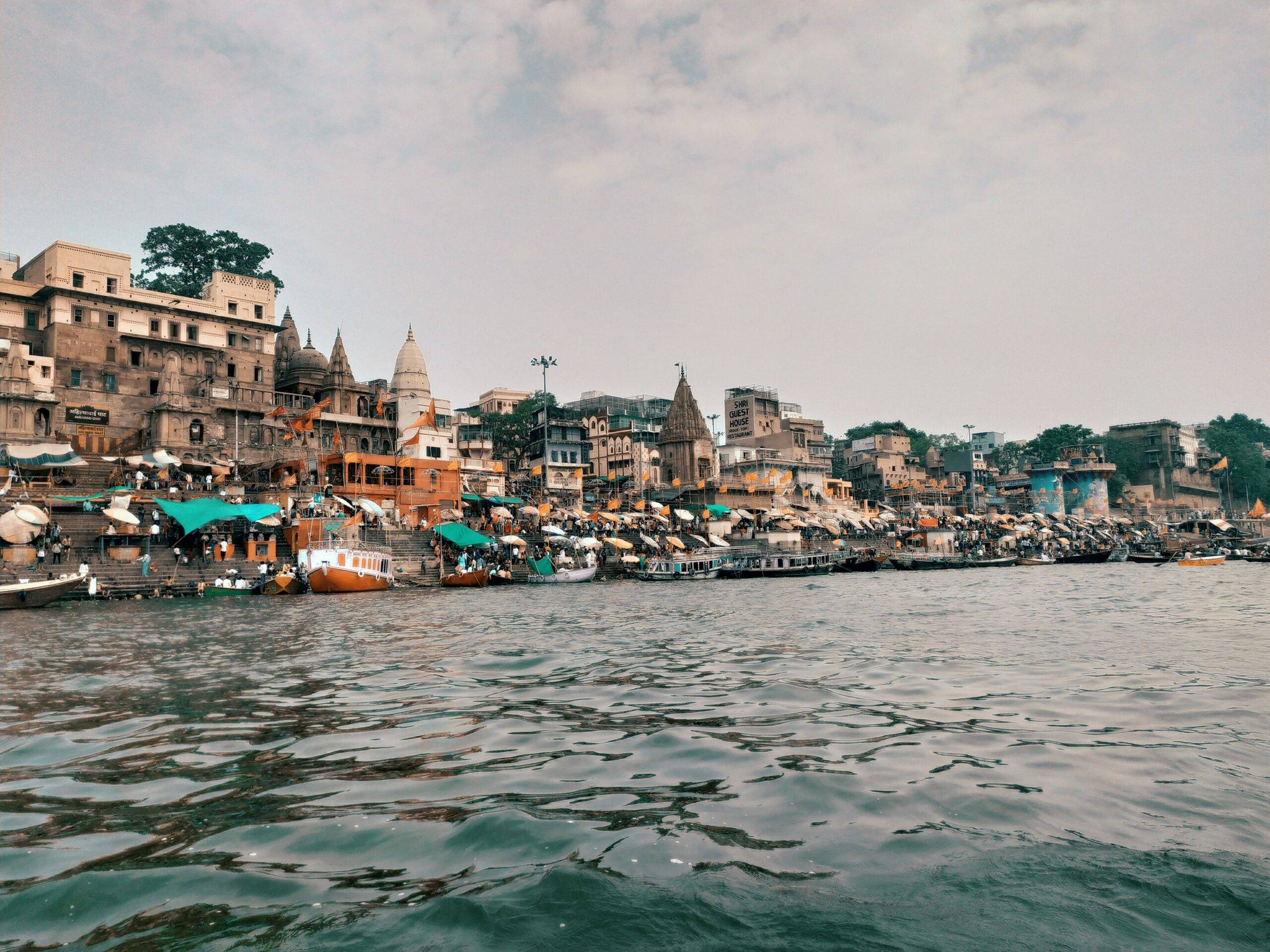
- Stand at Agni Theertham where the Bay of Bengal laps the temple’s eastern shore and pilgrims bathe at first light.
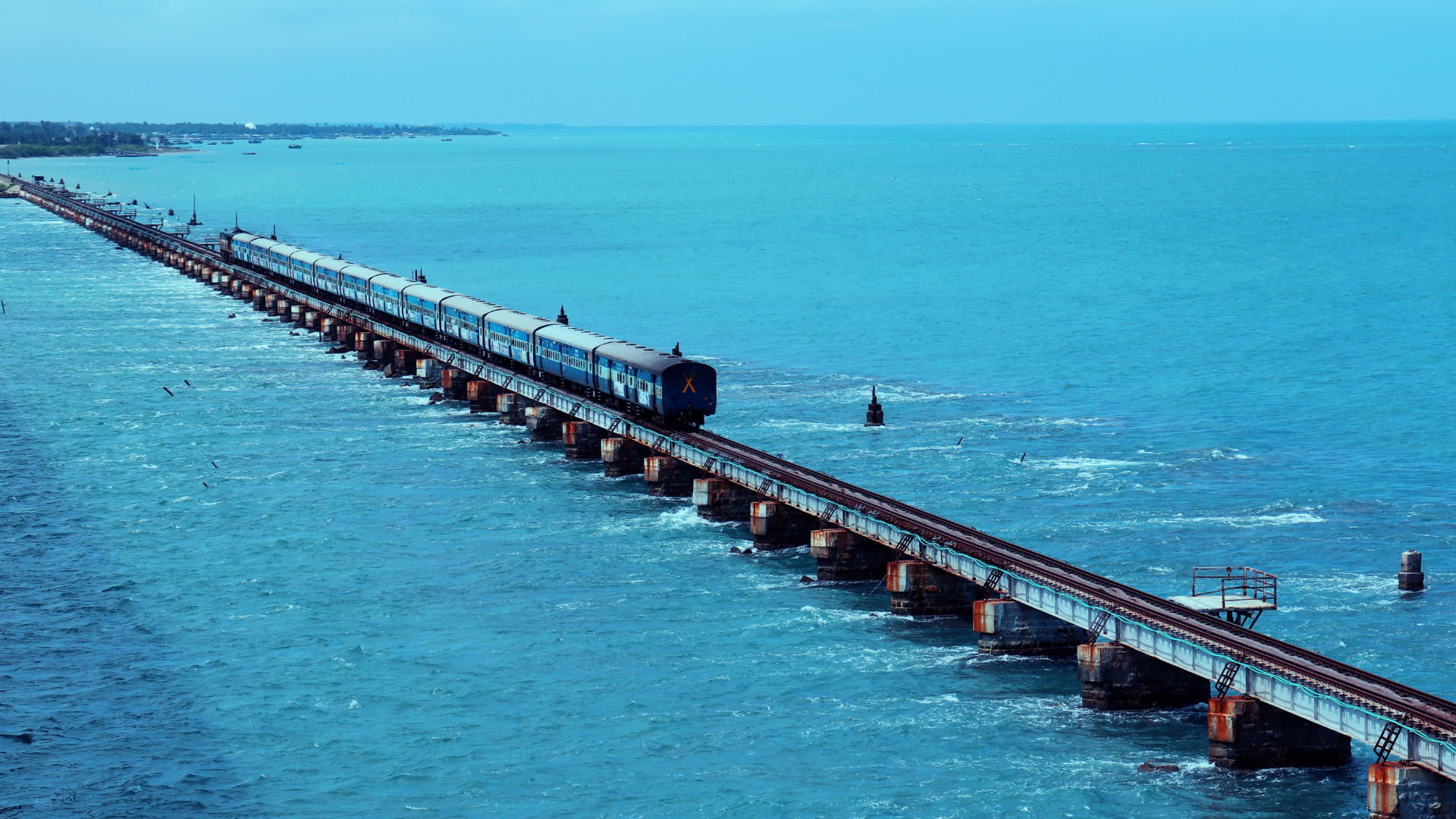
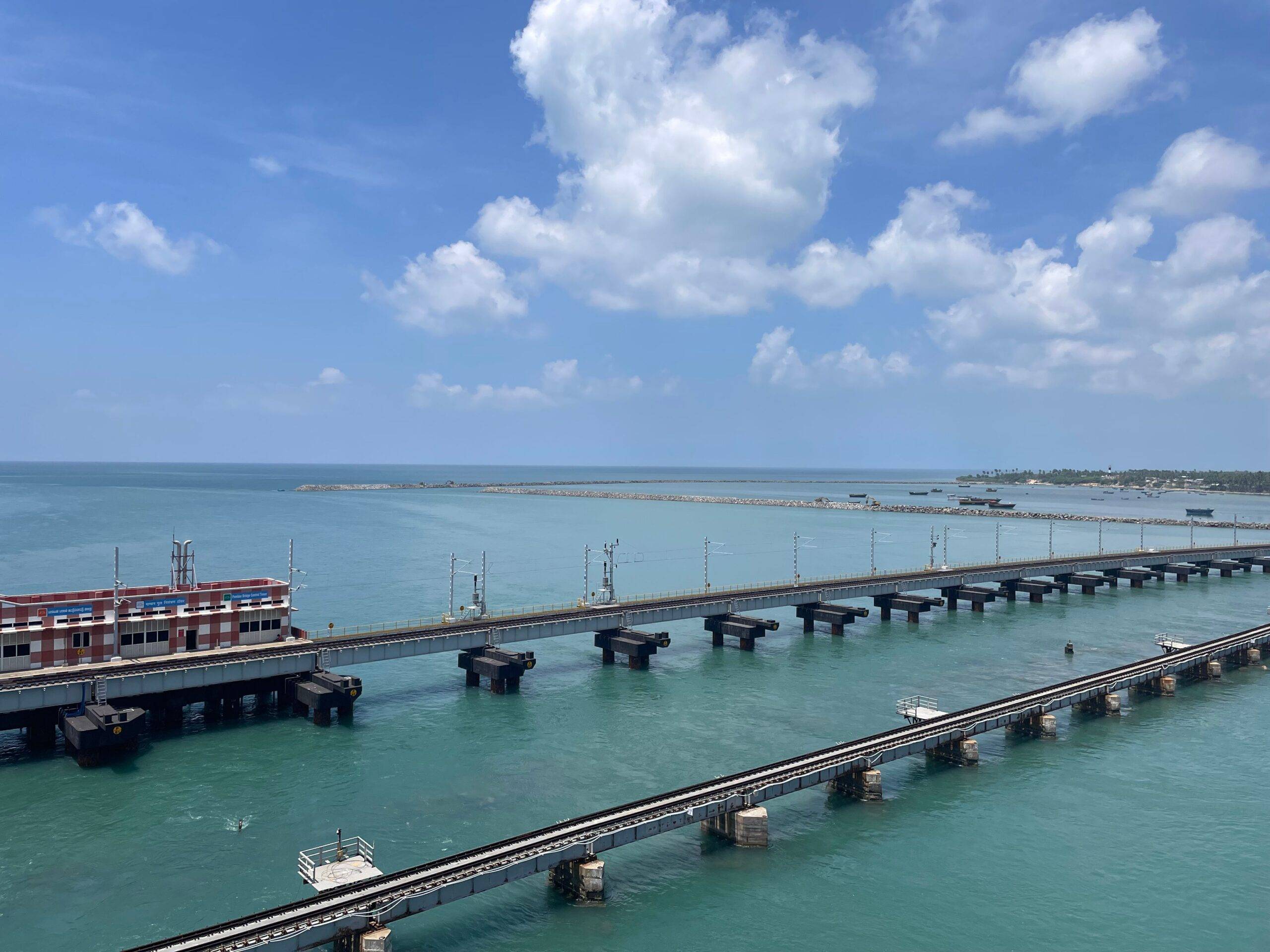
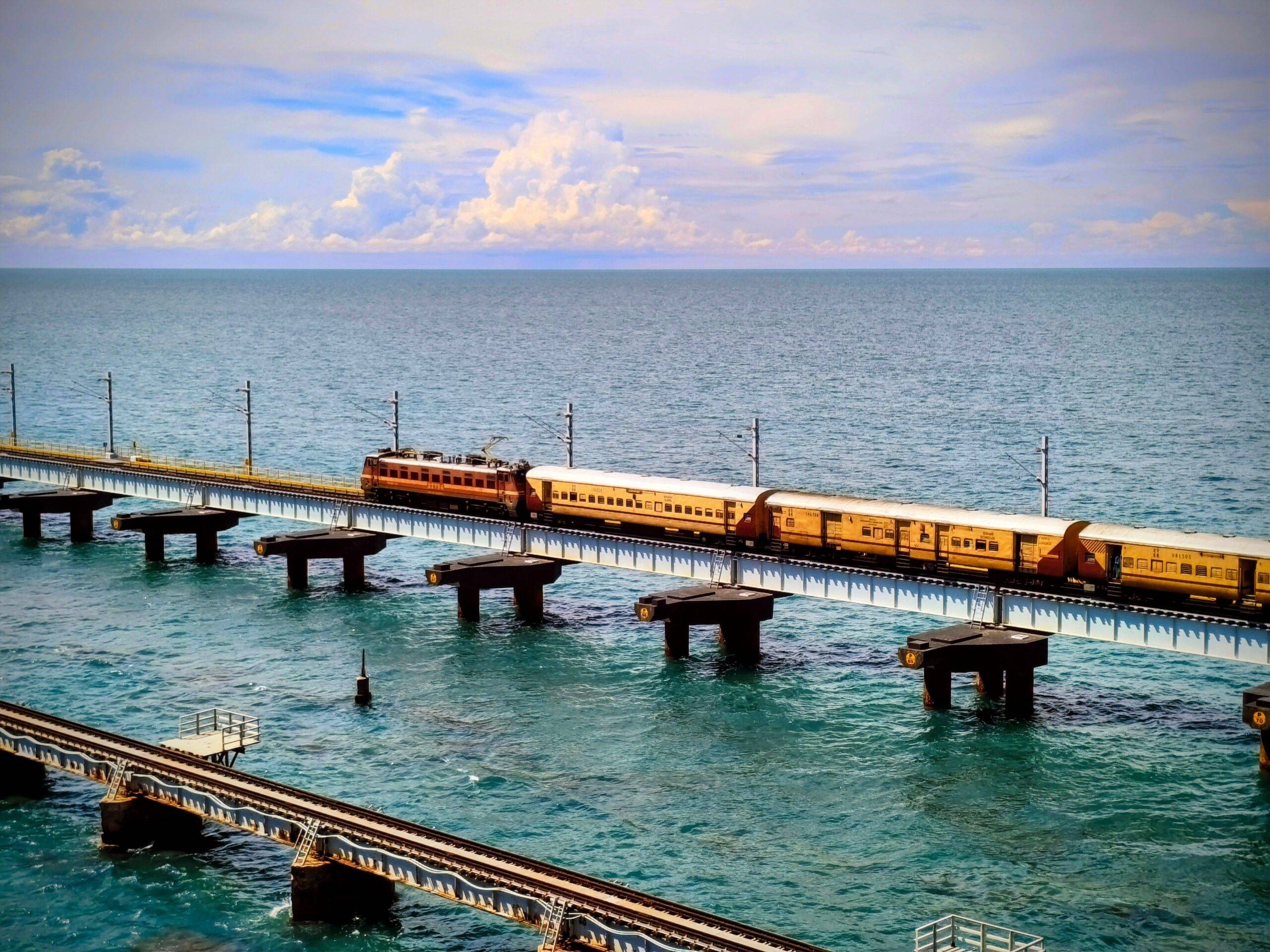
- Cross the Pamban rail bridge, then the new vertical-lift road bridge beside it, sea on both sides the whole way over.
- Drive to Dhanushkodi at the very tip — a ghost town the 1964 cyclone emptied, sand and ruins where two seas meet.
- Look out towards Adam’s Bridge, the chain of shoals the Ramayana names as Ram Setu, faint on the horizon.
- Climb Gandamadana Parvatham, the highest point on the island, for Rama’s footprint and the long view back to the temple.
 Rameshwaram, Pamban, Dhanushkodi
- Temple Town & Land's End
- 4 Nights / 5 Days
- Priced to Your Brief
- Sea-Facing & Temple-Side Stays
- Jyotirlinga Rituals & Coastal Pilgrimage


TWENTY-TWO WELLS TO THE SEA
Four nights on the island where Rama is said to have built his bridge to Lanka and worshipped Shiva on his return. Rameshwaram is rare among Indian pilgrimages — a Jyotirlinga, one of twelve, and a Char Dham site both, which is why the corridors fill from before dawn. Most visitors come for a single morning at the temple. This gives the place the days it asks for.
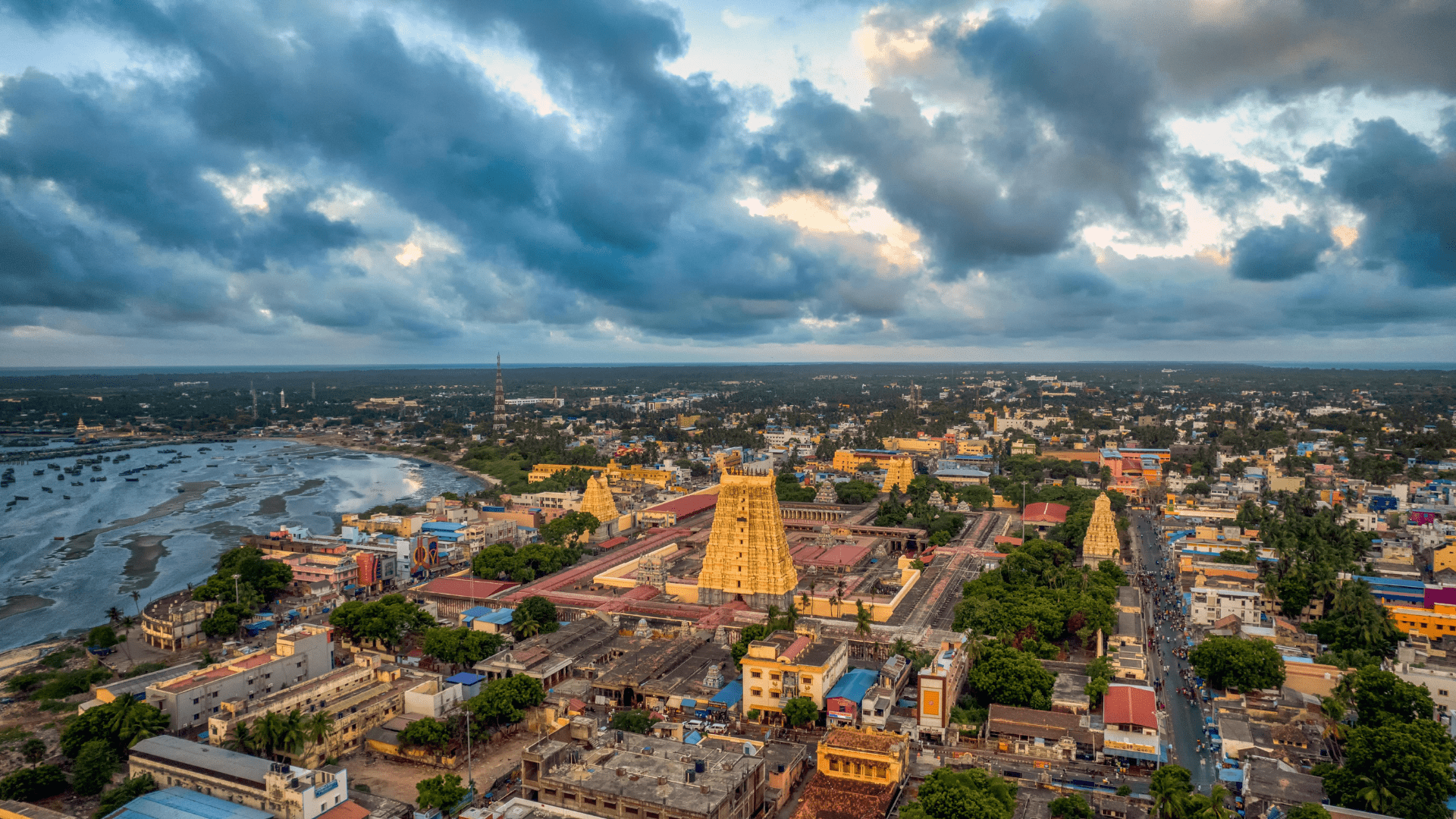
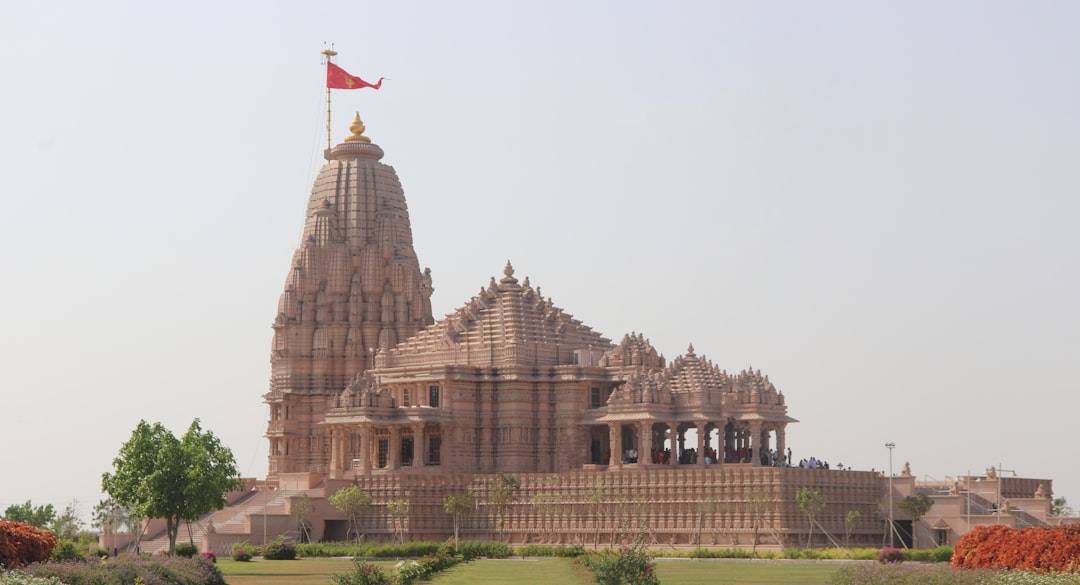
The Ramanathaswamy temple is the centre of everything, and its third corridor is the reason — the longest of any temple in the country, granite pillars running further than the eye follows, worn smooth by three centuries of bare feet. Around it lie the twenty-two theerthams, wells drawn from one by one in the bath ritual, and just east the sea at Agni Theertham where the day’s first pilgrims are already waist-deep.
Then the island opens out. The Pamban bridge carries the railway across the strait on a hundred spans, the old bascule beside the new lift; the road bridge runs parallel with water on either hand. South of it the tar thins to sand and ends at Dhanushkodi, a town the sea took in a single night in 1964 and never gave back — church walls, a station platform, fishing families among the ruins where the Bay of Bengal meets the Indian Ocean.
Some moments are built for lingering: the corridor at 5 am with the granite still cool underfoot and the crowds an hour away; the bath done, twenty-two buckets later, clothes clinging and the sea wind starting to dry them; Dhanushkodi at low light, Adam’s Bridge a broken line towards Sri Lanka, the whole peninsula behind you and nothing ahead but water.
Built for pilgrims, temple-lovers and travellers who want a coast with scripture written into it. Not for anyone expecting cool weather or short queues — the heat is real, the rituals are done wet, and the darshan lines are long on festival days. We time the mornings early and the drives for light.
Good to
know
Do we have to do the theertham baths, and what do they involve?

The baths are the heart of a Rameshwaram visit, but nothing is compulsory. The full ritual means a dip in the sea at Agni Theertham, then water drawn over you from each of the twenty-two temple wells in turn — done in the clothes you stand in, so you finish thoroughly wet. Bring a change and slip-on footwear. Those who prefer can watch, take a partial round, or skip it entirely; your curator arranges a priest to guide the sequence if you want one.
How hot does it get, and when should we go?
What does this journey cost per person?
Let's design
your version
Tell us your dates, group and budget and we’ll shape this journey around them. Everything is priced to your brief and planned on a call, never pulled off a shelf.