


Diwali falls on Sunday 8 November 2026. A curator on the full five-day calendar, why fares dip before the festival and spike after, and the ten-week booking window that closes now.
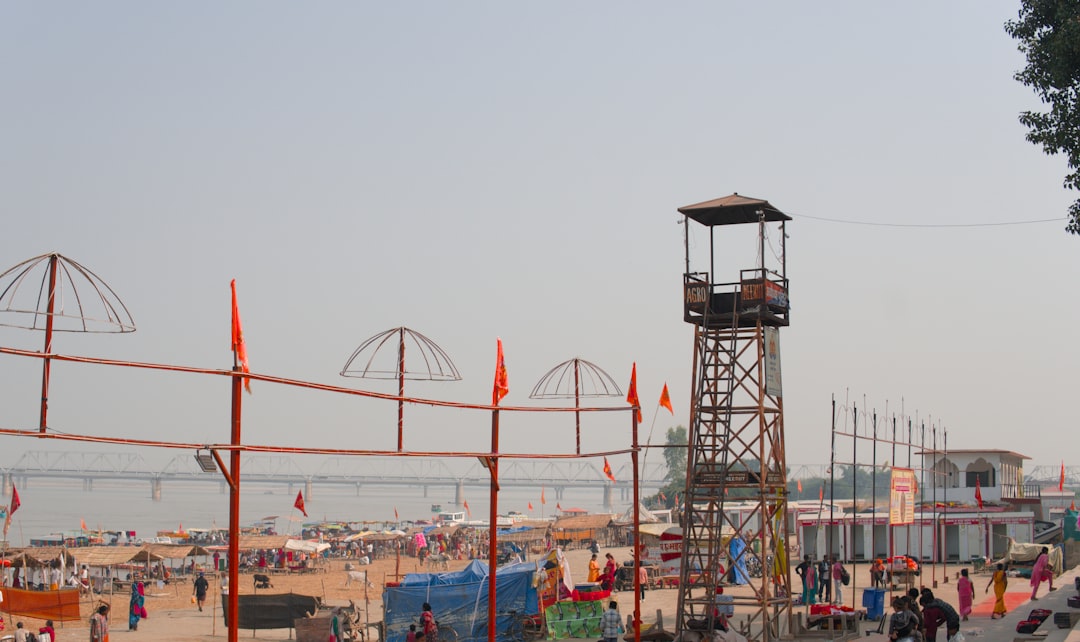
I have made exactly one serious mistake at Ayodhya, and it cost me an entire Deepotsav.
I drove up from Lucknow on the morning of the lighting, leaving at eight, confident because the distance is not long and I had done the journey a dozen times. By eleven I was stationary. Not slow — stationary, in a queue of vehicles several kilometres out, with an officer at the front explaining pleasantly and immovably that the city centre had been closed to traffic since mid-morning. I reached the ghats at ten past six.
The diyas had been lit at dusk.
I stood at the back of an embankment perhaps a kilometre from Ram Ki Paidi and watched, over several thousand heads, a river of light I had travelled four hundred kilometres to see and had missed by ninety minutes.
When is the Ayodhya Deepotsav 2026, and do you need a ticket?
The Deepotsav is held on Chhoti Diwali, the day before Diwali — which for 2026 points to Saturday 7 November, though the Uttar Pradesh government had not announced the date at the time of writing, and you should confirm with the Ayodhya district administration from around mid-October. It will be the tenth edition. There is no official public ticketing portal: general viewing from the ghats and the city is free, with passes issued by the administration for restricted enclosures near the main aarti. Any site selling you a “Deepotsav e-pass” is not the district administration.
That last point deserves a hard line under it. Search for Deepotsav registration and you will find a page of confident-looking sites offering passes. None of them is official. Some of them will take your money.
What the scale actually is now
I want to give you the numbers because they are genuinely difficult to picture otherwise.
In 2025, 26,11,101 diyas were lit across 56 ghats at Ram Ki Paidi, verified by a Guinness adjudicator using QR-coded participant tracking, with around ten thousand people involved in placing and lighting them. A second record was set the same evening for 2,128 people performing aarti simultaneously. Four years earlier, in 2021, the figure was around nine lakh.
So the trajectory is roughly nine lakh, to twenty-five lakh, to twenty-six lakh, in four years. Every year somebody tells me it cannot get bigger and every year it does.
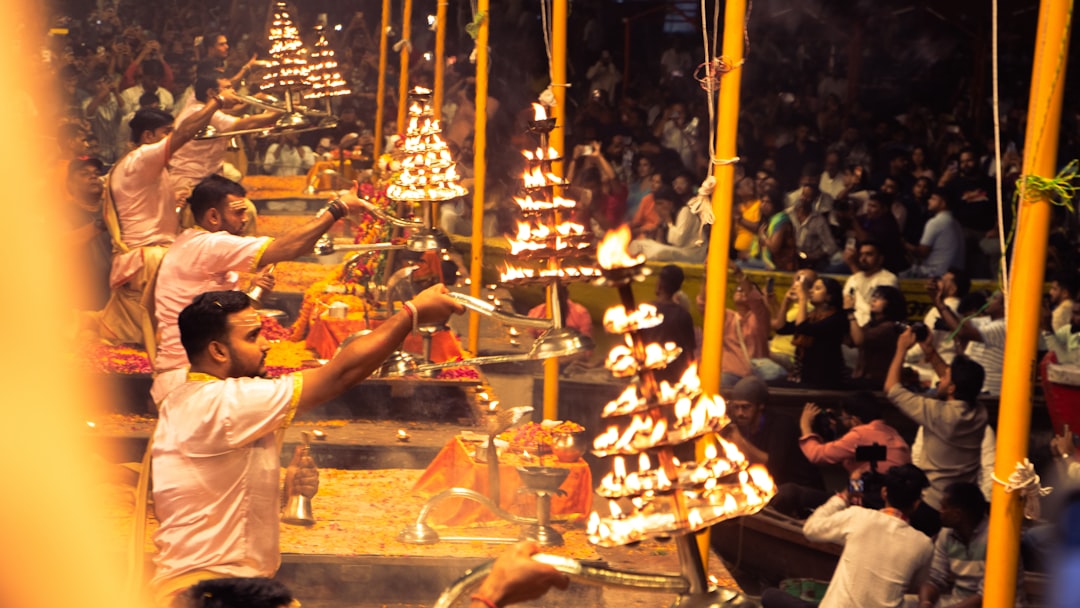
The thing the numbers do not convey is the lighting itself. The lamps are not lit gradually. They are placed over days by volunteers — largely students, in rows measured out along the terraced steps — and then lit on cue, in a wave, as the light goes from amber to blue. There is a moment of about ninety seconds when the ghats are half dark and half burning and the Saryu has a second, wobbling city floating on it. That is the photograph everyone wants and almost nobody gets, because at that moment they are usually still trying to reach a position.
How the crowd actually works
Here is the operational reality, learned the hard and expensive way.
Ram Ki Paidi fills by about half past four. After five, you are on an outer embankment with a distant view. This is not a queue that rewards patience; it rewards arrival.
Police cordons close the centre to vehicles from mid-morning. In 2024, seventeen bylanes leading to Ram Ki Paidi were sealed. If you attempt to arrive by road after about ten in the morning, you should budget two to three hours of not moving, and accept that you may be walking the last stretch regardless.
Which leaves one workable plan: arrive the previous evening and stay somewhere you can walk from. Not “a short drive” — walk. On Deepotsav day, a short drive is a fiction.
The city is far easier to reach than it was. Maharishi Valmiki International Airport at Ayodhya Dham and Ayodhya Dham Junction on the rail network both put you into the city without the Lucknow road. Both fill early for this week.
And the honest scheduling truth: the Deepotsav is a large, staged civic event with immense crowds and a great deal of security infrastructure. It is magnificent. It is not intimate. If what you want from Diwali is quiet lamplight and a family courtyard, this is emphatically the wrong festival and I would rather tell you now.
Everything else in the week
Deepotsav is one evening. The Diwali week around it is five days, and Ayodhya is one stop.
Darshan at the Ram Janmabhoomi wants the early window; queues build through the morning and are at their heaviest across the festival days. Govardhan Puja and Annakut follow Diwali — and here is a genuine complication worth knowing: for 2026 the government’s restricted holiday list places Govardhan Puja on Monday 9 November, while computed panchang places it on Tuesday 10 November, because Amavasya persists past sunrise on the 9th. Temples will differ. If a specific temple’s Annakut matters to you, ask that temple, not the internet.
Then, if you have the week, Vrindavan and Mathura for Annakut, and Delhi for the lit markets — with the caveat about Delhi’s air that I will not repeat here because a colleague has written it properly.
The booking problem, stated plainly
Accommodation in Ayodhya on Deepotsav night realistically needs to be booked around three months out. It is the end of August as I write. That leaves about ten weeks.
Which means: if you want to be there this year, this is a decision to make this week, not this month. I would rather say that than write you a beautiful paragraph about lamplight that you read in October and cannot act on.
And if this year is genuinely not possible, plan for next. The lamps, unlike my 2019 self, will not have moved.
Frequently asked questions
What date is Ayodhya Deepotsav 2026?
Most likely Saturday 7 November 2026, the day before Diwali. The event has been held on Chhoti Diwali every year — 19 October against a 20 October Diwali in 2025, 30 October against 31 October in 2024 — but the Uttar Pradesh government had not officially announced the 2026 date at the time of writing. Confirm with the Ayodhya district administration from around mid-October before committing to non-refundable travel.
Do you need tickets or a pass for the Deepotsav?
There is no official public ticketing portal. General viewing from the ghats and around the city is free. The district administration issues passes for restricted enclosures near the main aarti, but these are not sold online. Websites offering “Deepotsav e-pass registration” are unofficial — treat them as a scam risk and go through the district administration instead.
How early do I need to arrive at Ram Ki Paidi?
By about half past four in the afternoon to be in the main viewing area; after five you will be on an outer embankment with a distant view. More importantly, police cordons close the city centre to vehicles from mid-morning — in 2024, seventeen bylanes leading to Ram Ki Paidi were sealed. Arriving by road after around ten in the morning can mean two to three stationary hours. The only reliable plan is to arrive the previous evening and stay within walking distance.
How many diyas are lit, and is the record real?
In 2025, 26,11,101 diyas were lit across 56 ghats at Ram Ki Paidi and verified by a Guinness adjudicator using QR-coded tracking of the roughly ten thousand people who placed and lit them. A second record was set for 2,128 people performing aarti together. The figure was around nine lakh in 2021, so the event has roughly tripled in four years.
How do I get to Ayodhya, and when should I book?
Maharishi Valmiki International Airport at Ayodhya Dham and Ayodhya Dham Junction railway station both serve the city directly, which avoids the Lucknow road entirely. Both fill early for the festival week. Accommodation in Ayodhya for Deepotsav night realistically needs booking around three months ahead — so for a 7 November event, that decision belongs in August, not October.
Is Deepotsav suitable for elderly travellers or young children?
Honestly, it is demanding. Expect very large crowds, long periods standing, significant walking because vehicles cannot approach, early positioning from mid-afternoon, and heavy security screening. Travellers who cannot manage crowds, distance on foot or a long wait should consider viewing from a distance, or choosing a quieter Diwali destination — Udaipur and Jaipur offer lit markets and palace illumination at a fraction of the physical demand.
Our Deepawali week in North India journey is pinned to the almanac rather than a fixed grid, with the Ayodhya night handled as an arrive-the-day-before problem, which is what it is. Travellers who want the wider story usually pair it with our Ayodhya and Ramayan trail.
If you are deciding about this November, start at the thumbprint today. Ten weeks sounds like a lot. In Ayodhya, in Diwali week, it isn’t.
Continue Reading
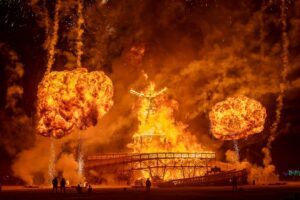
Goa spends the night before Diwali building thirty-foot demons and burning them at dawn. A Goa curator on the effigy contests, the all-night wards, and how to watch without being a nuisance.
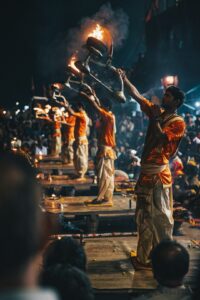
Fifteen days after Diwali, Varanasi lights every ghat for the gods. A festivals curator on the 24 November date, honest boat pricing, and the one place you must not raise a camera.