


A sports training camp abroad can give young athletes more than time on the pitch, court or track. It can introduce them to different coaching methods, unfamiliar sporting environments, new teammates and cultures, and help them practise independence away from home. The benefits of sports training camps abroad depend on the quality of the programme: […]
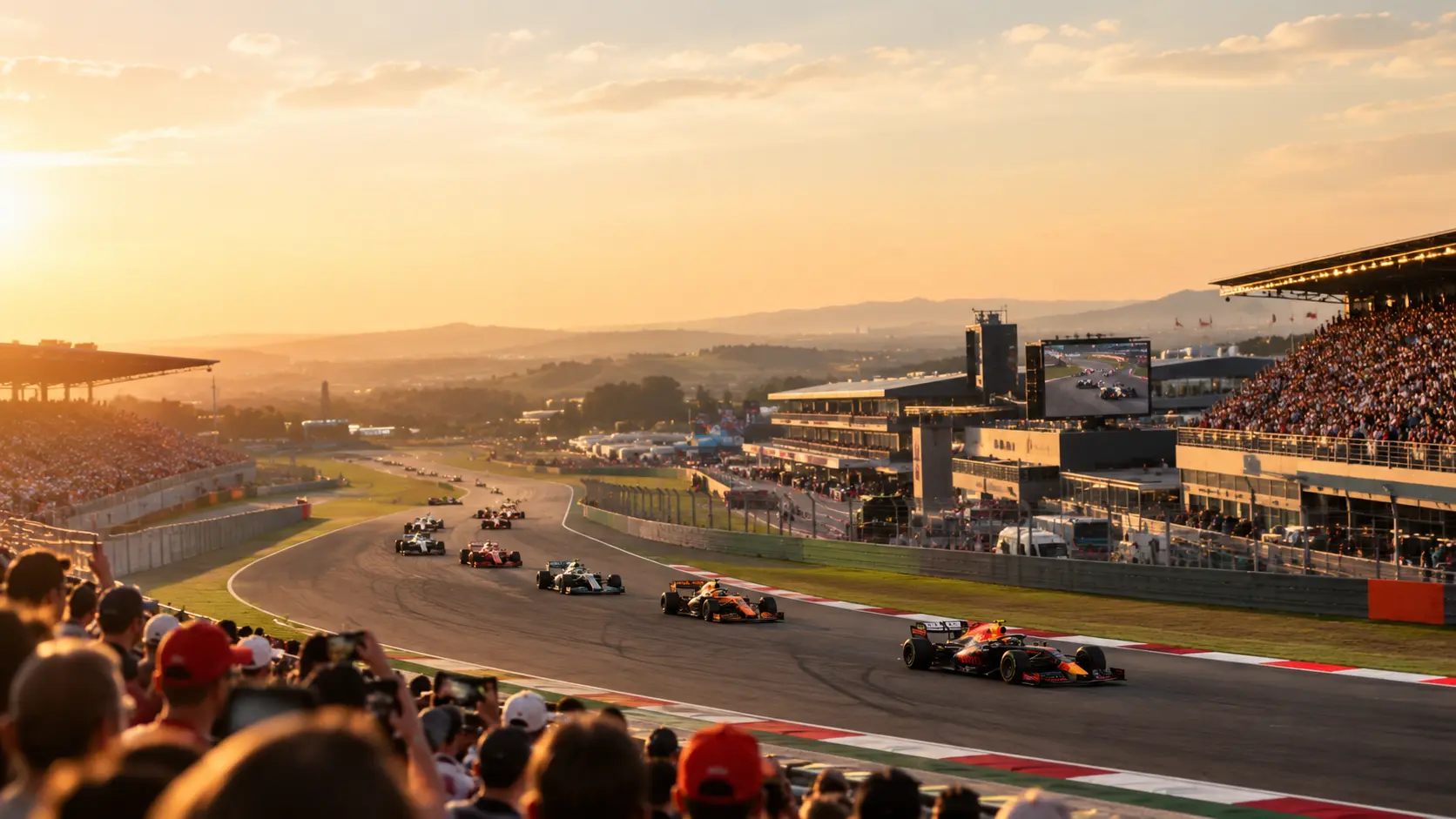
Watching Formula 1 on television gives you the race. Attending a Grand Prix gives you the entire event around it. For a first-time F1 race experience, expect long days, substantial walking, loud cars, changing session schedules, crowded transport and much more happening around the circuit than the race itself.
The best way to prepare is to understand how the weekend works, choose your ticket around the experience you want, plan your route to the circuit and leave enough time to explore the venue.
Formula 1’s official 2026 calendar features 24 Grand Prix weekends, including six Sprint events, so the exact experience depends on which race you attend.
What is a Formula 1 race weekend actually like?
A standard Grand Prix weekend builds towards Sunday’s race, but the circuit is active before then. Practice sessions allow teams to work on the car, qualifying determines the starting order and the Grand Prix is the main event.
Sprint weekends work differently. In 2026, Sprint weekends have Free Practice 1 and Sprint Qualifying on Friday, the Sprint and Grand Prix Qualifying on Saturday, followed by the Grand Prix on Sunday.
| First-time question | What to expect |
| How long is the experience? | Plan around the full circuit schedule, not only the race |
| Is every weekend the same? | No. Sprint weekends have a different format |
| Will I see the whole race from one spot? | Your view depends heavily on your ticket |
| Is the circuit easy to navigate? | Large venues can involve considerable walking |
| Should I arrive early? | Yes, particularly when security and transport are busy |
| What should I carry? | Ticket, phone, weather protection and ear protection |
Formula 1 itself recommends checking the timetable for the specific event because session times vary between locations.
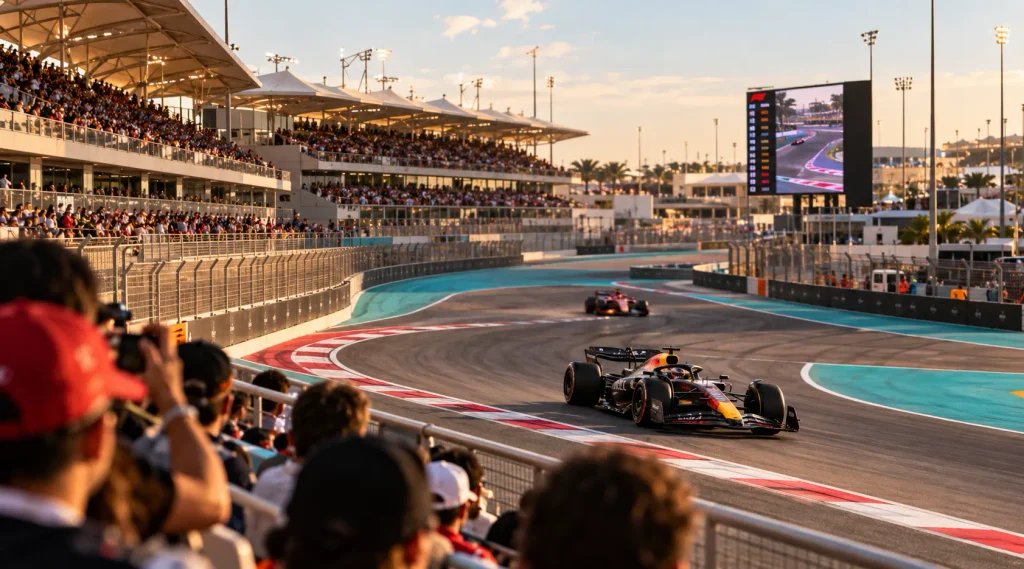
Which day should a first-time F1 fan attend?
If you can attend only one day, Sunday gives you the Grand Prix.
But if you want to understand the sport rather than simply watch the final result, qualifying adds considerable context. You can see how much importance teams place on track position and understand why a driver’s starting position can shape the race.
Practice provides a different perspective. You see teams working through setup changes rather than simply competing for the result.
If your trip allows it, attending more than one session makes the weekend feel like an event rather than a single afternoon at a circuit.
What should you know before buying F1 tickets?
Your ticket determines much more than where you sit.
Grandstand tickets provide an assigned viewing position. General admission usually provides access to designated viewing areas without one fixed seat.
Before buying, study the circuit map and understand exactly where your ticket puts you.
Check:
- What part of the circuit you can see
- Whether there is a large screen nearby
- How close the nearest entrance is
- Where food, toilets and merchandise areas are located
- How you will reach the circuit from your accommodation
A seat beside a particularly interesting corner may sound perfect, but a good view of the circuit combined with a nearby screen can sometimes be more useful for a first-time spectator.
The official F1 Race Guide app is designed to help spectators navigate this. It provides interactive circuit maps, points of interest, food and drink locations, transport information and schedule updates.
What does a Grand Prix feel like in person?
The biggest surprise is often the scale.
A circuit is not a television frame. You may be watching one corner while the rest of the race is happening elsewhere. Trackside screens become important because they help you follow positions, incidents and timing.
Then there is the sound.
Modern F1 cars sound different from earlier generations, but they are still extremely loud at close range. Ear protection is worth carrying, particularly for children or anyone sensitive to high sound levels.
The cars can also be difficult to follow visually when you first see them at racing speed. They pass incredibly quickly, and it takes a little time to understand how the cars move through the circuit from your particular viewing position.
That is why the best first time F1 race experience guide is not simply about finding the closest possible seat. It is about understanding what you want to watch.
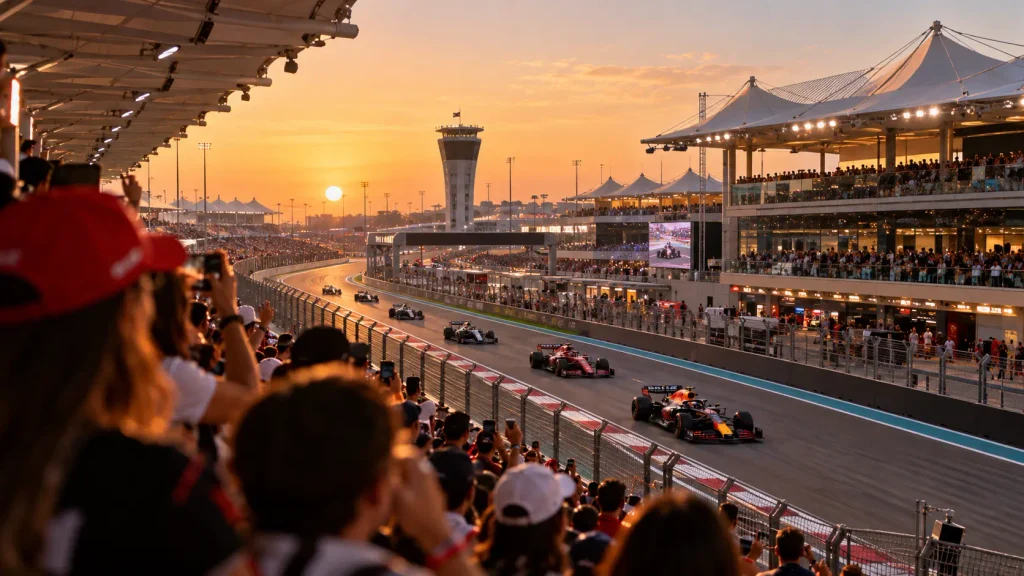
How early should you reach the circuit?
Treat an F1 circuit like a major international sporting venue.
Your journey may involve security checks, shuttle buses, trains, long walks between entrances and grandstands, queues for food and large crowds leaving simultaneously.
Arrive early enough to find your entrance, locate your seat, understand the circuit layout and check the day’s timetable.
If you want to visit the Fanzone, merchandise areas or other activities, allow time for them rather than trying to squeeze everything between sessions.
This matters even more on race day. Leaving your hotel at the time you would normally leave for a sightseeing attraction is unlikely to give you enough margin.
What should you wear and carry?
Comfort matters.
Wear shoes suitable for substantial walking. Check the local weather before leaving your hotel because some circuits can be exposed to heat, rain or wind.
Before packing, check the venue’s current prohibited-items policy. Rules differ between circuits.
Useful items may include:
- Your digital or printed ticket, as required
- Phone and portable battery
- Sunglasses
- Weather protection
- Ear protection
- Water where permitted
- Essential medication
- A small bag within the circuit’s permitted dimensions
Avoid carrying a large backpack unless you genuinely need it. Security checks are easier when you arrive with only the essentials.
What happens after the race?
Do not underestimate the exit.
Thousands of spectators may leave simultaneously. Public transport and shuttle services can become crowded, while roads around the circuit can slow considerably.
If you have a dinner reservation, airport transfer or train after the race, leave a substantial buffer.
This is particularly important when attending a Grand Prix abroad. A hotel that looks close to the circuit on a map may take much longer to reach once the crowds disperse.
A better approach is to treat the post-race journey as part of your itinerary. Know where you need to go, understand your transport option and avoid scheduling something immediately after the chequered flag.
Which Grand Prix is best for a first-timer?
There is no universal answer.
Your choice should depend on the type of trip you want.
A city-based race can make combining the Grand Prix with sightseeing convenient. A night race creates a very different atmosphere from a daytime European event. A purpose-built circuit may offer a more traditional motorsport environment.
For an Indian traveller, the Abu Dhabi Grand Prix can work particularly well as a sports-and-travel experience. The 2026 race takes place at Yas Marina from December 4 to 6, with the Grand Prix on Sunday, December 6.
Picknic’s current Abu Dhabi F1 experience combines the race weekend with time around Yas Island and Abu Dhabi, including attractions and the post-race concert.
What should first-time F1 travellers avoid?
The most common mistake is treating the race as the entire trip.
Do not choose accommodation without checking the route to the circuit. Do not buy a ticket without understanding the viewing area. Do not assume every Grand Prix follows the same schedule. Do not leave transport planning until race morning.
Most importantly, check official event information close to departure. Session timings, access rules and venue arrangements can change.
How can you make your first F1 race a proper trip?
The best F1 race experience combines the event with the destination around it.
Arrive with enough time to experience the host city. If your schedule permits, attend more than one session. Leave breathing room around the race rather than creating an itinerary that turns the Grand Prix into another appointment.
Picknic’s sports travel offering is built around global sporting events, training camps and tournaments, and its current portfolio includes Formula 1 experiences.
The useful question is not simply, “Which F1 ticket should I buy?”
It is “What do I want the entire weekend to feel like?”
Once that is clear, choosing the race, ticket, accommodation and itinerary becomes much easier.
Continue Reading

For young footballers who want to experience elite football in the UK, the Manchester United Soccer Schools (MUSS) programme offers more than a football camp. Picknic’s Manchester programme is a 10-day residential football development experience for ages 10–16, combining technical and tactical coaching, match play, personal-development sessions, an Old Trafford stadium experience and a weekend […]

Wimbledon needs ten months. El Clásico tickets don't exist until two weeks out. A curator's guide to the ballots, memberships and 30x markups between an Indian fan and a seat.