

Journey Highlights
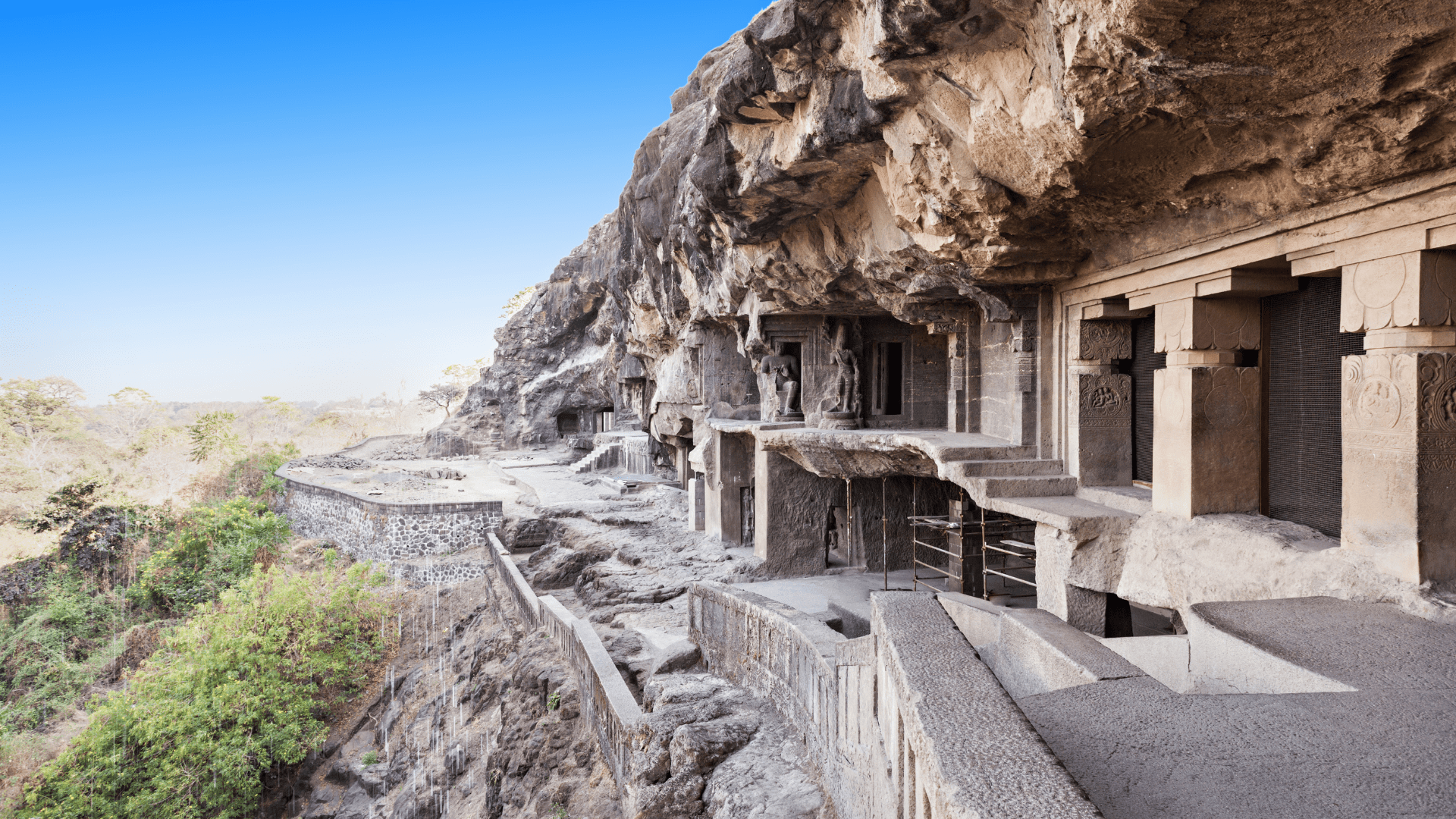
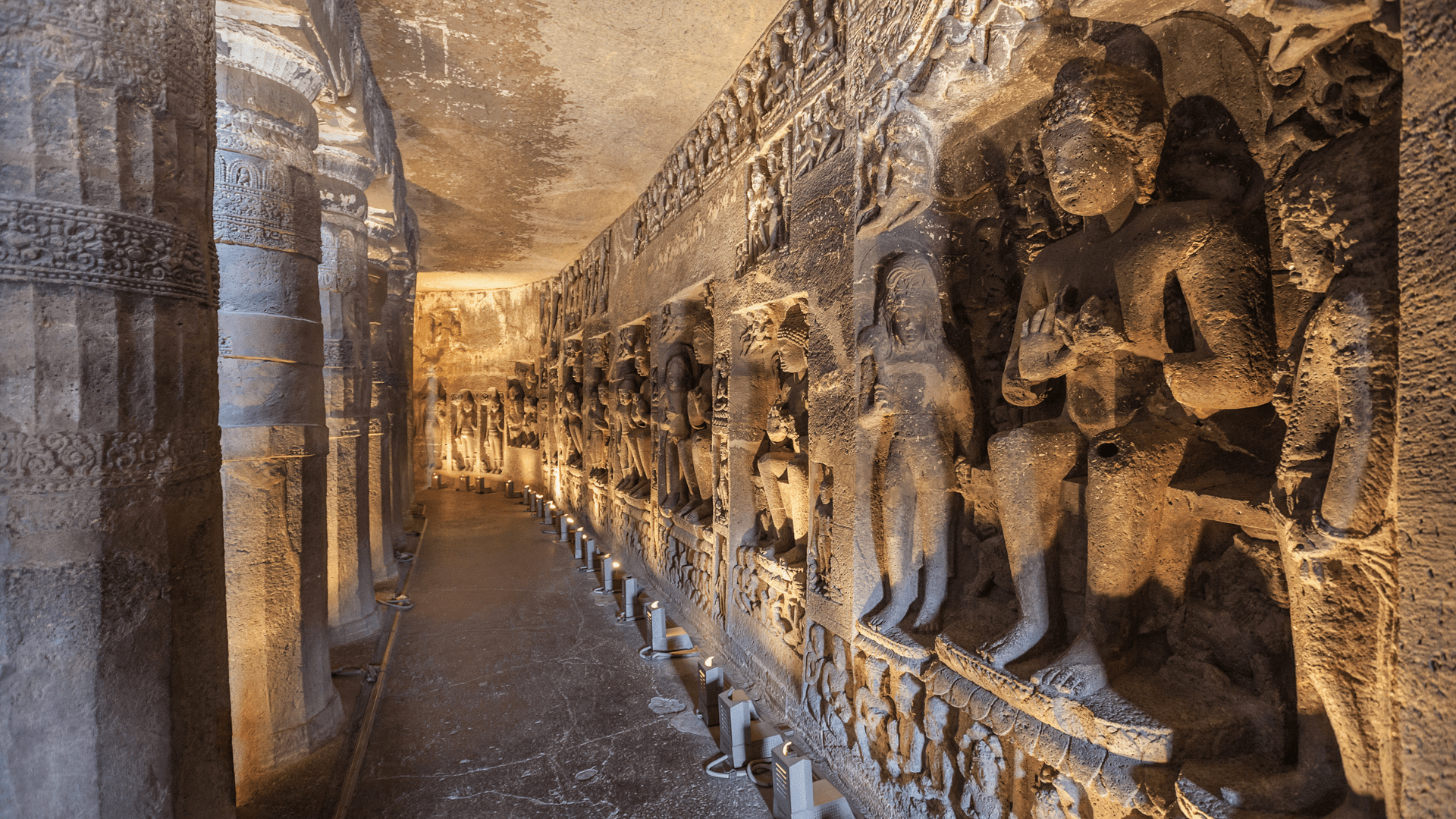
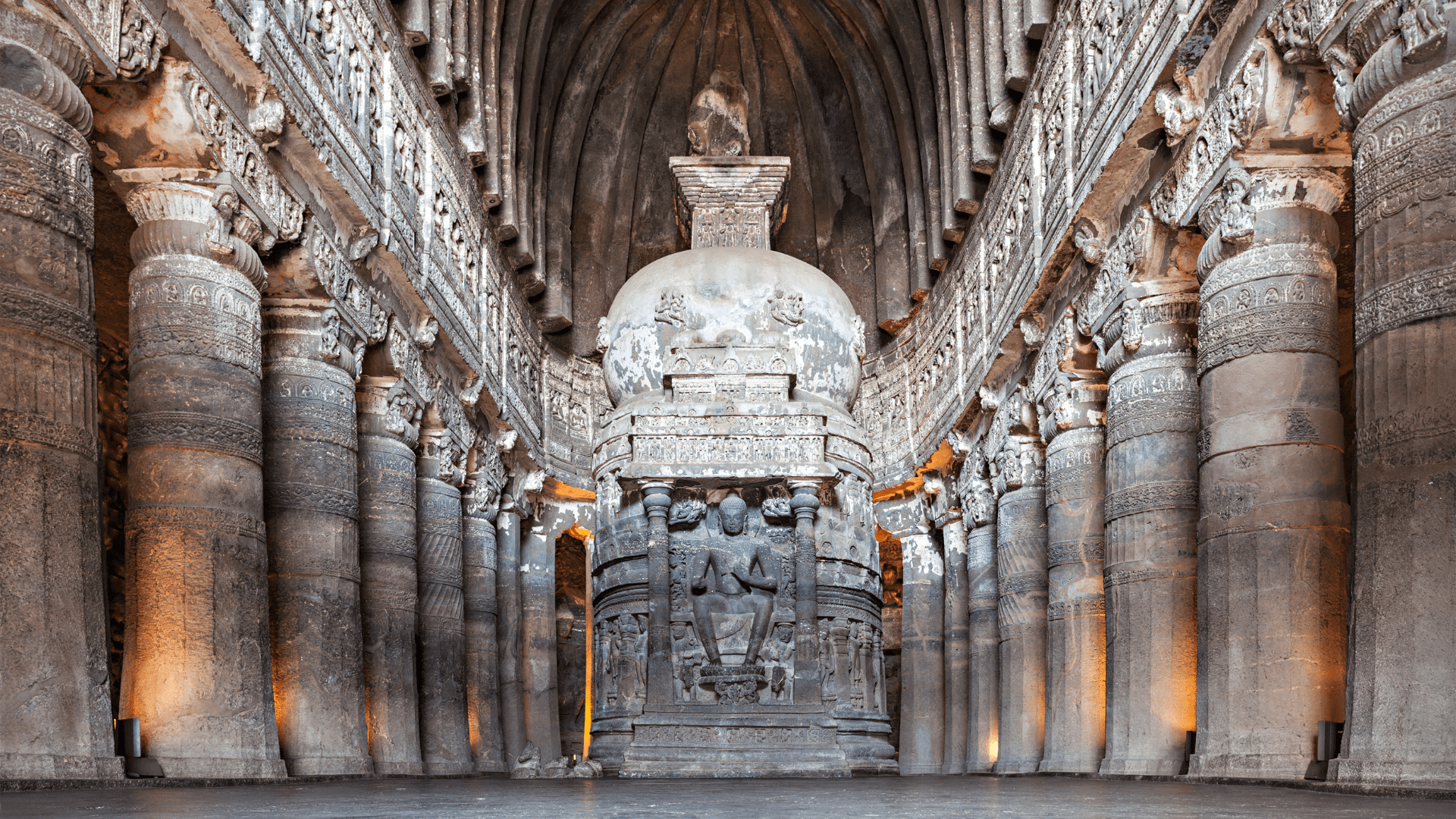
- Walk Ajanta’s horseshoe cliff of thirty caves, Buddhist prayer halls cut from rock in the 2nd century BCE.
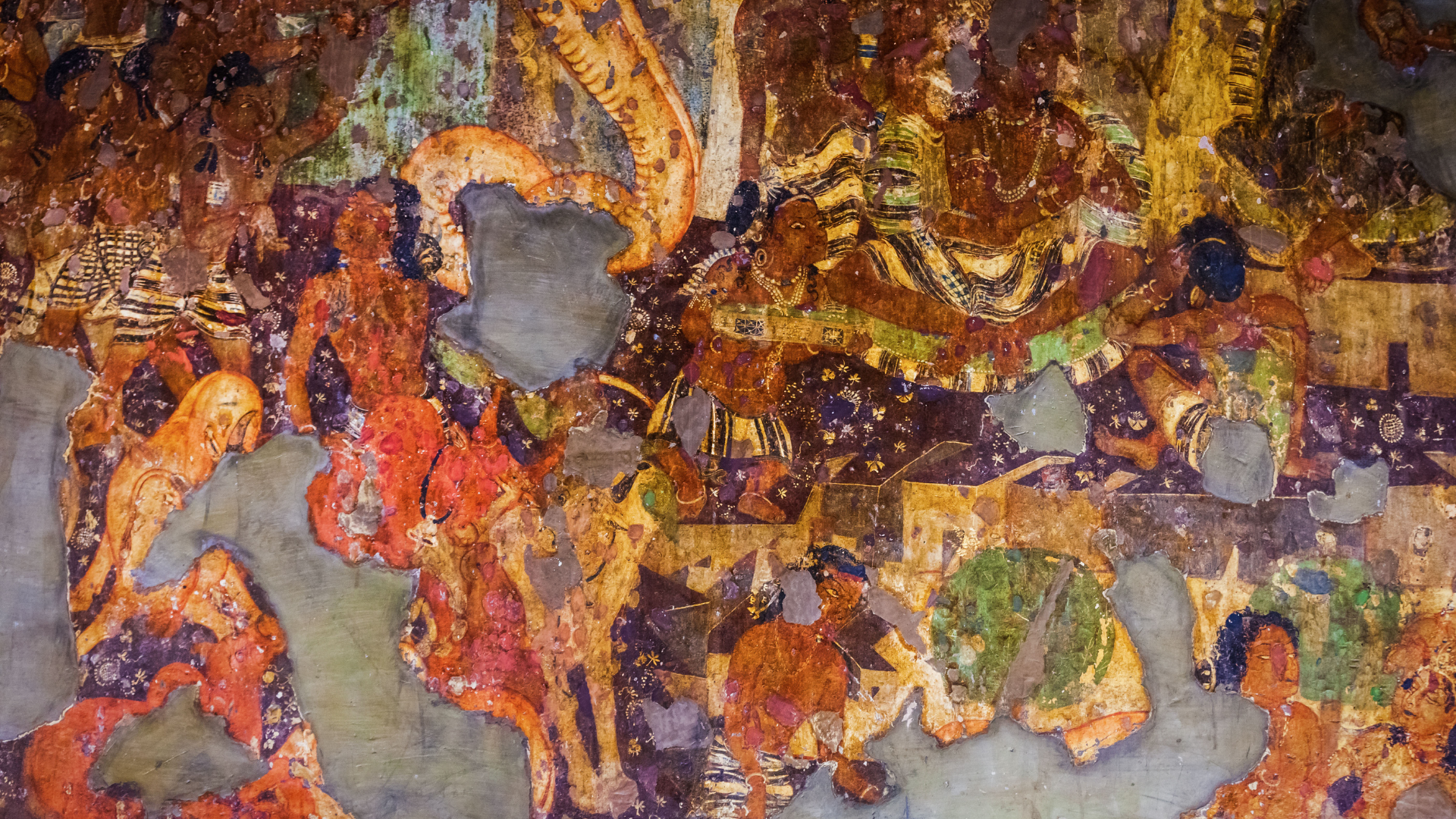
- Study the Ajanta murals by low light — court scenes and Jataka tales still holding their colour.
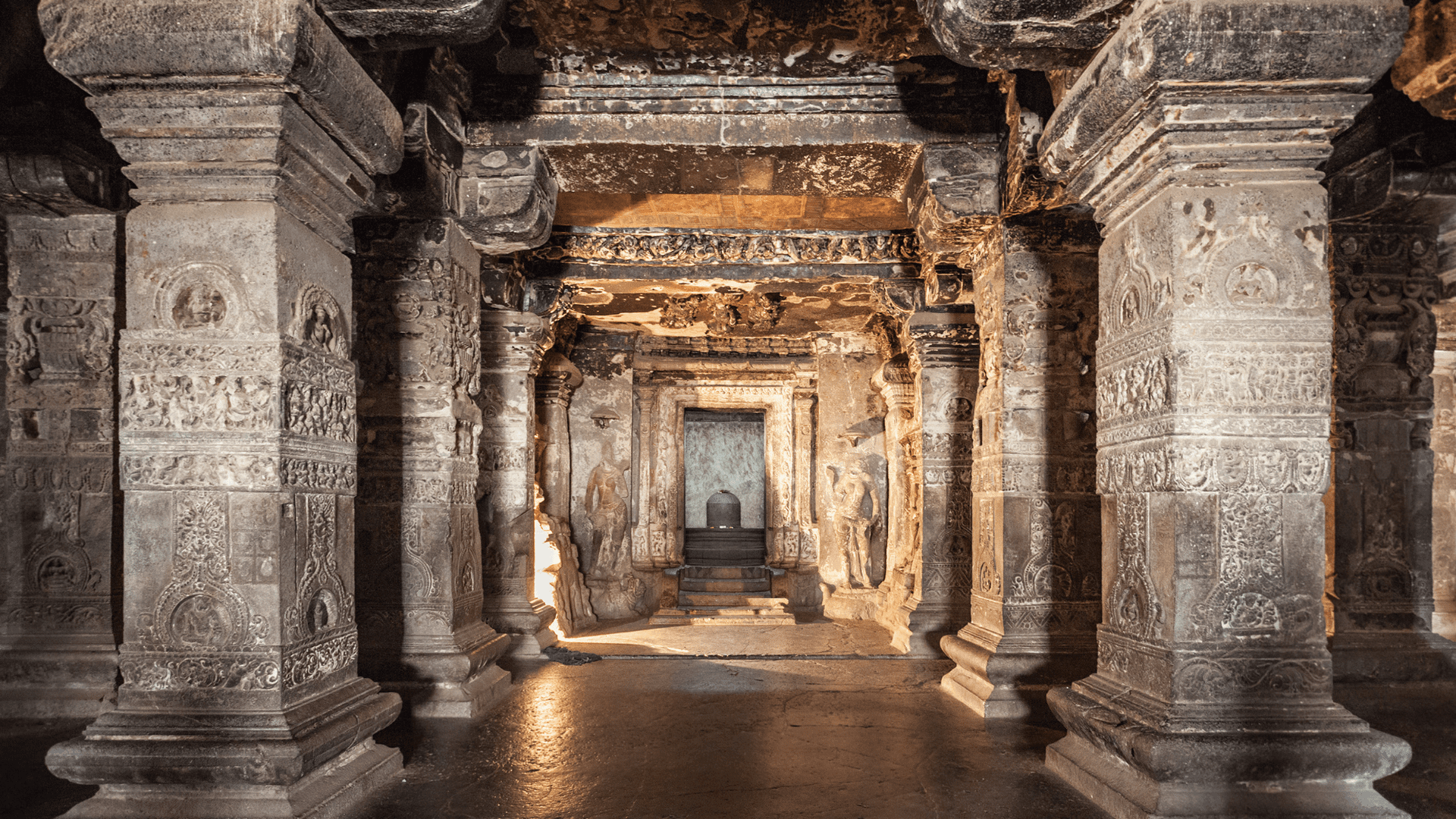
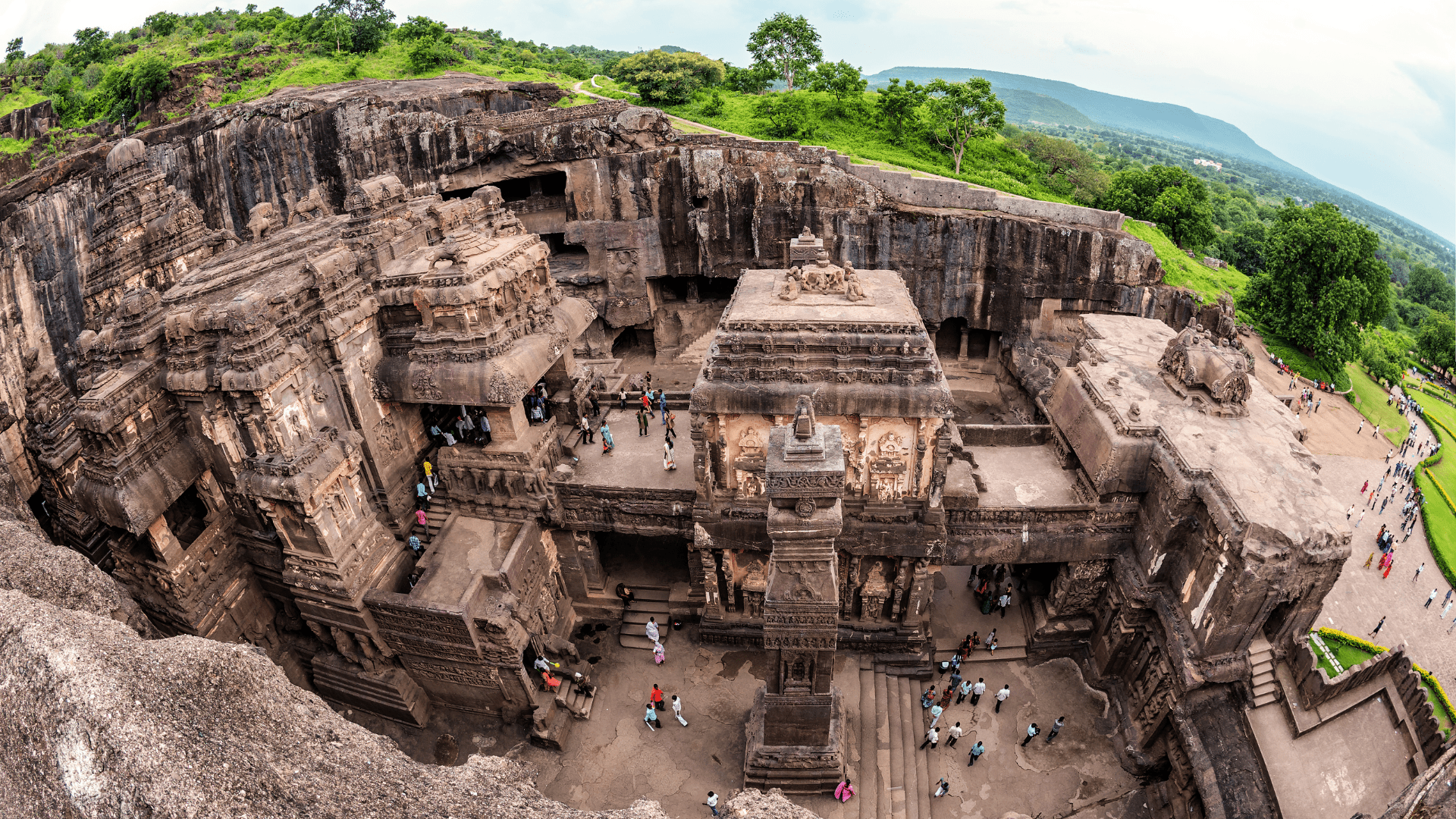
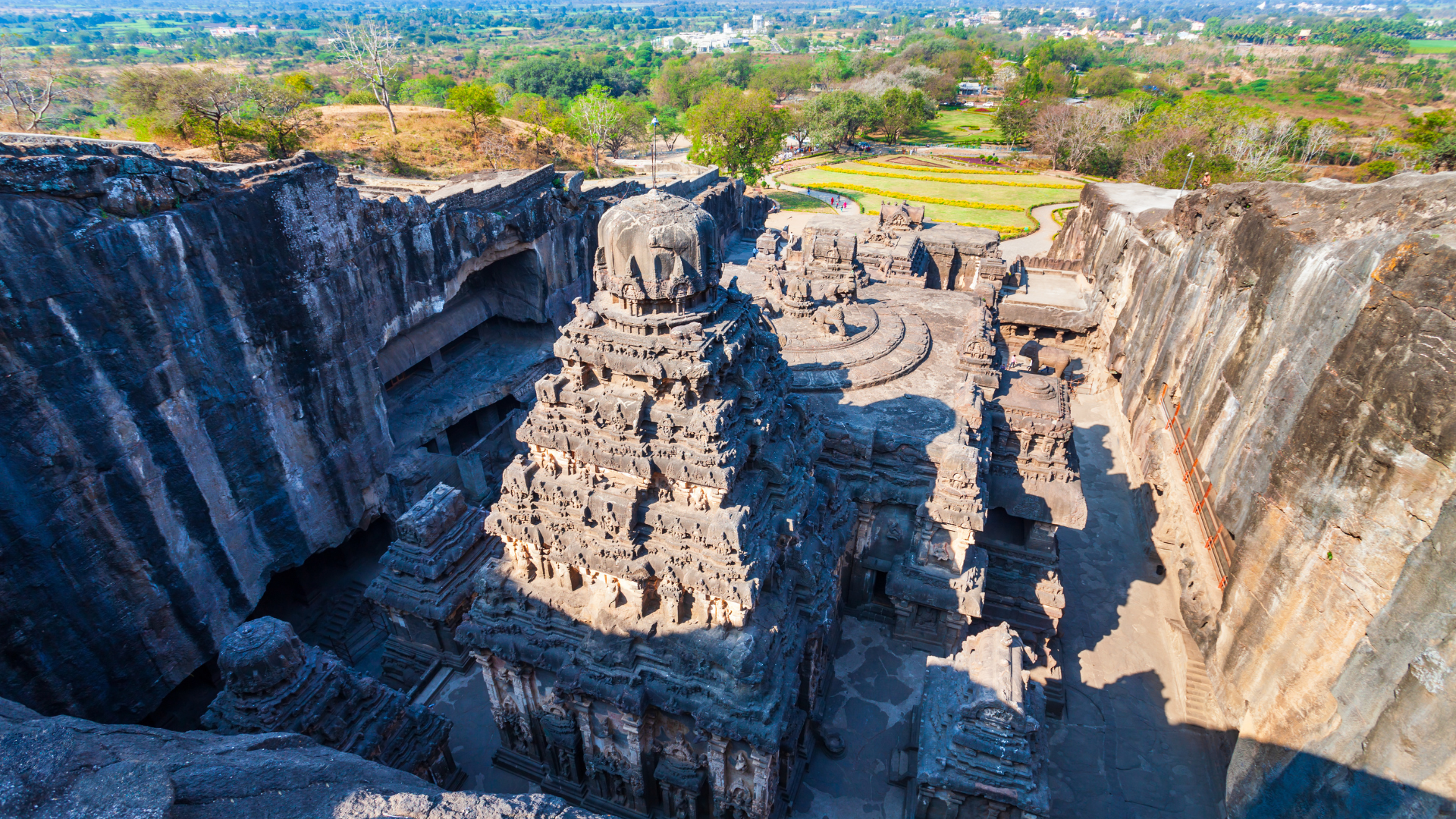
- Stand in Ellora’s Kailasa temple, the largest monolith on earth, carved downward from a single cliff.
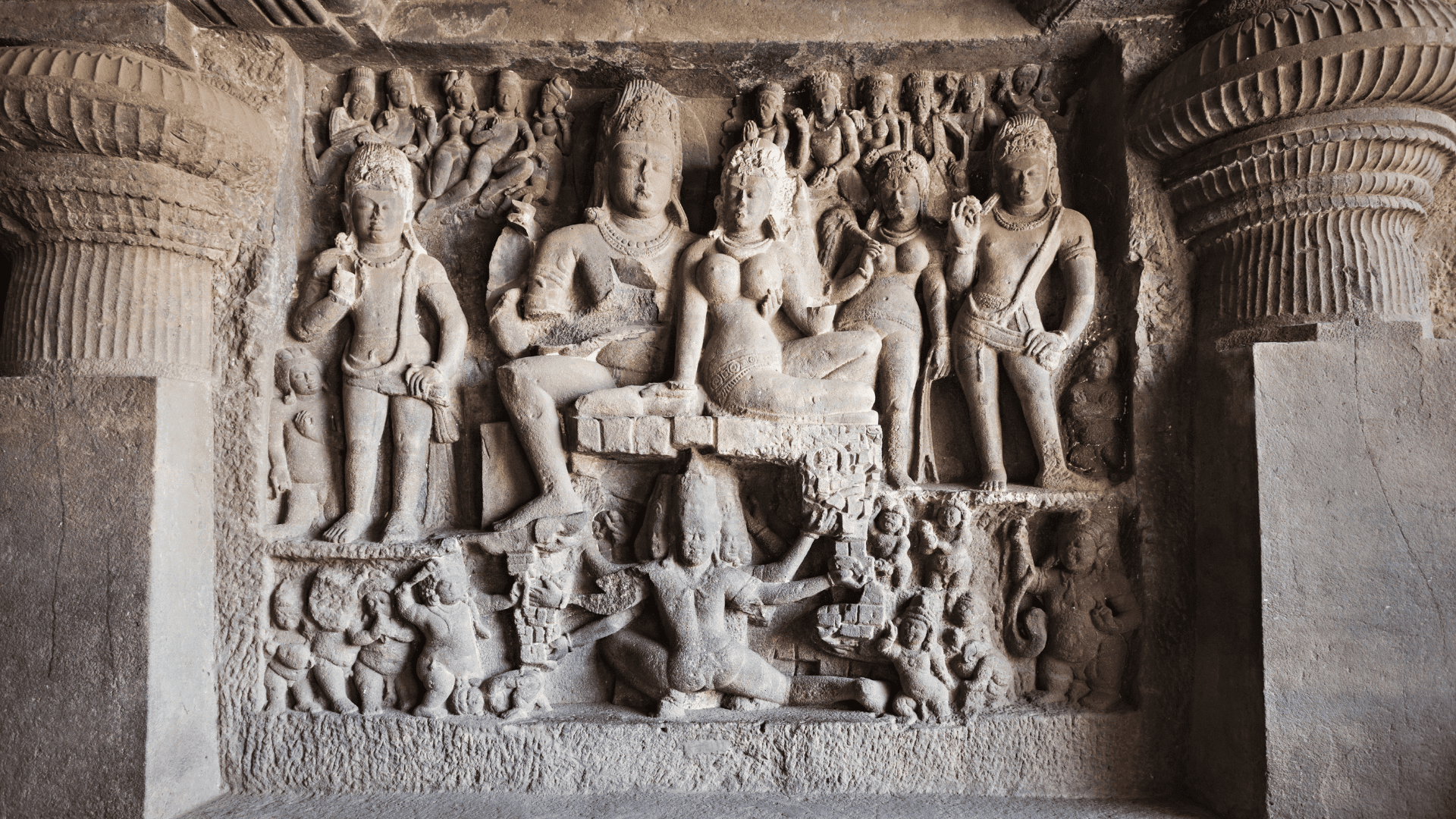
- Trace Ellora’s Buddhist, Hindu and Jain caves in one row — three faiths, one basalt escarpment.
- Base in Aurangabad, near the Bibi Ka Maqbara, a smaller Taj built by Aurangzeb’s son.
- Time it right: Ajanta closes on Mondays, Ellora on Tuesdays, so the routing matters.
- Visit the Daulatabad hill fort, a twelfth-century citadel with a spiral defensive passage cut through rock.
 Aurangabad, Ajanta, Ellora
- Ancient, Monumental, Quiet
- 3 Nights / 4 Days
- Priced to Your Brief
- Aurangabad Hotels
- Rock-Cut Caves


CUT FROM SOLID ROCK
Three nights around two of the greatest works of human hand in India — the painted Buddhist caves of Ajanta and the rock-cut temples of Ellora. Both are UNESCO sites, both are quieter than their fame suggests, and both need a proper guide to come alive. Aurangabad, now Chhatrapati Sambhajinagar, is the base for each.
You give Ajanta a full day — thirty caves along a cliff, the murals its whole point — and Ellora another, centred on the Kailasa temple. Between them: Daulatabad fort’s spiral rock passage, Bibi Ka Maqbara, and the Panchakki water mill. The two cave sites close on different days, so the sequencing is deliberate, not accidental.
This is the Deccan plateau — flat black-soil country broken by basalt ridges, hot and dry outside the monsoon. Ajanta hides in a river gorge you don’t see until the last turn; Ellora runs along an open escarpment. The caves stay cool inside even when the plateau bakes, and the murals demand you let your eyes adjust.
Some moments are built for lingering: the first painted Buddha emerging from Cave 1’s dark as your eyes adjust; the moment you grasp that Kailasa was carved top-down, removing two hundred thousand tonnes of rock; and the quiet of Ajanta’s gorge, where the only sound is river water far below the caves.
Built for history, art and architecture lovers who want the real thing over the checklist. Not for anyone needing beaches, nightlife or luxury resorts — Aurangabad is a functional base, not a destination. And the walking is real: Ajanta’s caves climb, and shade is scarce between them.

Good to
know
Which day should we visit each site, given the closures?

Ajanta is closed on Mondays and Ellora on Tuesdays, so we never schedule either on its off-day. A typical plan visits Ellora and Daulatabad one day and Ajanta the next, keeping arrival and departure days clear. Ajanta is about two and a half hours from Aurangabad; Ellora is under an hour. We build the routing around both closures.
Are the Ajanta paintings still visible, or too faded to matter?
What does this journey cost per person?
Let's design
your version
Tell us your dates, group and budget and we’ll shape this journey around them. Everything is priced to your brief and planned on a call, never pulled off a shelf.