


A visit to CERN can help students understand how scientists investigate the fundamental building blocks of matter, test theories about the universe and develop the complex technologies required for particle physics. Through exhibitions, guided tours and age-appropriate workshops, students can explore particle accelerators, detectors, antimatter and the relationship between theoretical predictions and experimental evidence. Located […]
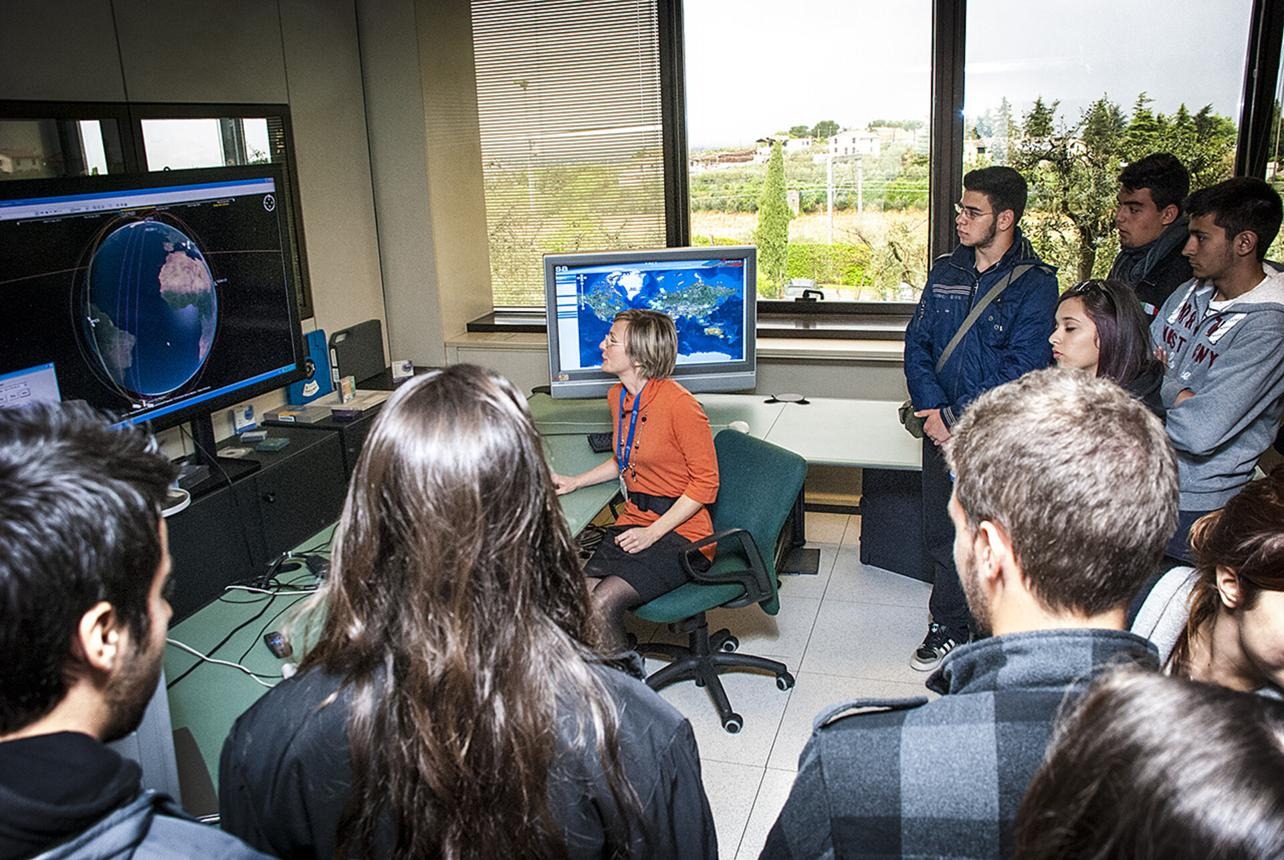
Space centers inspire students by turning abstract science into something they can observe, question and apply. When students encounter spacecraft, explore the engineering behind a mission or build a robotic model, subjects such as physics, mathematics, computing and engineering become more tangible. STEM education through travel works best when a visit is connected to classroom learning, includes purposeful activities and gives students a chance to reflect on what they discover.
For schools considering an educational trip, a space center can offer more than an exciting day out. It can help students understand how scientific ideas become real technologies, explore potential career paths and see space exploration as a field shaped by human decisions and problem-solving.
Why do space centers make science easier to understand?
Science lessons often begin with diagrams, equations and explanations. These are essential, but students may struggle to picture the scale of a rocket, understand how a satellite is assembled or imagine the conditions involved in working beyond Earth.
A space center provides a physical context for those concepts. A spacecraft exhibit can prompt questions about materials and structural design. A launch simulation can introduce forces, motion and timing. A demonstration involving robotics can help students connect programming with the movement of a physical object.
The value lies in connecting what students see to what they already learn in class. A visit becomes more meaningful when a teacher asks students to identify the scientific principle behind an exhibit, explain how a system works or compare an engineering challenge with a problem they have studied.
NASA’s Kennedy Space Center STEM programme describes its purpose as helping students explore the agency’s missions and develop an interest in STEM through educational opportunities. Its approach places space exploration within a broader learning pathway, rather than treating it only as a visitor attraction.
What can students learn at a space center?
The specific learning outcomes depend on the centre, the student’s age and the activities included in the visit. A well-designed programme can connect several classroom subjects to practical questions.
Physics and mathematics
Students can investigate thrust, gravity, motion, orbital paths and the calculations involved in planning a mission. Exhibits can help them see why measurements, precision and testing matter in aerospace engineering.
Robotics and engineering
Building a rover or robotic arm introduces design constraints. Students must consider movement, stability, control and how a machine might operate in an unfamiliar environment. A structured challenge also gives them a reason to test and improve their designs.
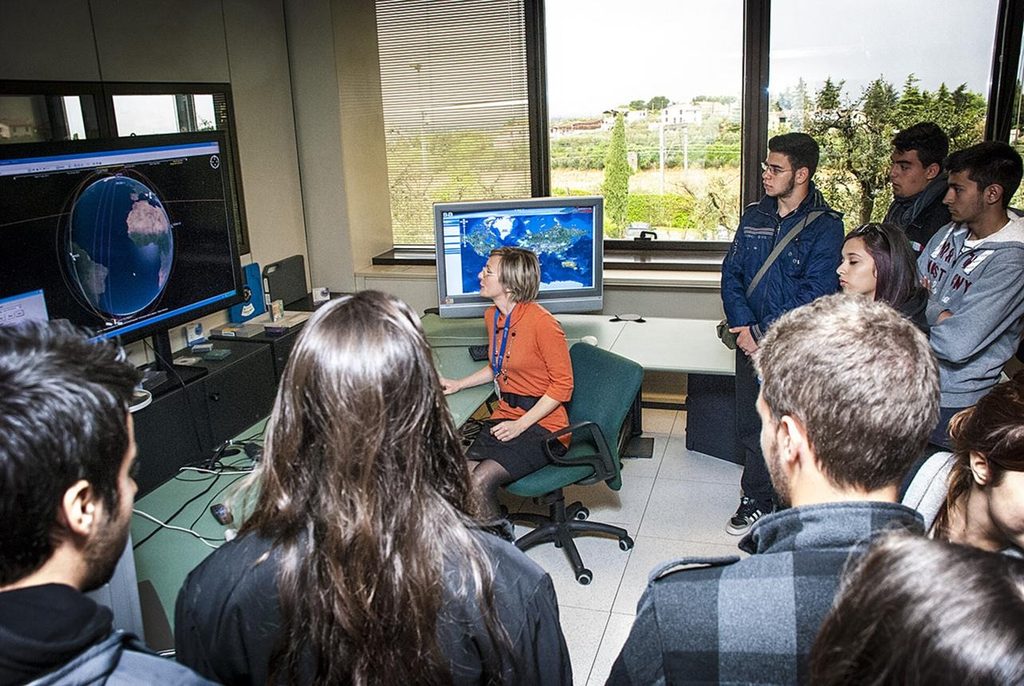
Earth and space science
Satellite imagery, astronomy displays and mission exhibits can help students explore weather, climate, planetary systems and the role of observation in scientific research.
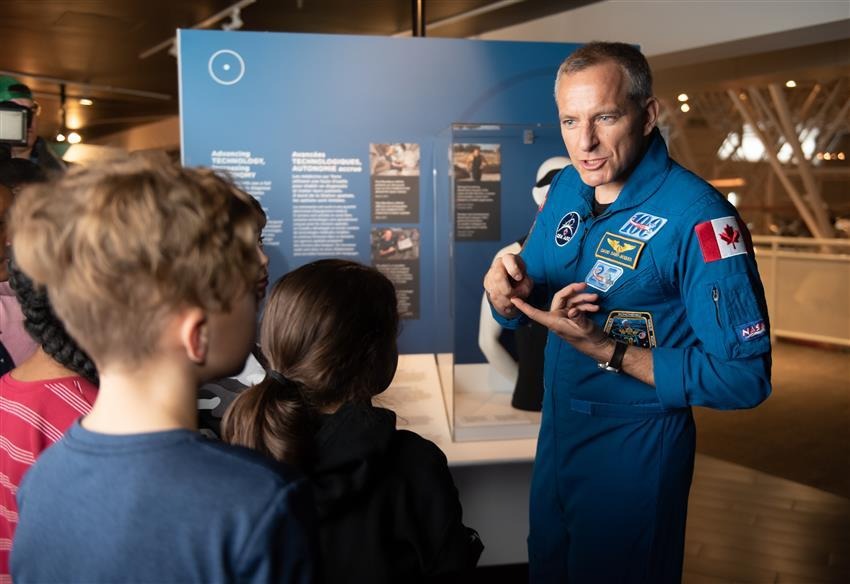
Communication and collaboration
Group challenges encourage students to explain decisions, listen to different approaches and work towards a shared objective. These are useful skills in scientific and technical work, where complex projects rarely depend on one person alone.
A visit does not automatically deliver all these outcomes. Schools should examine the actual programme and distinguish between guided exhibitions, demonstrations, workshops and access to specialist facilities. These are different experiences, and the learning opportunities vary accordingly.
How does STEM education through travel differ from classroom learning?
Travel changes the setting in which students encounter a subject. Instead of learning only from a textbook or screen, they can see the institutions, objects and environments connected to the topic.
This can make a lesson easier to remember because students have a concrete experience to refer to later. It can also lead to questions that may not emerge during a conventional lesson. A student who sees a spacecraft may become curious about thermal protection, communication systems or the people responsible for different parts of a mission.
The educational value depends on preparation. Before the visit, teachers can introduce the relevant concepts and ask students to prepare questions. During the trip, a worksheet or guided challenge can direct attention towards the intended learning outcomes. After returning, students can explain what they learnt through a presentation, project or written reflection.
NASA’s Office of STEM Engagement reported that more than 704,000 student participants took part in its STEM engagement activities during fiscal year 2025. This figure covers NASA’s wider STEM engagement portfolio, not space-centre visits alone, but it demonstrates the scale of the agency’s investment in connecting students with science and aerospace learning.
Which space centers and programmes should schools consider?
The right destination depends on the curriculum, age group, budget, available time and the level of practical participation a school wants.
Kennedy Space Center, USA
Kennedy Space Center is relevant for students interested in space missions, robotics and aerospace. Picknic’s NASA Space School at Kennedy programme is designed around a three-day Space School experience within a ten-day educational journey.
According to the programme description, students build lunar rovers and robotic arms, take part in a robotics competition and attend an astronaut question-and-answer session. The itinerary also includes a guided facilities tour and visits beyond the Space School.
The distinction between activities matters: an astronaut presentation is not private laboratory access, and a guided tour does not mean students enter restricted operational areas. Schools should review the precise itinerary and inclusions before making a decision.
India’s space and aerospace story
A domestic journey can connect students with the development of India’s space programme. Picknic’s India’s Space Story programme combines Bengaluru’s science and aerospace institutions with the Thumba coast in Kerala.
The itinerary describes visits to the Visvesvaraya Industrial and Technological Museum, Jawaharlal Nehru Planetarium and HAL Aerospace Museum, along with an exhibition-hall visit through ISRO’s student-visit channel. Picknic explicitly distinguishes these visits from access to clean rooms, assembly halls or restricted facilities.
For schools seeking a shorter journey or a closer connection to India’s scientific history, this can be a useful starting point for a STEM-focused programme.
Science and technology immersion programmes
A space-themed journey does not have to focus exclusively on rockets. Picknic’s science lab immersion programme describes a route connecting Bengaluru, Singapore and Tokyo through science-centre galleries, demonstrations and selected institutional visits.
This broader approach can suit schools whose objectives include robotics, applied physics and technology. Schools should confirm which activities are guided visits and which involve a separately booked workshop with an instructor.
What makes a space-center visit educational rather than just entertaining?
The answer is the learning design around the visit.
A school should define what students are expected to understand before selecting the destination. For example, a programme focused on engineering design could ask students to identify the constraints a rover must operate within, sketch a solution and explain why they selected particular features.
For a programme focused on astronomy, students might maintain an observation journal, compare what different instruments reveal or prepare questions about how scientists interpret data. The activities should match the students’ age and prior knowledge.
The trip should also allow enough time for students to engage with the subject. A schedule packed with attractions may leave little room for discussion or reflection. A focused itinerary with fewer, better-connected visits can provide a stronger educational experience.
NASA’s STEM resources include hands-on activities, educator materials and student challenges, which teachers can use to support learning before and after a visit.
How can schools measure space center learning outcomes?
Learning outcomes should be defined before departure, not added after the trip.
Schools can evaluate progress through short pre-trip and post-trip questions, student project work, group presentations or reflection journals. The aim is not to claim that a single visit guarantees higher grades or a future career in science. It is to understand whether students gained knowledge, developed questions or applied a concept in a new context.
A practical evaluation plan might include:
- Subject understanding: Can students explain a scientific principle they encountered?
- Application: Can they use that principle to describe a design or solve a related problem?
- Curiosity: Have they developed more specific questions about space science or engineering?
- Reflection: Can they describe which part of the visit changed or extended their understanding?
Teachers can use these observations to decide what to revisit in class and whether a similar programme would suit future cohorts.
What should schools check before booking a STEM educational trip?
The destination is only one part of the decision. Schools should also check the learning plan, access arrangements and operational details.
Ask the provider for a written itinerary, programme-specific outcomes and clarity on which activities are confirmed. Check travel documents and visa requirements early for international journeys. Review accommodation, transport, medical arrangements, insurance and the process for updating parents. The school should also understand the responsibilities of its accompanying staff and the tour team.
Picknic’s educational travel programme describes a planning process that includes consultation with school coordinators, a proposal for trustees and parents, parent orientation, pre-trip briefings and a post-trip debrief. Its published safety framework also outlines tour management, medical planning and parent communication. Schools can use these details as a starting point for their own due diligence.
Make space science part of the learning journey
Space centers can give students a memorable way to connect classroom concepts with the work of scientists and engineers. The strongest educational trips do more than show students impressive machines: they give students a reason to investigate how those machines work and time to reflect on what they have learnt.
For schools exploring STEM education through travel, Picknic offers programmes focused on NASA and space science, India’s aerospace history and broader science immersion. Explore Picknic’s educational journeys to discuss a programme that fits your students’ age group, academic objectives and school calendar.
Continue Reading
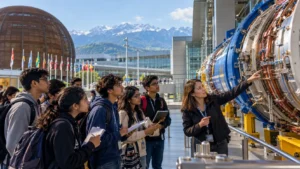
Europe is an excellent destination for science education tours because students can study scientific discoveries, explore interactive museums, encounter industrial engineering and visit institutions connected to contemporary research within the same trip. From the Deutsches Museum in Munich to CERN near Geneva, the continent offers opportunities to connect physics, chemistry, astronomy and engineering with the […]
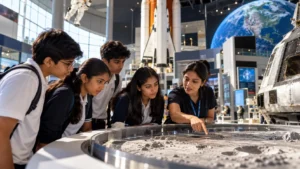
NASA education programs help students connect classroom science with real space missions, engineering challenges, Earth observation and scientific research. Depending on their age and the programme, students may investigate planetary environments, design and test engineering solutions, explore satellite data or work with mentors on research projects. For school groups, an educational visit built around NASA-related […]