


A traveller's account of doing the Uttarakhand Char Dham twice — once badly in June, once properly in September. Registration, health, helicopters and the stops packages drive past.
My father-in-law died in 2019, and in the way of these things a small brass pot of Ganga water from Kashi ended up in our house in Lucknow and stayed there for six years, on a shelf, behind the mixer.
I knew what it was for. Everyone in the family knew what it was for. Nobody had done it, because doing it meant going to Rameswaram, and Rameswaram is 2,500 kilometres away at the other end of the country, in a state where we did not speak the language and had never been.
Last winter my husband and I finally went. I want to write about it for other North Indians, because we arrived knowing almost nothing and got almost everything wrong in the first six hours.
Why do North Indians go to Rameswaram?
Because the pilgrimage is not finished without it. Rameswaram is the southernmost of the twelve Jyotirlingas and the southern anchor of the original all-India Char Dham — the only site in India that is both. And there is a living ritual axis between it and Kashi: pilgrims carry Ganga water from Varanasi to offer at the Ramanathaswamy lingam, and carry Rameswaram sand back to immerse in the Ganga. Many families do the two legs across two trips, years apart. Ours took six.
Nobody had ever explained this to me as a journey. It had always been described as a place. It is not a place, it is the other end of something.
The first six hours, in which I got everything wrong
We arrived at the temple at nine in the morning in the clothes we had travelled in, which for my husband meant jeans and a shirt with a leather belt, and for me a salwar kameez I was quite pleased with.
No leather. At all. Belt, wallet, watch strap. He had to go back to the room.
Then a man attached himself to us and quoted six hundred rupees a head for the 22 theerthams, and because I had absolutely no idea what the real price was, I nearly paid it.
The official ticket is ₹25 per person. There is an express version at ₹150. I found this out afterwards, from a website, sitting on the hotel bed feeling foolish. So I am going to put it in bold here so that the next person from Lucknow has the number in their head before a man says six hundred: ₹25.
The 22 theerthams, which nobody had prepared me for
I had read the phrase “22 holy wells” and formed a mental picture of walking politely past twenty-two wells.
What actually happens is this. You begin outside the temple in the sea — Agni Theertham, directly opposite the eastern entrance — and you get in, fully. Then you enter the temple wet and go well by well, and at each one a temple assistant hauls up a bucket and throws it over your head.
Twenty-two times.
By the fourth well I had stopped trying to protect my hair. By the tenth I was laughing. By the fifteenth I was doing that thing where you gasp before each one, and so was everybody around me, including two enormous men from Andhra and a grandmother from somewhere in Karnataka who was getting the sprinkled version and looked deeply unimpressed about it. It ends at Kodi Theertham, and you come out of it soaking, freezing in the shade, laughing, on stone floors, with a thousand strangers.
I have been to a great many temples. I had never in my life been wet in one.
Carry a full change of dry clothes. Everything you are wearing will be soaked. Leave your phone and wallet with someone. You cannot enter the sanctum in wet clothes — you change first, then go for darshan.
And the thing I most want to say to North Indian men: you will be expected to be bare-chested, in a veshti and angavastram, for this. My husband, who has never in his life removed a shirt outside a doctor’s room or a swimming pool, was blindsided. You can rent or buy the set at the gates for somewhere between ₹50 and ₹150. Do it before, not during.
The corridor
The other thing I was not ready for.
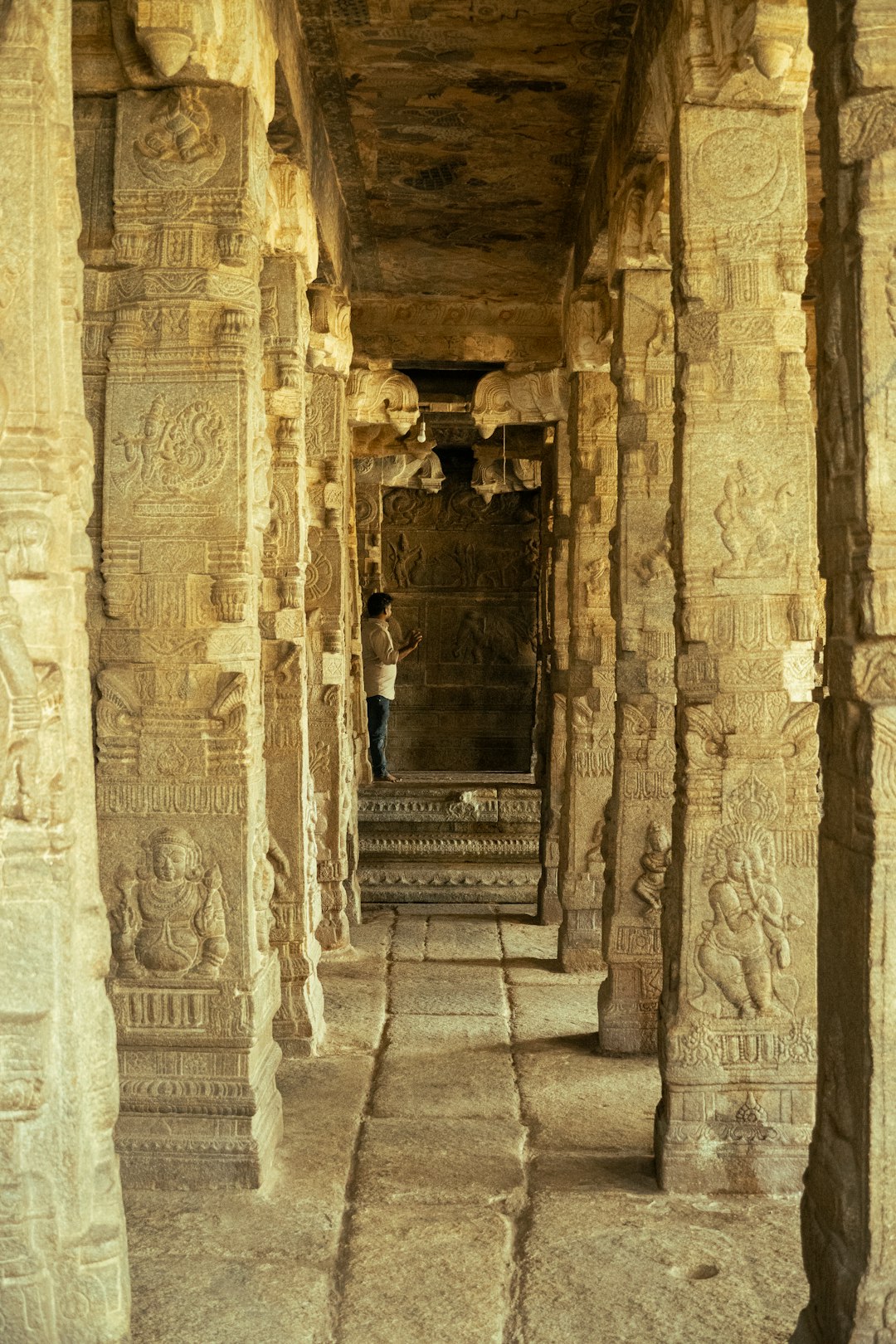
Ramanathaswamy’s third corridor runs about 3,850 feet — a little over a kilometre — carrying roughly 1,212 carved pillars. It is described everywhere as the longest temple corridor in India and is widely claimed as the longest in the world, and I am told the claim is reputational rather than measured, so let me just describe standing in it: the pillars go away from you in both directions until they stop making individual sense and become a rhythm, and the light comes in sideways in bars, and there is no photograph of it because photography is prohibited inside, which I resented for about ninety seconds and then was grateful for.
The bridge, which I would now travel for on its own
We went on to Madurai by road, and this was my one real regret.
Take the train at least one way. The road bridge and the railway bridge run parallel across the sea between Mandapam and Pamban, and only the train crosses the new Pamban vertical lift bridge — India’s first vertical lift railway sea bridge, 2.07 kilometres long, with a 72-metre span that rises to let ships through, inaugurated in April 2025. The old bridge, opened in 1914, ran for over a century and was closed in December 2022 when corrosion finished it; local campaigners want it preserved. It is still standing there alongside, which is the photograph.
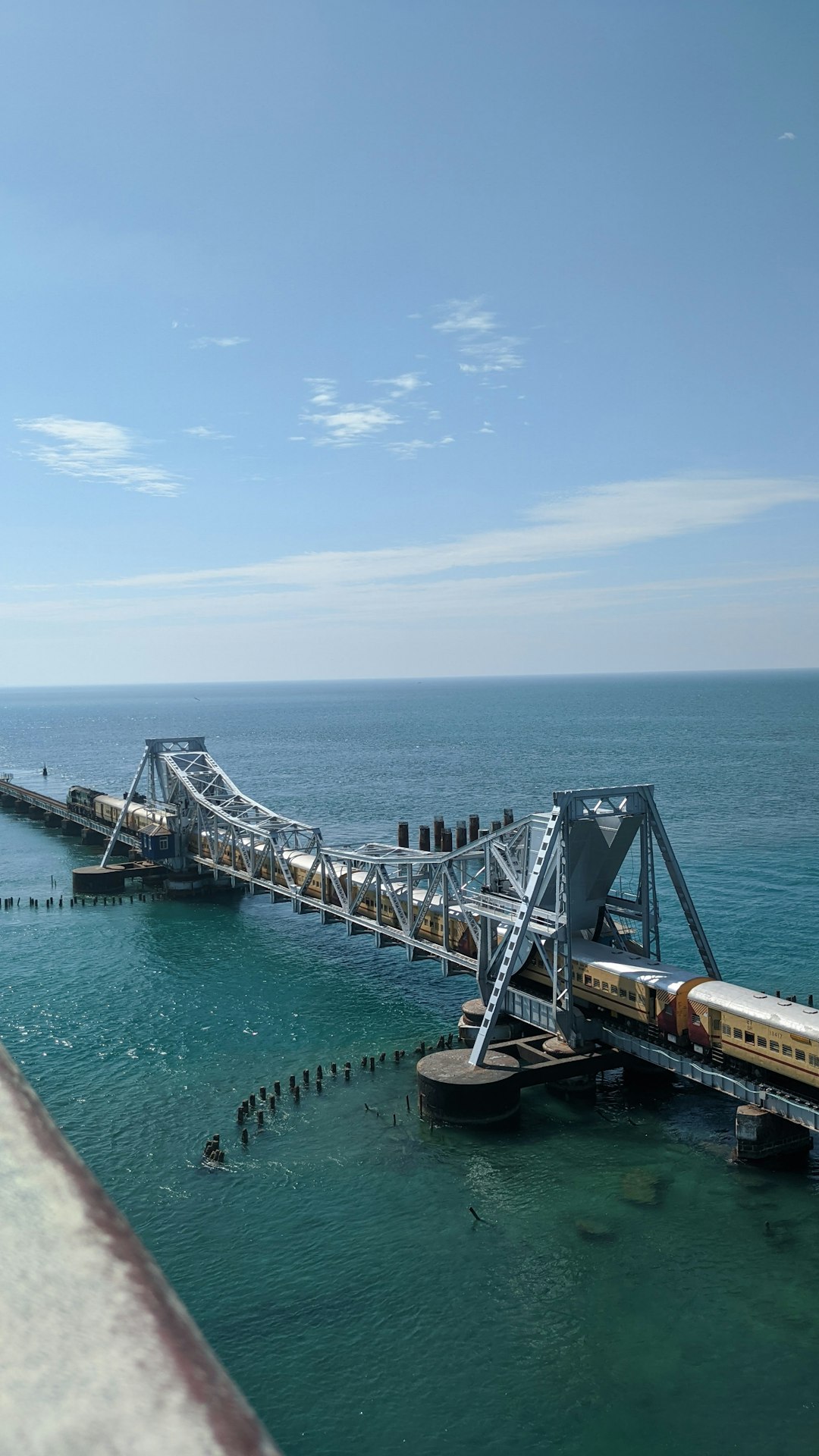
If you drive, you cross on the road bridge and you see the railway bridge from the side, which is not the same thing at all.
(In fairness I should note what I read later: the Commission of Railway Safety flagged construction concerns on the new bridge, including welding deviations, and it operates under sanctioned speed limits. I mention it because it is on the record, not because it stopped me wanting to go back and do it by train.)
Dhanushkodi
Twenty kilometres from Rameswaram, about half an hour, and I would not have gone if a hotel manager had not insisted.
It is a town that was destroyed by a cyclone on 22 December 1964. More than eighteen hundred people died. A passenger train carrying over a hundred people was swept away by the surge. The place was declared unfit for habitation and simply left, and what is there now is a railway station with no roof, a church with no walls, sand, and the Bay of Bengal meeting the Indian Ocean.
At Arichal Munai, the tip, the land narrows to about forty-five metres and then stops, and Sri Lanka is thirty kilometres away, and you can see the shoals of Ram Setu going out towards it like a sentence trailing off.
Open 6 a.m. to 6 p.m.; no overnight stays; police clear all vehicles before dark. No entry fee. Go early. There is no shade at all and by eleven it is unbearable.
Madurai, and the ceremony I nearly missed
We were leaving Madurai on an evening train and had planned to see the Meenakshi temple in the morning and be done.
A woman in a shop selling jasmine told me we were being stupid.
Every night, between 9.30 and 10.30, the metallic footprints of Sundareswarar — Shiva — are carried in a palanquin from his sanctum to Meenakshi’s bedchamber, so that the divine couple spend the night together. In the morning a puja wakes them and he is walked back.
I moved the train. I am not a sentimental person and I have thought about that hour more than almost anything else in the last two years. A god who is married into the city, who does not sleep in his own shrine, who is escorted to his wife every night with drums, for centuries, without interruption. Madurai does not have a deity presiding over it. It has a couple living in it.
A few practical things about Meenakshi that catch every North Indian visitor:
Phones are banned. Not “discouraged in the sanctum” — assume you cannot take yours in at all, and use the deposit counters. Enforcement is much stricter than the internet suggests.
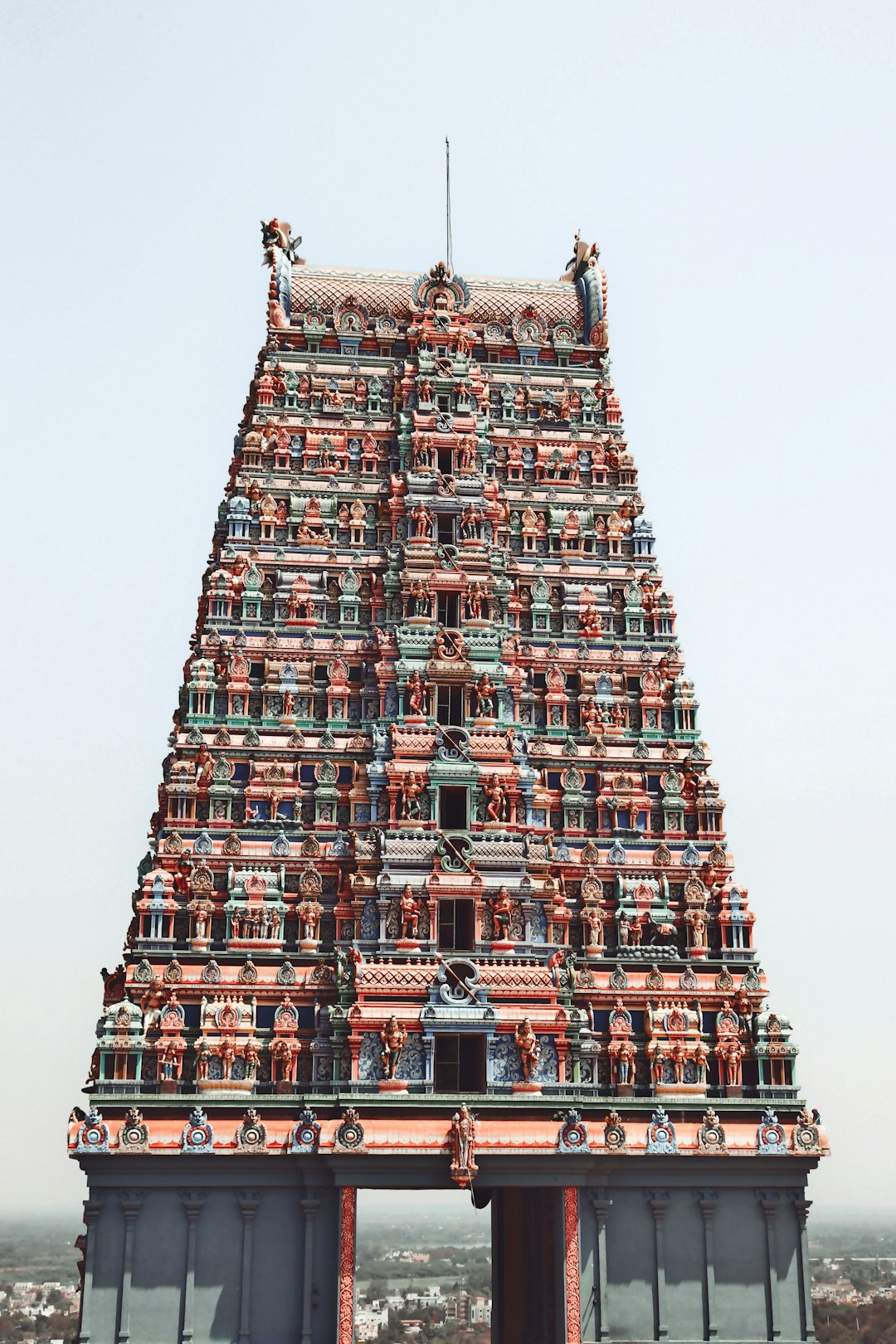
There are fourteen gopurams, the southern one 170 feet tall with over fifteen hundred figures on it. The Thousand Pillar Hall has 985 pillars, not a thousand, and some of them are musical and sound a note when struck. The Golden Lotus Tank is about 50 metres by 37.
The temple runs 5 a.m. to 12.30 p.m. and 4 p.m. to 10 p.m., every day of the year, and queues close well before the shutters do.
What I would say to someone from Delhi or Lucknow or Patna
Go in January or February — October to February is the season, March to June is brutal, and the north-east monsoon can be wet in October and November. Understand that Chithirai in April is the great festival — the wedding of Meenakshi and Sundareswarar, and Kallazhagar riding into the Vaigai river — and also the worst heat of the year, and that Madurai sells out for it months ahead.
Learn vanakkam and nandri. Use English rather than Hindi — it will get you further, and more warmly, and there are reasons for that which are not yours to litigate on a four-day trip.
Take the change of clothes. Know the ₹25. And carry the bottle, if you have one on a shelf behind the mixer.
We took the sand back. It went into the Ganga at Kashi in March. Six years and 2,500 kilometres, and the whole thing fitted into a cloth bag.
Frequently asked questions
What is the 22 theertham ritual and how much does it cost?
Twenty-two sacred wells inside the Ramanathaswamy temple, said to represent the 22 arrows in Rama’s quiver. You begin with a dip in the sea at Agni Theertham outside the eastern entrance, then move from well to well inside, where temple assistants pour a bucket of water over your head at each. It ends at Kodi Theertham. The official ticket is ₹25 per person, or ₹150 for the express service — guides and pandas routinely quote several hundred, so know the real price. Allow 45–90 minutes and carry a complete change of dry clothes; you cannot enter the sanctum wet.
What should a North Indian visitor wear at these temples?
At Ramanathaswamy, men are expected in a veshti with angavastram — often bare-chested, which catches most North Indian men by surprise — or trousers with a plain shirt; sets rent at the gates for ₹50–150. Women wear a saree, salwar kameez or a long skirt with a full-length top. No leather at all — belts, wallets, watch straps. Avoid jeans, shorts, sleeveless and tight clothing. At Meenakshi in Madurai, similar rules apply and phones are banned outright, with deposit counters at the entrances.
Should I take the train or drive between Madurai and Rameswaram?
Take the train at least one way. It is about 173 km and 3.5 to 4 hours by road, but only the railway crosses the new Pamban vertical lift bridge — India’s first, 2.07 km long with a 72-metre lifting span, inaugurated in April 2025 — with the 1914 bridge it replaced still standing alongside. If you drive, you use the road bridge and see the railway bridge from the side, which is not the same experience.
What is the Kashi–Rameswaram connection?
A living ritual axis between the two ends of the subcontinent. Pilgrims carry Ganga water from Kashi to offer as abhishekam at the Ramanathaswamy lingam, and carry Rameswaram sand back to immerse in the Ganga at Kashi. The circuit is considered incomplete without both legs, and many families do them across two separate trips, sometimes years apart. Rameswaram is also the only site in India that is both a Jyotirlinga — the southernmost of the twelve — and one of the original all-India Char Dham.
What is the Meenakshi temple’s night ceremony?
The palliyarai, between roughly 9.30 and 10.30 p.m. every night. The metallic footprints of Sundareswarar are carried in a palanquin from his sanctum to Meenakshi’s bedchamber so the divine couple spend the night together; a morning puja wakes them and returns him. It is the most affecting thing in the temple and almost every itinerary schedules a morning visit and misses it. Stay the extra evening.
When is the best time to visit Rameswaram and Madurai?
October to February, with January and February the sweet spot. March to June is very hot and humid, and the north-east monsoon brings rain and occasional cyclones to this coast in October and November. The Chithirai festival at Madurai — the fifteen-day celebration of Meenakshi’s wedding, with the chariot festival and Kallazhagar entering the Vaigai — falls in April, which is both the greatest spectacle and the worst heat. Madurai hotels sell out months ahead for it, so book early or deliberately avoid those ten days.
Our Madurai, Rameswaram and Kanyakumari journey is built with the train leg over the Pamban bridge and the evening at Meenakshi left in rather than cut. Travellers completing the other half of the circuit start at Kashi and Varanasi.
If you have a bottle on a shelf, tell us at the thumbprint. We have planned this trip for a number of families now, and it is never really about the four days.
Continue Reading
A traveller's account of Bodh Gaya, Pawapuri and Patna Sahib, the new ₹550-crore stupa at Vaishali almost nobody knows about, and the two weeks you must not go.