


A Lucknow traveller on the 22 theerthams, the ₹25 ticket nobody tells you about, the new Pamban bridge, and the night ceremony at Meenakshi that changed the trip.
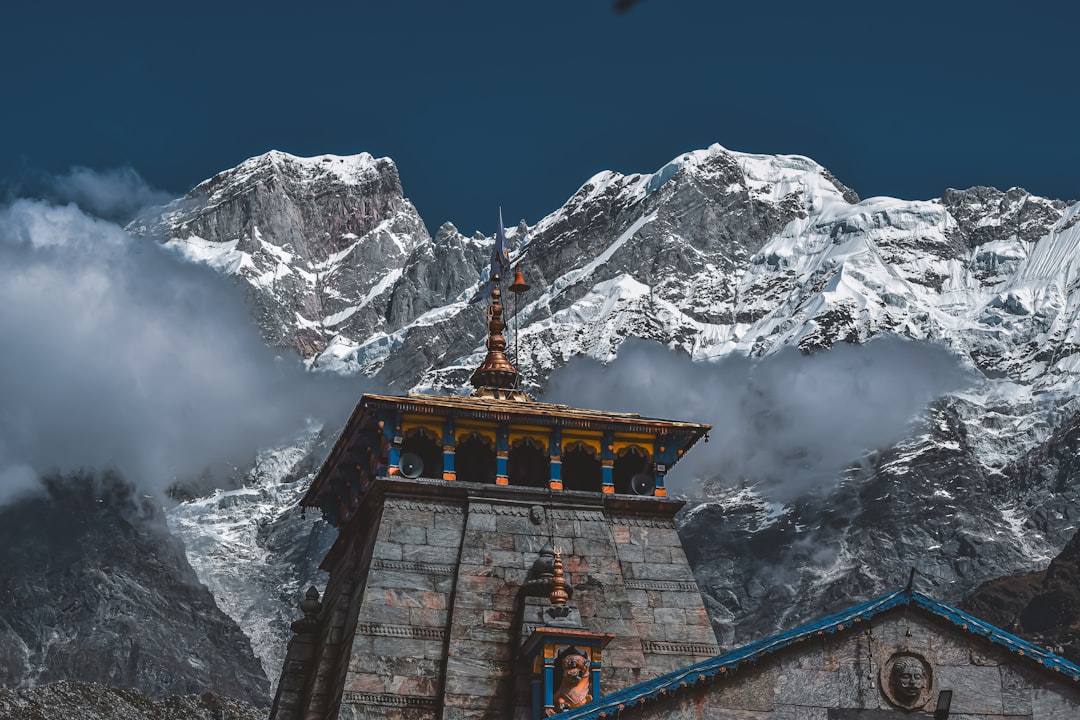
I am sixty-three. I have done the Uttarakhand Char Dham twice, and I would like to describe both, because the difference between them is not money.
The first time was a ten-day package out of Haridwar in the first week of June, in a tempo traveller with fourteen people I did not know. We left before dawn every day, arrived after dark most days, and I remember the yatra mainly as a sequence of vehicle interiors. At Kedarnath I was so anxious about being late back to the group that I did not sit down once. At Badrinath I stood in a queue for two hours and came out with no memory of the darshan itself. I got what I came for in the sense that I visited four shrines. I am not sure I went anywhere.
The second time was in the second half of September, with my wife, over sixteen days, and I intend to describe that one instead.
What is the best way to do the Char Dham yatra?
Slowly, and not in May or June. The four Uttarakhand shrines are open roughly late April to mid-November, and the crowds and the risk both peak in May and early June — which is when almost every package runs. Mid-September to October is the quietest and clearest window, after the monsoon has finished and before the shrines close. Registration is compulsory and free through the Uttarakhand government portal, and you must register your vehicle separately from yourself. Give the circuit twelve to sixteen days if you can, rather than ten, and build in the acclimatisation days that packages remove.
First, the thing that confuses everybody
There are two Char Dhams and they are not the same list.
The original Char Dham, attributed to Adi Shankaracharya, is national: Badrinath in the north, Dwarka in the west, Puri in the east, Rameswaram in the south. The Uttarakhand circuit — Yamunotri, Gangotri, Kedarnath, Badrinath — is properly the Chota Char Dham, a twentieth-century framing, and it is deliberately cross-sectarian: two goddess shrines, one Shaiva, one Vaishnava.
Badrinath is the only shrine on both lists. Which means when I stood there the second time, at 3,133 metres, I understood something I had entirely missed the first time: I was standing at one corner of a diagram that stretches to Tamil Nadu.
The part I want older readers to read carefully
I will not soften this, because I am the demographic it concerns.
In the first forty-seven days of the 2026 season, 152 pilgrims died — 74 at Kedarnath, 44 at Badrinath, 19 at Yamunotri, 15 at Gangotri — against a footfall of about thirty lakh over the same period. The leading cause was cardiac arrest, and most of the deceased were over 55 with pre-existing heart disease, diabetes or hypertension.
As a rate, that is low. As a number, it is a lot of families. And it is heavily concentrated in exactly the group that most wants to make this journey.
Uttarakhand’s 2026 protocol reflects it: 31 health check-up centres and 20 medical relief posts along the trek routes, mandatory pre-ascent screening for anyone 55 or over and for anyone with a history of heart disease, hypertension, asthma or diabetes, advice to carry a pulse oximeter and seek help below 90% saturation, and a recommendation to spend 24 to 48 hours at lower altitude before ascending. There is also a ban on vehicle movement between 10 p.m. and 4 a.m. — a rule I watched my first operator break twice.
And here is the sentence I most want to leave with people my age, because I believed the opposite for years: the helicopter removes the walk. It does not remove the altitude. Kedarnath is at 3,583 metres whether you arrive on foot in nine hours or by air in eleven minutes. A friend of mine flew in, felt fine for ninety minutes, and then did not.
On helicopters, honestly
I have used them and I would again, with two conditions.
The first is that IRCTC HeliYatra is the only legitimate seller, and Uttarakhand registration is a prerequisite before you can book. Three helipads serve Kedarnath — Sirsi, Phata and Guptkashi — and round-trip fares in the 2026 season ran roughly ₹6,400–8,900 from Sirsi, around ₹10,000 from Phata and ₹12,400–12,800 from Guptkashi, plus GST. I have seen those figures quoted differently in different places, so treat them as a band and check the portal.
The second condition is that you know what happened in 2025. On 15 June 2025 a helicopter crashed near Gaurikund flying Kedarnath to Guptkashi; all seven on board died, including an infant and the pilot, in poor visibility and dense cloud. It was the fifth helicopter incident in the region in six weeks — a separate May crash had killed six. The Ministry of Civil Aviation suspended all helicopter operations in Uttarakhand, the DGCA imposed enhanced oversight and posted officials at Kedarnath, and one operator’s Char Dham permissions were suspended.
The helicopter is not a way to buy your way out of the mountain’s risk. It substitutes a walking risk for a weather risk in a valley where flying into cloud has killed people. Fly if the walk is beyond you. Fly on a clear morning. And accept a cancellation without arguing, because the pressure to fly anyway is exactly what the enquiry was about.
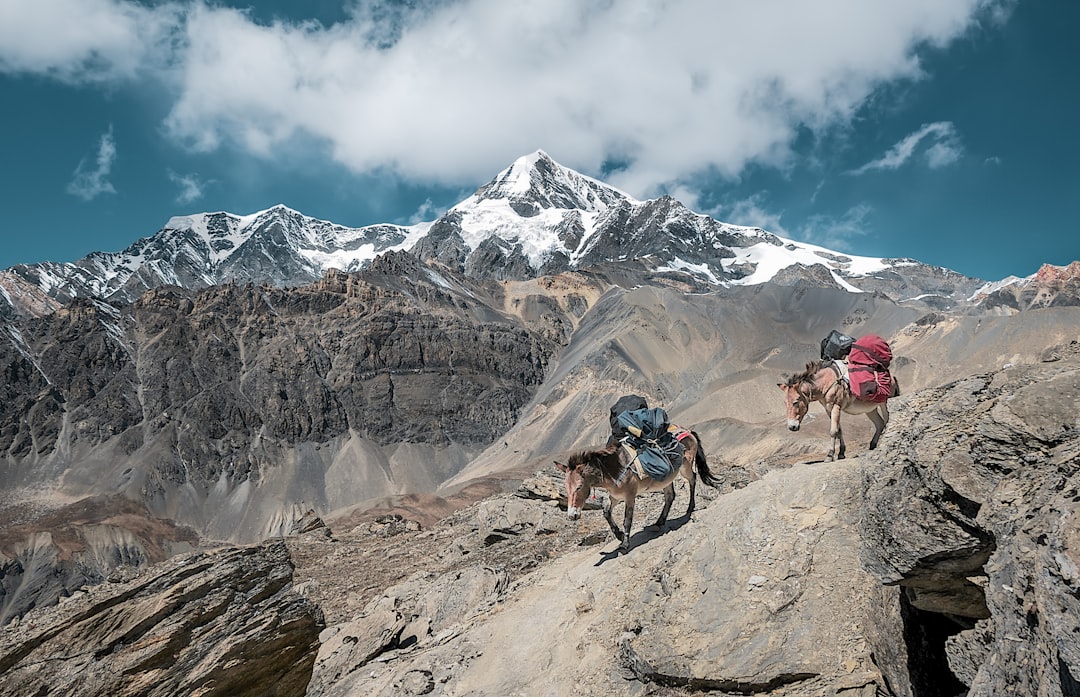
For the ponies and palkis, one rule that will save you money and trouble: book only at the government-authorised counters at Gaurikund, Bhimbali or Linchauli. Never online. Anyone selling you an internet pony booking is a tout. Season rates ran around ₹3,500 for a pony, from ₹6,000 for a pitthu and from ₹9,200 for a palki, one way.
What the packages drive past
This is the part I actually wanted to write.
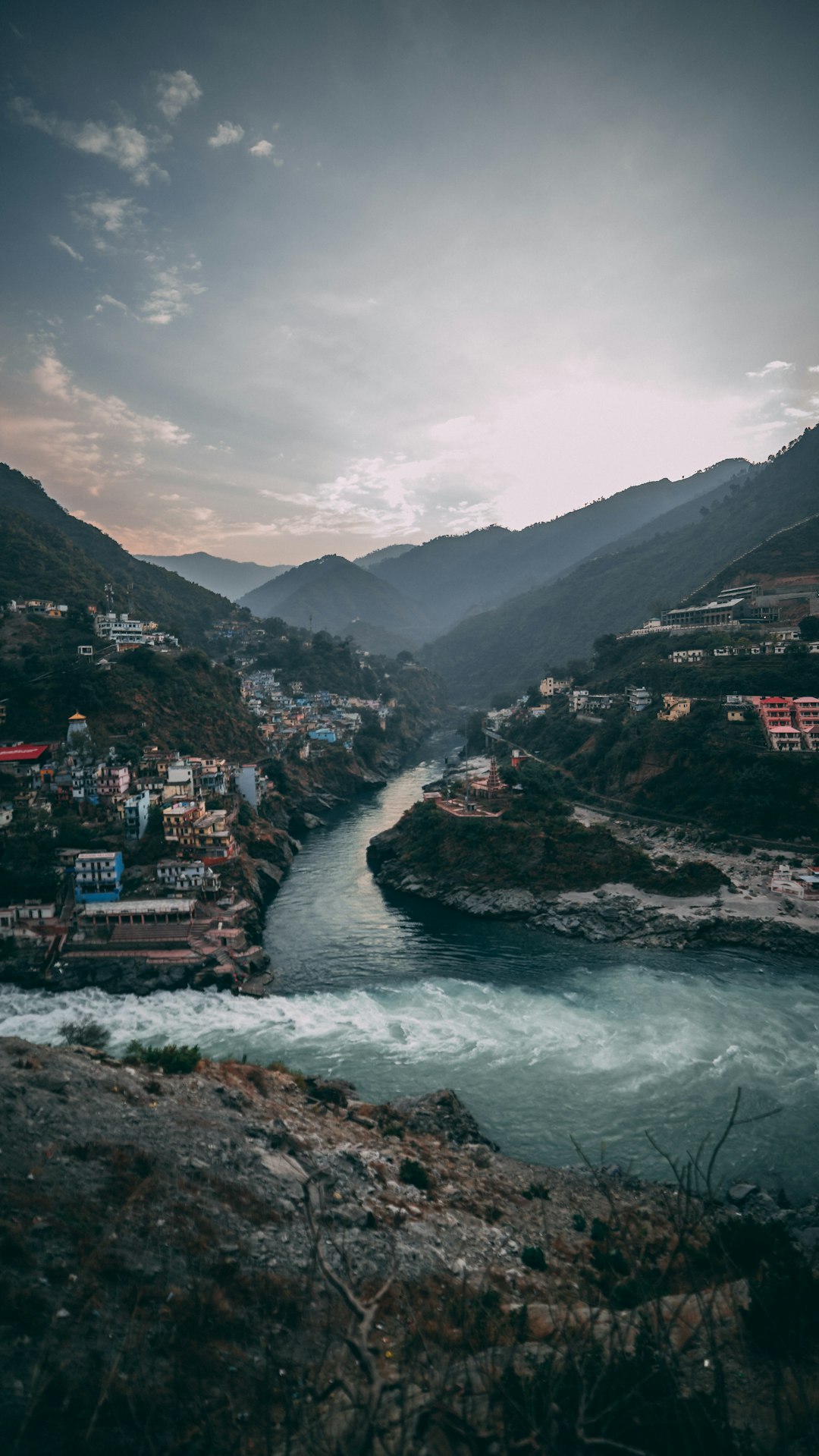
The Panch Prayag. Five sacred confluences on the Alaknanda — Vishnuprayag, Nandaprayag, Karnaprayag, Rudraprayag and Devprayag — and you drive past every single one of them on the Badrinath road whether you stop or not. At Devprayag the Bhagirathi and the Alaknanda meet and become the Ganga; you can stand at the point and watch two rivers of visibly different colour arrive as strangers and leave as one. It costs nothing and adds an hour. My first tour did not stop at any of them.
Triyuginarayan, a short detour off the Gaurikund road, where Shiva and Parvati are said to have married and where a fire is said to have burned since. It is now a fashionable wedding venue, which I found funny rather than annoying.
Ukhimath. When Kedarnath closes in November, the deity’s utsav murti is carried down to the Omkareshwar temple at Ukhimath and worshipped there for six months. Which means Kedarnath darshan is available in January, in a warm valley, with nobody in it. I did not know this until I was sixty-one.
Chopta and Tungnath. Tungnath sits at 3,680 metres — higher than Kedarnath — up a three-and-a-half kilometre path, and is one of the Panch Kedar. Chandrashila is another kilometre and a half above it. This is the walk I would send a fit person on instead of a second day of driving.
Mana, three kilometres past Badrinath, which was signposted for decades as “The Last Village of India” and now carries a Border Roads Organisation sign reading “The First Indian Village.” Same village, same road, the direction of the gaze reversed. Vyas Gufa is there, and Bhim Pul over the Saraswati, and Vasudhara Falls five kilometres on foot.
Gaumukh, eighteen kilometres beyond Gangotri on foot with a forest permit, where the Ganga actually comes out of the glacier. Almost nobody on a package sees the source of the river they have come to worship.
Two practical warnings
The monsoon is not a risk, it is a certainty. On 20 July 2026 the yatra was suspended on all four routes on IMD red and orange alerts after landslides cut the roads. That happens every year, in some form. If you must travel July or August, build slack into the itinerary and accept that you may be sheltered somewhere for two days.
Joshimath — now officially Jyotirmath — is still moving. Scientists at the Wadia Institute confirmed in 2026 that the town continues to subside slowly, that the risk intensifies during monsoon, and that continuous monitoring remains inadequate. It is open, it functions, the Badrinath road passes through it, and I am not telling you to avoid it. I am telling you I chose to sleep at Pipalkoti instead in July, and I would do that again.
What the sixteen days bought
Time to be unwell for a day at Barkot and not lose the trip. A morning at Devprayag with tea. An afternoon at Ukhimath that was not on any list. My wife sitting on a step at Badrinath for forty minutes, doing nothing, which she had not been able to do the first time and which she says now was the whole yatra for her.
The four shrines were the same four shrines. I just arrived at them as a person instead of a passenger.
Frequently asked questions
Is Char Dham registration compulsory, and does it cost anything?
It is compulsory and it is free. Register through the Uttarakhand government portal at registrationandtouristcare.uk.gov.in, the Tourist Care Uttarakhand app, WhatsApp on +91-8394833833, or at offline counters in Haridwar and Rishikesh. Aadhaar is required. Your vehicle must be registered separately from you — a step most people miss. Despite the widespread “biometric registration” phrasing, what actually operates is QR-code verification, scanned at checkpoints and shrine entrances. Any agent charging you a registration fee is charging for convenience, not for the registration.
When do the Char Dham shrines open and close?
The season runs from Akshaya Tritiya to around Diwali. In 2026 Yamunotri and Gangotri opened on 19 April, Kedarnath on 22 April and Badrinath on 23 April, with closings between 10 and 13 November. For 2027 the season is expected to begin roughly three weeks later — early-to-mid May — with dates formally announced at Maha Shivaratri and Basant Panchami in early 2027. Anyone planning a 2027 trip on 2026’s calendar will get it wrong.
Who should not attempt the Char Dham yatra?
In the first 47 days of the 2026 season, 152 pilgrims died, most of cardiac arrest, most over 55 with existing heart disease, diabetes or hypertension. Uttarakhand now requires pre-ascent health screening for anyone 55 or over and for anyone with those conditions. Our own view, not a government instruction: anyone with uncontrolled hypertension, a recent cardiac event or stent, unstable angina, severe asthma or COPD, uncontrolled diabetes, late pregnancy or a previous episode of altitude illness should get clearance from their own doctor first, and should consider skipping the Kedarnath and Yamunotri legs. Note that a helicopter still lands at 3,583 metres — it removes the exertion, not the altitude.
How long is the Kedarnath trek?
Sixteen kilometres on foot from Gaurikund, taking six to nine hours up. You will also see figures of 18 to 21 kilometres, which measure from Sonprayag — private vehicles cannot go past Sonprayag, so you take a shared jeep for the last five kilometres to Gaurikund. The pre-2013 route was shorter; the trail was rebuilt on a longer alignment after the floods. Ponies, pitthus and palkis are available and must be booked only at the government counters at Gaurikund, Bhimbali or Linchauli — never online.
Is the Kedarnath helicopter safe, and how do I book it?
Book only through IRCTC HeliYatra, which is the only legitimate seller and requires your Uttarakhand registration first. On safety, be informed rather than reassured: on 15 June 2025 a helicopter crashed near Gaurikund killing all seven on board, the fifth incident in the region in six weeks, after which the Ministry of Civil Aviation suspended all Uttarakhand helicopter operations and the DGCA imposed enhanced oversight. Services are suspended from July to September regardless. Fly on clear mornings and accept a weather cancellation without argument.
What should I add to a standard Char Dham itinerary?
The five Panch Prayag confluences, which you already drive past on the Badrinath road — Devprayag, where the Bhagirathi and Alaknanda become the Ganga, is the one to stop for. Triyuginarayan near Sonprayag. Ukhimath, the winter seat of Kedarnath’s deity, which means you can have Kedarnath darshan in January. Chopta and the 3.5 km walk up to Tungnath at 3,680 metres. Mana village past Badrinath, with Vyas Gufa and Vasudhara Falls. And, for the fit, the 18 km walk beyond Gangotri to Gaumukh, where the Ganga leaves the glacier — a forest permit is required.
Our journeys through this region start from Haridwar and Rishikesh and can be built at sixteen days rather than ten, with the acclimatisation and the confluences left in. Travellers drawn to the wider Shaiva circuit often pair it with the Jyotirlinga yatra.
Tell us your age and your doctor’s view at the thumbprint, before your dates. On this yatra, that is the conversation that matters.
Continue Reading
A traveller's account of Bodh Gaya, Pawapuri and Patna Sahib, the new ₹550-crore stupa at Vaishali almost nobody knows about, and the two weeks you must not go.