

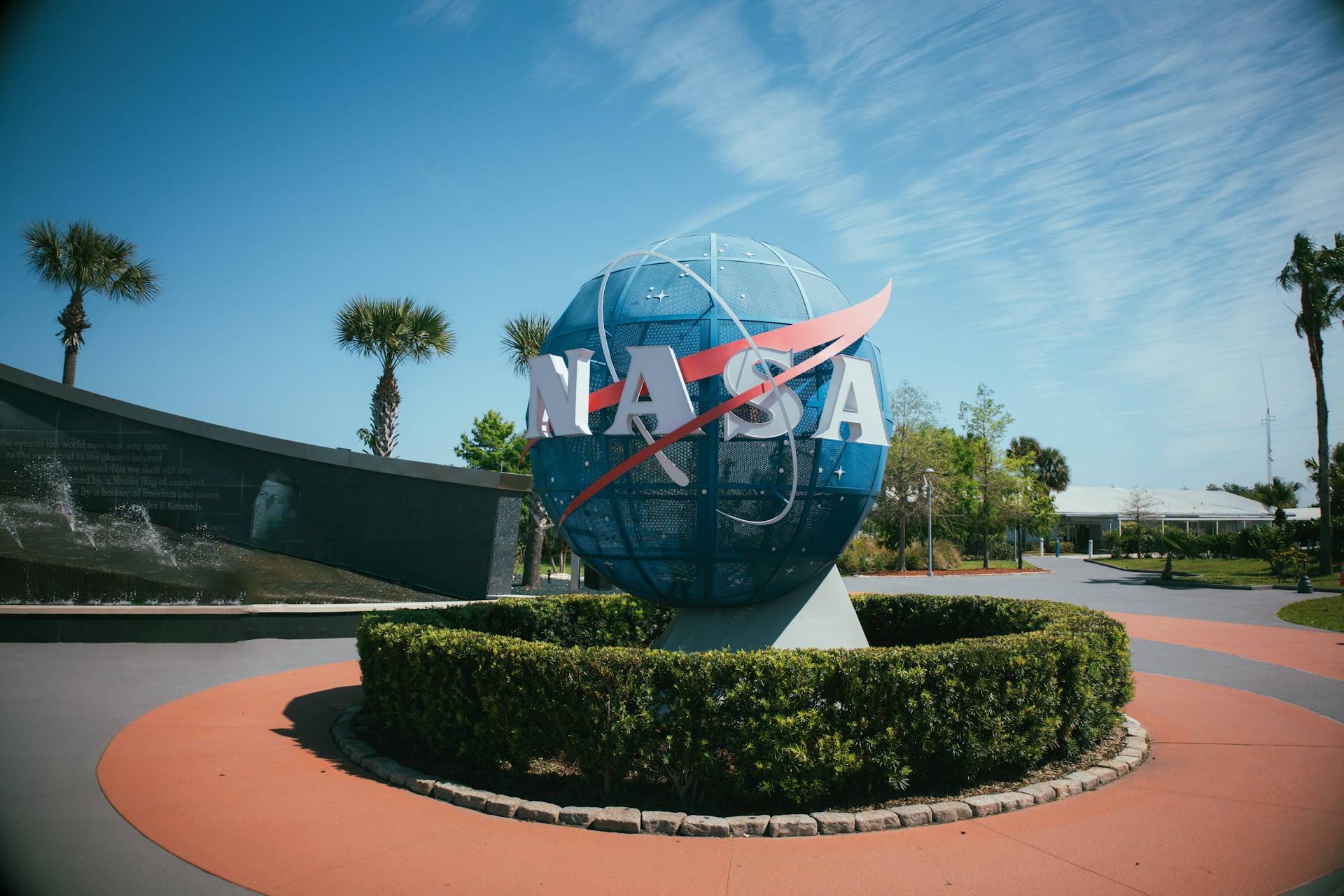

I have now stood under the Saturn V rocket at Kennedy Space Center eleven times, escorting eleven different school groups from India, and the same thing happens every time. The students walk into the hall talking — about lunch, about someone’s shoes, about whose phone has charge. Then they look up. The rocket is lying on its side above them, all 110 metres of it, longer than a football field, and the talking stops in a wave from the front of the group to the back.
Teachers call it the quietest thirty seconds of the entire tour. I call it the moment the trip pays for itself.
Is a NASA educational trip actually worth it for school students?
For the right student at the right age — roughly 13 to 17 — yes, measurably. A week at Kennedy Space Center with structured programmes does something classroom physics rarely does: it converts space from a chapter into a career possibility. The best window is April to June or September to November, planned six to eight months ahead.
But I want to be precise about what changes, because “inspiring” is a word brochures use when they have stopped observing.
What I observe is this. Before the trip, when you ask students what they want to be, you get the standard Indian trinity — engineer, doctor, “something in computers”. After three days at the Cape, the answers get specific and strange in the best way. One girl from a Chennai school, quiet the entire flight over, spent forty minutes interrogating a retired astronaut during the lunch programme about how the toilets work on the ISS, then about bone density loss, then about whether she could study aerospace medicine. Her teacher told me later she had never voluntarily asked a question in class. That is not inspiration. That is a door opening with an audible click.
The Atlantis exhibit does the heaviest lifting. The space shuttle is displayed mid-flight, payload doors open, tilted as if it has just rolled off your shoulder, and it is scorched. That detail matters enormously to teenagers. It is not a model. The heat tiles are burnt because this machine went to space 33 times, and students who have grown up on rendered graphics can tell the difference between an animation and an object with a biography.
Then there are the programmes you cannot get by just buying a ticket — and this is where school-trip design earns its keep. Astronaut encounters where the person on stage has actually watched Earth rotate beneath them. Camp-style engineering challenges where teams build and crash-test rovers, and the loudest boy in the group discovers the quiet girl is a better systems thinker than he is. If a launch happens to be scheduled during your window — never guaranteed, always checked — the itinerary bends around it, because watching a rocket climb off the pad beats every classroom demonstration ever conducted.
We usually pair the Cape with two or three days that widen the lens: the Smithsonian’s National Air and Space Museum if the route goes through Washington, a university campus visit — walking through MIT’s corridors does to some students what the Saturn V does to others — and yes, one theme-park day, because they are fourteen and they have earned it.
Now the honest caveats, and there are two, because parents’ committees deserve straight answers. First, cost: this is a long-haul US programme, and with flights, insurance and structured programming it prices like one — this is not a ₹1 lakh trip, and any operator suggesting otherwise is planning to disappoint you somewhere. Second, the US visa process for minors takes time and paperwork; start six to eight months out, and be aware that appointment backlogs in Indian consulates are a genuine constraint, not a formality. Jet lag is the third, smaller truth: day one is a write-off, and a good itinerary treats it that way instead of pretending fifteen-year-olds arrive fresh after twenty hours of travel.
What stays with me is not the rockets. It is the bus rides afterwards. Eleven groups, and every time, the ride back to the hotel after Saturn V day is different from the ride out — the phones are still out, but now they are being used to look things up. What is escape velocity. How do you become a flight surgeon. When is the next Artemis mission.
Our NASA student journey is built for schools — programmes, chaperone ratios, veg meal planning and all the unglamorous logistics done properly. Schools wanting a wider American arc often pair it with our USA East Coast journey framework.
Teachers and parent committees: tell us your group’s age band and budget honestly. We will tell you honestly what fits. The rocket handles the rest.