
From the medinas of Marrakech to the star-filled silence of Merzouga — a first-person account of Morocco done properly.
The first time I flew into Leh, I felt fine. That was the problem. The 6 a.m. flight out of Delhi puts you on the tarmac at 3,500 metres by half past seven, and for about four hours your body runs on the oxygen it packed at sea level. I spent those four hours unpacking, rearranging my day bag, walking up one flight of stairs to photograph a rooftop. By 2 p.m. I had a headache that felt like a slow door closing, and by evening I was lying very still, negotiating with my own skull.
I now design Ladakh journeys for a living, and that first afternoon is the thing I protect travellers from most fiercely.
How many days do you need to acclimatise before Pangong Tso?
Give Leh a minimum of two full days before you attempt Pangong. Day one: rest, water, no stairs you can avoid. Day two: gentle local walking, nothing above 3,600 metres. Day three at the earliest, drive to the lake at 4,225 metres. Anyone with heart or lung conditions should clear the trip with a doctor first.
That is the short version. Here is the protocol I actually put in every Picknic Ladakh brief, learned partly from Ladakhi drivers and partly from my own mistakes.
Day one is sacred. You land, you go to the hotel, you drink water — I aim for four litres across the day — and you do almost nothing. No market, no monastery, no “just a quick look” at Shanti Stupa, which sits up a flight of roughly 500 steps that will still be there on day three. Sleep propped slightly up. Skip alcohol entirely for the first 48 hours; it dehydrates you exactly when you can least afford it.
Day two, you move a little. A slow walk through the old town, a long lunch, maybe Thiksey monastery, which you can drive most of the way up. I carry a pulse oximeter and check readings morning and evening — most people sit in the high 80s on arrival and climb into the low 90s by the second evening. If someone is stuck below 85 and feels rough, we slow the whole itinerary down. The itinerary serves the traveller. Never the other way around.
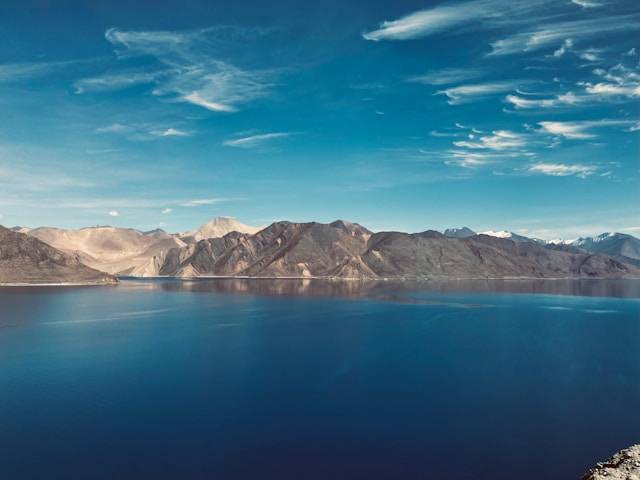
Day three, Pangong — but by the right road. The lake sits at 4,225 metres, higher than Leh, and the drive crosses Chang La at over 5,300 metres. You go up, you take your photograph at the pass, you come down the other side without lingering. Sleeping at the lake is magnificent — the water goes from steel grey to an impossible blue between 8 and 10 a.m. — but I only recommend an overnight for travellers who sailed through days one and two.
On the question of Diamox: I am not a doctor, and neither is your travel agent, whatever their WhatsApp forwards say. Many physicians prescribe it preventively; some travellers do fine on hydration and patience alone. Ask a real doctor, ideally one who knows your history, at least two weeks before you fly.
A few small things that help more than they should. Butter tea, if you can make peace with it; otherwise plain kahwa, constantly. Garlic soup at the Tibetan kitchens near the main bazaar — the locals swear by it and it costs about ₹150. A woollen cap at night even in July, because Leh drops close to 5°C after dark while the daytime sun burns through SPF 30 like it is personally offended.
The honest caveat, and I say this in every curator call: altitude does not care about your gym routine. I have watched a marathon runner spend two days horizontal while his 62-year-old mother strolled to the market humming. Roughly one in four travellers feels genuinely unwell at some point, and a small number simply have to descend. Build a spare day into the plan so that a bad morning is an inconvenience, not a crisis.
This is why our Ladakh road journey refuses to start with a checklist. The mass-tour version does Leh, Nubra, Pangong and Khardung La in five breathless days, and half the bus spends it nauseous. We would rather you see less and remember all of it. It is the same logic that shapes our Bhutan journey, where the road climbs slowly enough that your body barely notices.
If you want a trip built around your own lungs, your own pace and your own people, tell us who is travelling. We will tell you, honestly, which day you should first see the lake.
The lake, I promise, will wait. It has been there eleven thousand years. It can manage another 48 hours.
ABOUT THE AUTHOR

Continue Reading