


Watching Formula 1 on television gives you the race. Attending a Grand Prix gives you the entire event around it. For a…
The best week at the Australian Open is the one before it starts
In this article
I did not plan to spend a Tuesday morning at Melbourne Park watching qualifying. I had a main-draw ticket for the following week and three days to fill, and someone at the hotel said the grounds were open and cheap.
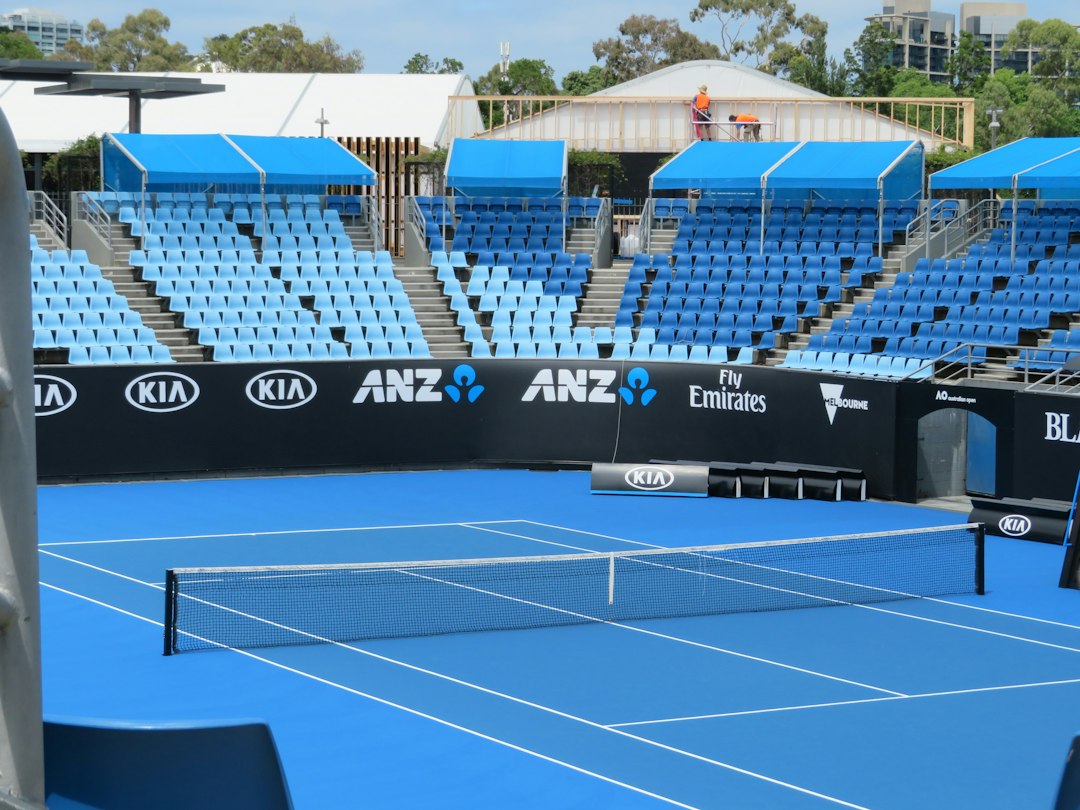
What I found was a tournament nobody had told me about. Show courts half full, so you could sit six rows back from a player ranked 140 in the world fighting for the life of her season. Players practising on outside courts with no rope between you and them. A father explaining a serve toss to a seven-year-old on Court 8 while, thirty metres away, a top-ten seed hit for an hour with nobody watching but us.
By Thursday I had decided that the main-draw ticket I had paid a great deal for was the less interesting purchase.
When is the Australian Open 2027 and are tickets on sale?
The tournament runs 11 to 31 January 2027 at Melbourne Park. Opening Week is 11 to 16 January — qualifying, the opening ceremony, exhibition showdowns, concerts and Kids Tennis Day — with the main draw from 17 January and the singles finals on 30 and 31 January. General public tickets went on sale on 13 August 2026, so they are buyable now. Everything is digital-only through Ticketmaster, and the on-sale runs a Smart Queue that assigns queue positions randomly, so logging in ten minutes early achieves nothing.
Why Opening Week is the right week for an Indian traveller
Three reasons, and the first one is a calendar collision most people miss.
The Indian school winter break runs roughly from late December to mid-January, ten to fifteen days depending on the board and the state. The Australian Open’s main draw starts on 17 January, by which point most Indian schools have reopened. Opening Week, 11 to 16 January, sits inside the tail of that break. If you are travelling with school-age children, the main draw is a trip that requires taking them out of school. Opening Week is a trip that doesn’t.
Second, it is no longer a warm-up. Around 218,000 people attended Opening Week in 2026. It has become a genuine standalone event, with qualifying that is real competitive tennis, exhibition matches featuring names you have heard of, concerts in the evening and a full grounds programme.
Third, the access is better than anything you can buy in the second week. In the main draw you are a long way from the court and a long way from the players. In Opening Week the practice courts are open, the crowds are thin, and the sport is at eye level. For a child who plays tennis, that is the difference between watching a match and understanding a game.
I have stopped recommending finals tickets to first-time visitors. They are the most expensive seats at the most crowded moment of the fortnight, and they buy you the experience you can already get on television.

The practical things
Everything is digital. Tickets live in the Ticketmaster app on a phone, and that phone needs to work in Australia. Sort out roaming or an eSIM before you leave; I have watched a family of four stand outside a gate while the only phone with the tickets refused to load.
There is an official resale, which opened alongside general sale in August 2026. That is the only resale channel worth using — everything else you find by searching is a reseller marking up a ticket that may not scan.
Register for AO Extras, which is free, if only for future years; it carries presale notice.
On prices, I am going to disappoint you deliberately. I could not verify 2027 ticket prices for either Rod Laver Arena or ground passes from any published source, and I would rather leave a gap than print a number that turns out to be last year’s. Check ausopen.com. What I can tell you is the shape: ground passes in the early rounds are a small fraction of a Rod Laver day session, and the gap widens sharply towards the finals.
What the trip costs, and the heat
An indicative band for five nights, per person, twin-sharing, ex-Delhi or Mumbai — flights, hotel, food and local transport, before finals-tier tickets — is roughly ₹1.6 to ₹3.0 lakh. That is a modelled range, not a quote.
Two honest caveats sit inside it.
January is high summer in Melbourne and it is also Australia’s school holidays. You are travelling into peak domestic demand as well as a Grand Slam, which does what you would expect to hotel rates. If your only goal were to see Australia, April to June is cheaper, quieter and lovelier — but that is the Indian summer break, and it is not tennis season.
And Melbourne heat is a real planning factor, not a line in a brochure. The tournament has an extreme heat policy for a reason. Ground-pass days in January can mean hours of open sun with no reserved seat to retreat to. Hats, water, and a plan for the middle of the day. Melbourne’s other habit — four seasons in an afternoon — means the same day can end cold and wet, so carry a layer even when leaving the hotel feels absurd.

The Indian argument
Melbourne is, for Indian fans, the friendliest Slam by some distance. The time difference is small enough that the tennis happens at civilised Indian hours, which is why generations of us grew up watching this tournament and not Roland Garros. The city has one of the largest Indian communities in Australia, with everything that implies for food, for a familiar face at the ground and for the noise in the stands when an Indian doubles pair walks out. And doubles is where Indian tennis has written its history — a fact best appreciated from four rows back on an outside court, which is precisely where Opening Week puts you.
Book the week nobody talks about. The one everybody talks about is on television anyway.
Frequently asked questions
When is the Australian Open 2027?
11 to 31 January 2027 at Melbourne Park. Opening Week runs 11 to 16 January and includes qualifying, the opening ceremony, exhibition showdowns, concerts and Kids Tennis Day. The main draw begins on 17 January, with the singles finals on 30 and 31 January.
Are Australian Open 2027 tickets on sale now?
Yes. General public sale opened on 13 August 2026, with an official resale channel opening the same day. All tickets are digital-only through Ticketmaster, and the on-sale uses a Smart Queue that assigns positions randomly rather than by arrival time. Buy through ausopen.com or the official Ticketmaster channel; other sites offering tickets are resellers.
Is Opening Week worth attending, or should I wait for the main draw?
For a first visit, and especially with children, Opening Week is the better trip. Around 218,000 people attended in 2026, so it is a full event rather than a warm-up, and the access is far better — thin crowds, open practice courts, competitive qualifying matches watched from a few rows back. It is also cheaper. The main draw offers bigger names in a bigger crowd from further away.
Does the Australian Open fit the Indian school holidays?
Opening Week does; the main draw largely doesn’t. The Indian winter break typically runs from late December to mid-January, and the main draw starts on 17 January, by which time most schools have reopened. Opening Week, 11 to 16 January, sits inside the tail end of the break, which makes it the practical choice for families travelling with school-age children.
What does an Australian Open trip cost from India?
As an indicative band for five nights per person on twin-share ex-Delhi or Mumbai, covering flights, hotel, food and local transport but before finals-tier tickets: roughly ₹1.6 to ₹3.0 lakh. January is both Grand Slam season and Australian school holidays, so accommodation is at peak demand. We could not verify 2027 ticket prices from a published source and would rather you check ausopen.com than rely on a figure.
How hot does it get, and what should I plan for?
Hot enough that the tournament operates a formal extreme heat policy. Ground-pass days can mean long stretches in open sun without a reserved seat to retreat to, so plan hats, water and a sheltered break in the middle of the day. Melbourne also changes weather abruptly, so carry a layer even on a morning that makes it feel unnecessary.
Travellers wanting more of the country either side of Opening Week usually add our Australia journey.
At the thumbprint, give us two things: who is travelling, and when your school reopens. In January, the second answer decides the trip.
Ready to plan your own journey?
Share your dates and interests. A Picknic curator will design it for you.

Written by
Ananya Kapoor
Lead Experience Designner
A passionate travel storyteller at PicknicGo, dedicated to crafting experiences that resonate long after the journey ends.
View all 22 articles by Ananya Kapoor →
Continue Reading
 Sports
 Sports
A sports training camp abroad can give young athletes more than time on the pitch, court or track. It can introduce them…
 Sports
For young footballers who want to experience elite football in the UK, the Manchester United Soccer Schools (MUSS) programme offers more than…