


Booking windows, permit costs and the ethics nobody discusses. A wildlife curator on why the guest, not the driver, controls what happens…
Jungle, jungle everywhere, and not a tiger to be seen
In this article
By the fourth drive my son had stopped looking.
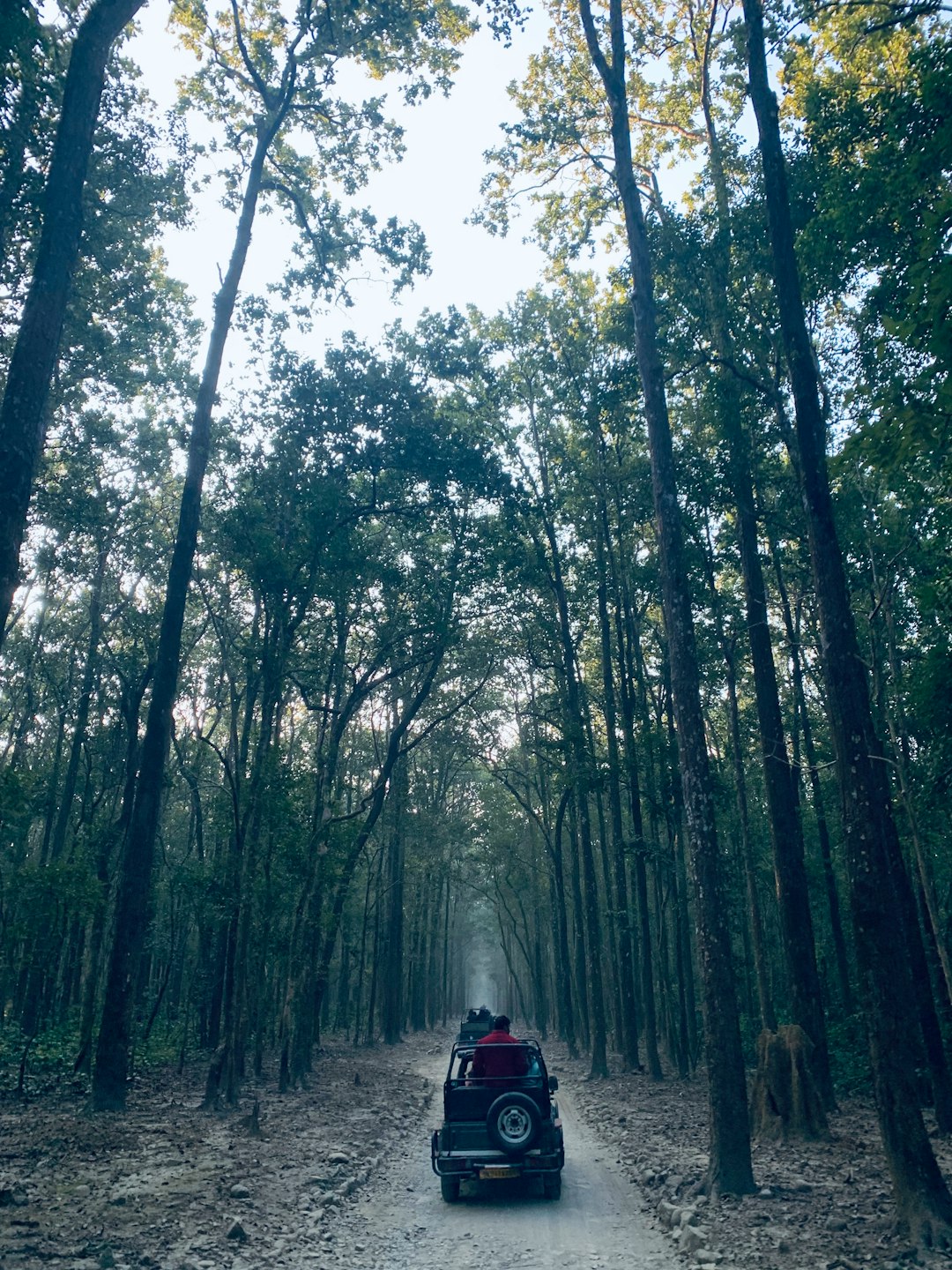
He was eleven, he had a borrowed pair of binoculars he had refused to put down for three days, and somewhere between the second afternoon and the third morning the binoculars had migrated to the floor of the gypsy and he had started asking, in a flat voice, how long was left. My mother-in-law had gone quiet in the way that means something is being endured rather than enjoyed. My husband was doing sums about what each empty hour had cost.
We had come to Ranthambore for four safaris across three days, in February, and we did not see a tiger. Not a flank in the grass, not a tail, not a face in the lantana. Nothing.
I want to write about that trip because everything I read before we went had prepared me for the other outcome, and nothing at all had prepared me for this one.
What are the real chances of seeing a tiger at Ranthambore?
Nobody publishes an honest number, and that is the first thing to know. There is no official per-safari sighting-rate data — the Forest Department publishes population estimates, not sighting rates. Every “70% chance in Zone 3” or “almost guaranteed in summer” you will read is operator marketing with no stated method behind it. What experienced visitors report, informally, is roughly one sighting per two to four drives, and the consistent advice across every forum and naturalist I have since spoken to is the same: book three or four drives, not one. A single drive is a coin flip at best.
We booked four. We got nothing. Four is not a guarantee, it is just a much better bet than one, and the difference between those two sentences is the entire emotional content of a Ranthambore holiday.
The definition problem nobody mentions
Here is a thing I only understood afterwards, and it explains a lot of the gap between the brochures and the jeep.
When an operator counts a “sighting”, they may be counting pugmarks in the dust, an alarm call from a sambar, a shape in the grass at two hundred metres that the guide is confident about, or a tiger seen by a different vehicle and radioed across. When you count a sighting, you mean a tiger you could look at. Photograph, probably. Remember.
Those are not the same number, and the first one is much larger than the second. Nobody is lying. They are just answering a different question from the one you asked.
The month we chose, and why it was the wrong one for the tiger and the right one for us
February is lovely at Ranthambore. Cold enough at dawn that you want the blanket they hand you, cover thinning, the migratory birds still in, light that makes the fort look like something out of a manuscript.
February is also not when the tigers are easiest to find. The honest shape of the year is this: October and November are hardest — the monsoon has left water everywhere and nothing is tied to a waterhole. December to February brings thinning cover and basking. March and April are the sweet spot. May and June give you the highest odds and the worst experience, because water has shrunk to a handful of sources and everything must come to them, in forty-two to forty-five degrees, in an open vehicle, in the afternoon.
That is the trade nobody states plainly: the months that maximise your odds are the months that minimise your comfort. Anyone advising an Indian family with a seven-year-old and a grandmother to go in June for “better chances” is optimising the wrong variable. We chose February for the people in the vehicle. I would choose it again.
What our guide was up against
I did not think about this until later either.
Our driver and our naturalist were both paid, in the end, by whether we were happy. And we had made it perfectly clear — without ever saying it — that happy meant a tiger. So they drove. Hard, between waterholes, radios crackling, doubling back on rumours, and every minute of that was a minute not spent on the crocodile at Malik Talao or the owl in the fort wall.
On the fourth drive I finally said, out loud, that we had given up on the tiger and would he please just show us the forest.
The drive changed within ten minutes. We stopped. We watched a pair of Indian gazelle for a quarter of an hour. He showed my son how to read the alarm calls — sambar, langur, peacock — the three-note system that tells you a predator is moving even when you cannot see it, and my son picked up the binoculars again. We heard a sambar call once, from a long way off, and the whole vehicle went silent for four minutes, and nothing came out, and it was the best four minutes of the trip.
The person with the most power over what happens in that vehicle is the guest. I did not know that until the last morning.
What is actually there when the tiger isn’t
More than I had any idea of.
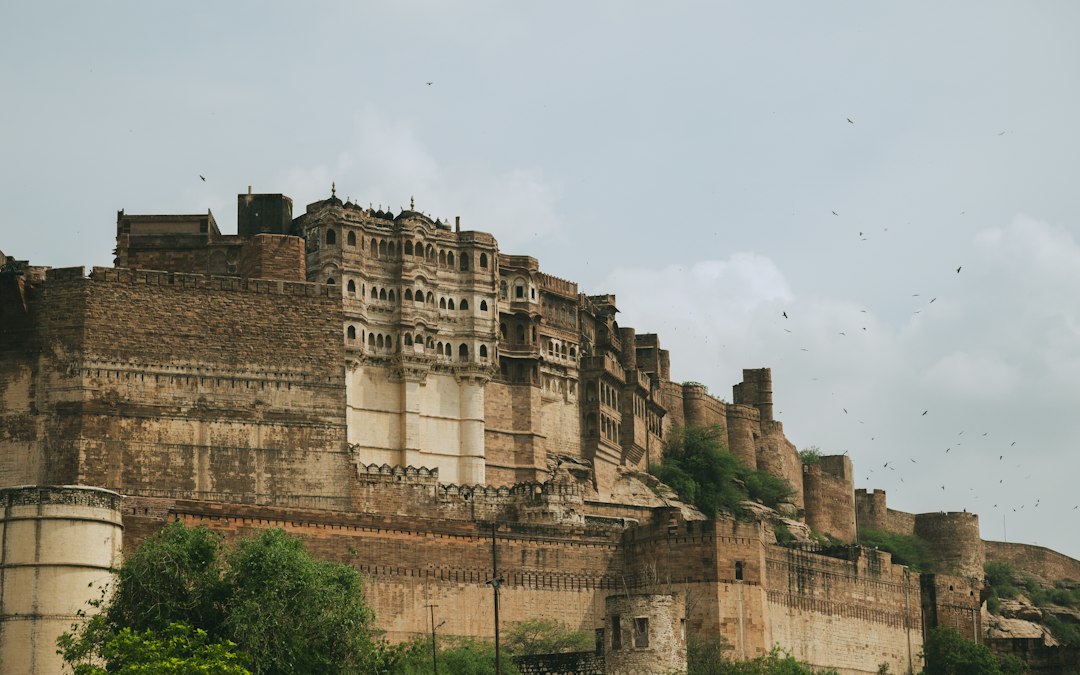
Ranthambore Fort is the thing I would now tell people to do first rather than last. It is a UNESCO World Heritage Site, inscribed in 2013 as part of the Hill Forts of Rajasthan; it stands inside the park, seven hundred feet up; and — this is the part nobody had told me — you do not need a safari permit and there is no ticket counter. It is reached by its own road. It is free, because it is a working pilgrimage site.
At the top is the Trinetra Ganesh temple, and inside the temple there is the thing I have thought about most since. People post letters to the god. Actual letters, in envelopes, addressed to Trinetra Ganesh Temple, Ranthambore Fort, Sawai Madhopur — about jobs, illnesses, court cases, marriages — and they are carried up and laid at the deity’s feet. Families send the first wedding invitation card here before they give one to any human being.
I stood in a room with a heap of other people’s letters in it, on a hill in a tiger reserve, having seen no tigers, and it was the single most affecting thing that happened to us in Rajasthan.
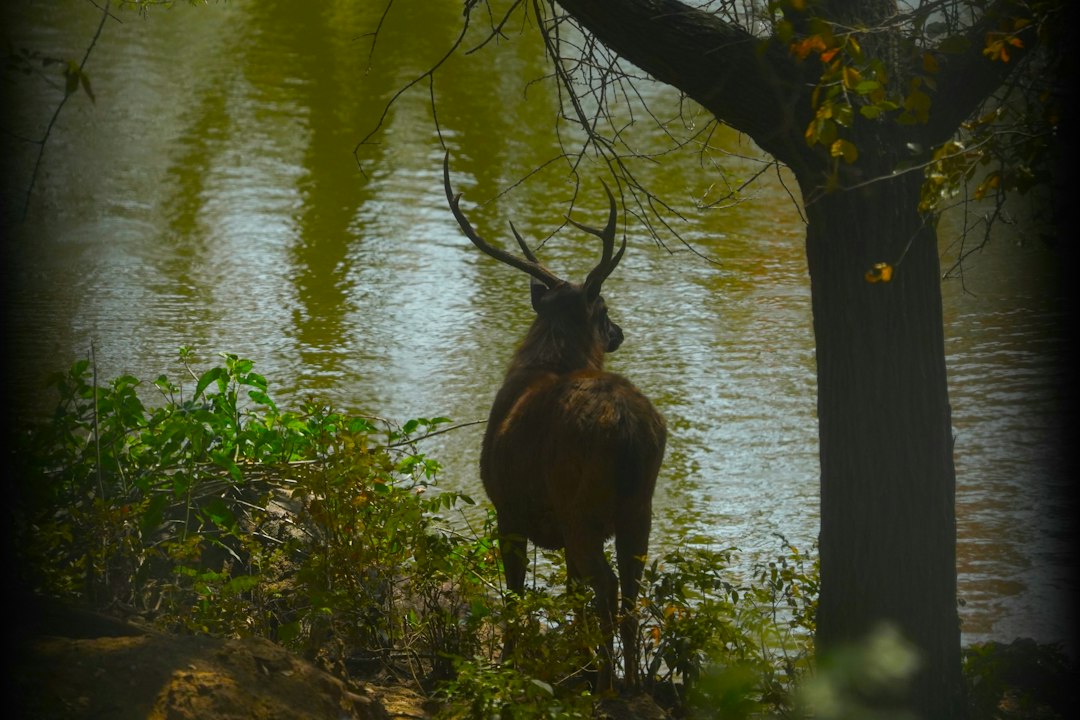
There is also, if you look: marsh crocodiles at the lakes, which are close to a guaranteed sighting; sloth bear, most likely April to June near the fort; striped hyena; caracal, rare enough that a sighting is an event; sambar wading in the shallows at Padam Talao, which is the iconic Ranthambore photograph and has no tiger in it; and over three hundred bird species. The ruined arches of Rajbagh on the water are, I would argue, more beautiful than any tiger picture I have seen from there.
And Surwal Lake and Mansarovar Lake are outside the park entirely — no permit, no zone, no lottery. A birder locked out of the booking system still has a morning.
The uncomfortable part
I came home and read, and found things I would rather have known.
Ranthambore’s tiger population was given as around 72 by the Rajasthan Chief Wildlife Warden in July 2026 — roughly fifty adults and twenty-two cubs — against a Rajasthan state total of 149. India’s most recent official national figure is 3,682, from the 2022 census, with the sixth count running now and results expected in 2027. You will see higher numbers quoted for both. They come from different boundaries and different years.
In 2024 a Forest Department report found no evidence for twenty-five tigers at Ranthambore. Ten were re-sighted on camera traps within weeks; fifteen were not, and the NTCA said publicly that poaching could not be ruled out and asked the Wildlife Crime Control Bureau to look at it. Several had reportedly been unaccounted for over five years, which makes it a record-keeping story as much as a disappearance story.
And in April and May 2025 there were two fatal tiger attacks on people inside the reserve within two months — a forest ranger and a temple caretaker both killed — after which a tigress was tranquilised and access to the Trinetra Ganesh temple was restricted for a period. Experts publicly connected the loss of wariness towards humans to baiting practices used to produce sightings for tourists.
I do not offer that as a reason not to go. I offer it because the pressure that made my family miserable for three days — the assumption that a tiger is a thing that gets delivered — is the same pressure at the other end of the chain. Somebody has to absorb it. Sometimes it is the guide. Sometimes it is the tiger.
What I’d tell you
Book three drives at least, and book them before you arrive. Say to your guide on the first morning that you have come for the forest. Do the fort on a spare afternoon. Learn the alarm calls. Take a grandmother in February, not in June.
And accept, before you go, the sentence I could not have written on the second day and can write easily now: a tiger you didn’t see is still a tiger, in thirteen hundred square kilometres of surviving forest in one of the most crowded states on earth. That is the story. The photograph would only have been the souvenir.
Frequently asked questions
What are the actual odds of seeing a tiger at Ranthambore?
No official per-safari sighting rate is published by the Forest Department or the NTCA, and any percentage you see quoted online is operator marketing without a stated method. Experienced visitors informally report roughly one sighting per two to four drives. The consistent advice is to book three or four drives across different zones rather than one. Note also that operators may count pugmarks, alarm calls or distant shapes as “sightings” — which is not what a guest means by the word.
When is the best time to visit Ranthambore for tigers?
May and June give the highest odds, because water shrinks to a few sources and animals must come to them — but temperatures reach 42–45°C in an open vehicle, which is punishing for children and older travellers. March and April are the best balance. December to February is comfortable and good for birds, with moderate odds. October and November are the hardest months, because post-monsoon water is everywhere. The months that maximise sightings are the months that minimise comfort.
Can I visit Ranthambore Fort without a safari permit?
Yes. The fort sits inside the park but is reached by its own public road, needs no safari permit, and has no ticket counter — it is an active pilgrimage site, home to the Trinetra Ganesh temple. It was inscribed as a UNESCO World Heritage Site in 2013 as part of the Hill Forts of Rajasthan. Allow roughly half a day and expect a climb of a few hundred steps and ramps. Note that vehicle access on the fort route has been restricted since the 2025 tiger attacks — check locally before setting out.
What else can I see at Ranthambore if there’s no tiger?
Marsh crocodiles at the lakes, which are close to a certainty; sambar wading in the shallows at Padam Talao; the ruined arches of Rajbagh; over three hundred bird species; sloth bear, most likely April to June near the fort and Kachida; striped hyena; and — rarely enough to count as an event — caracal. Surwal and Mansarovar lakes sit outside the park and need no permit at all, which makes them a good option if safari permits are sold out.
Which zones are best, and can I choose one?
Zones 1–5 are the original core, containing the lake complex and the fort ramparts, and are generally considered stronger than 6–10; Zone 2 is often named the single best for its waterholes. But you cannot reliably pick your zone. Allocation is administered by the Forest Department, popular zones sell out the moment permits release, and what remains is what you get. Anyone promising you a specific zone is either booking months out or working an informal market. Zones 1–5 close on Wednesdays and 6–10 on Tuesdays; the core closes 1 July to 30 September while 6–10 stay open.
Would a different park give me better odds?
Possibly, but nobody publishes sighting rates for any Indian reserve, so “Bandhavgarh has the best chance” is an industry belief rather than a measured fact. What is measured is population: Corbett had 260 tigers in the 2022 census, Bandipur 150, Nagarhole 141, Bandhavgarh 135, Kaziranga 104, against Ranthambore’s roughly 72–88. Bandhavgarh has the strongest density reputation and Tadoba the current one. Corbett has the most tigers absolutely but is vast, dense and hilly, so sighting rates are not proportional to the population.
Our Ranthambore tiger photography journey is built around multiple drives and zone choice rather than a promise, and travellers who want the strongest odds India offers usually look at Kanha and Bandhavgarh instead.
Tell us at the thumbprint who is in the vehicle and what would make the trip worth it. If the honest answer is “a tiger or nothing”, we would rather have that conversation before you book than after.
Ready to plan your own journey?
Share your dates and interests. A Picknic curator will design it for you.

Written by
Rohan Mehta
Lead Experience Designner
Lorem ipsum dolor sit amet, consectetur adipisicing elit, sed do eiusmod.
View all 18 articles by Rohan Mehta →
Continue Reading
 Wildlife