


By the fourth drive my son had stopped looking. Photo by Simran Vij on Unsplash He was eleven, he had a borrowed…
At a tiger sighting,
the person with the most power is the guest
In this article
I have been thinking for years about a morning in Bandhavgarh that I would rather not have witnessed.
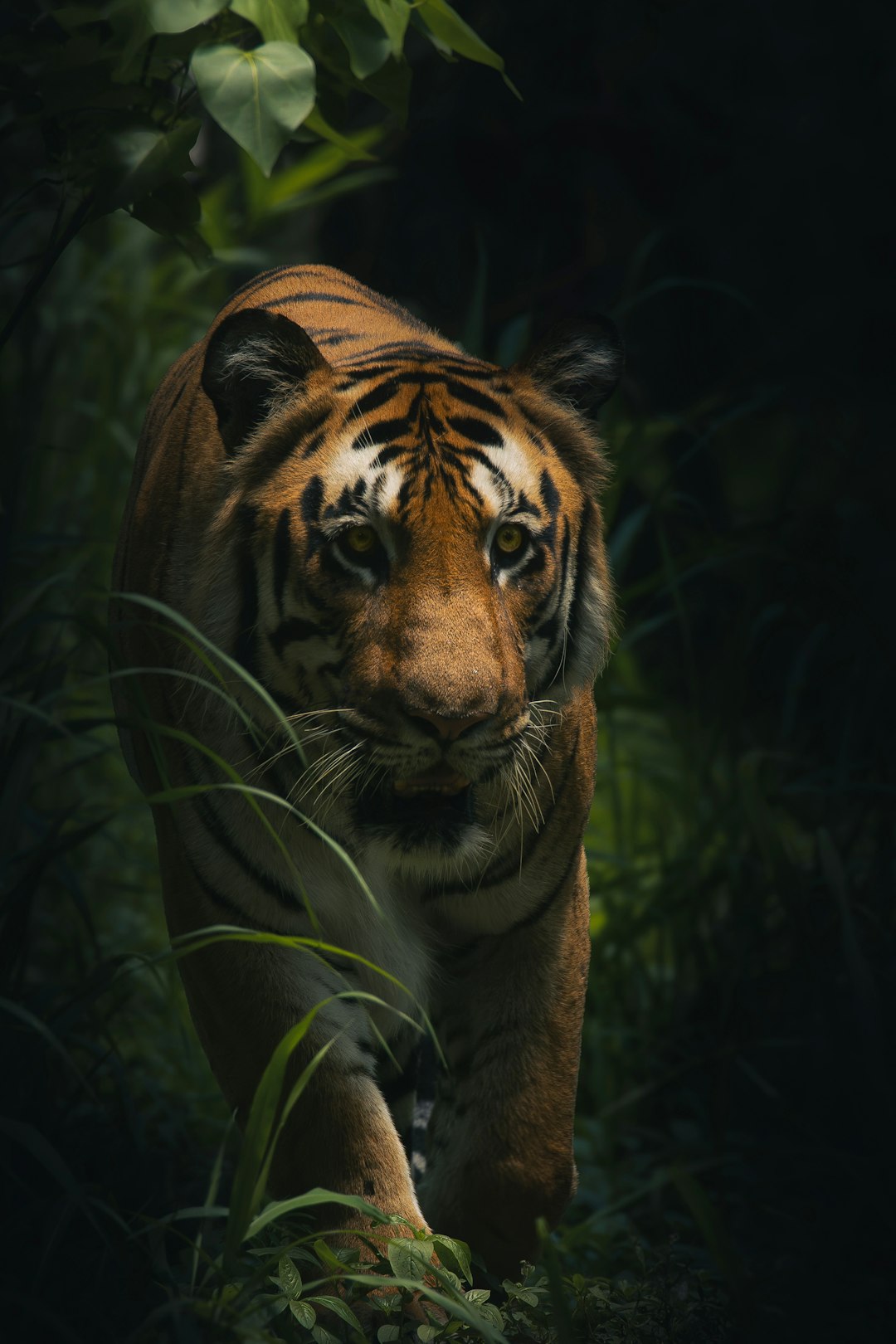
A tigress crossed a track ahead of us and moved into thin sal forest, unhurried, entirely uninterested in the four vehicles that had arrived. Then a fifth arrived, and a sixth, and somebody in one of them said the sentence that starts all of it: “Bhaiya, thoda aage.” A little further ahead.
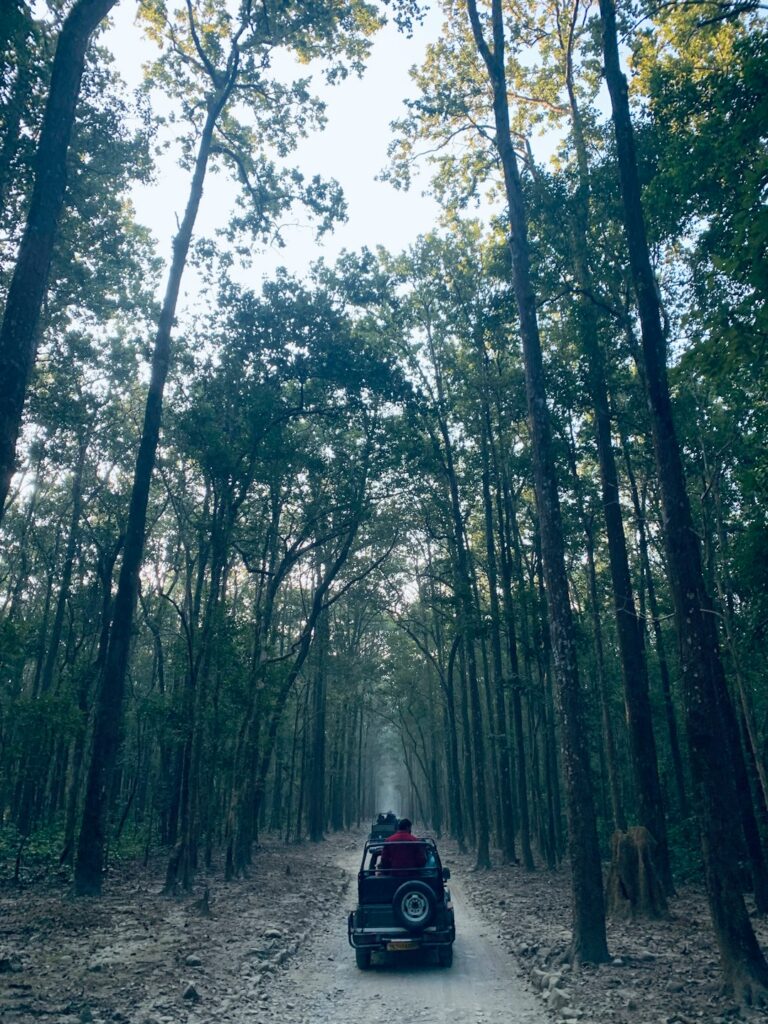
The driver moved. The others moved, because no driver wants to be the one whose guests saw less. Within ninety seconds six vehicles had arranged themselves in a rough arc across her line of travel, and the tigress — who had been walking — stopped, and stood, and then turned and went back the way she had come.
Nobody broke a law that morning. Every vehicle had a permit. Every driver had a licence. And a tiger did not go where she was going, because eleven tourists wanted a photograph without a branch in it.
That is the thing I want to write about, and I will get to the booking mechanics afterwards, because they matter too.
What is the right etiquette at a tiger sighting?
The rule that actually works is not a distance and not a regulation. It is a question: did the animal change what it was doing because of me? If a tiger alters her route, if a bird abandons a nest approach, if a herd moves off a waterhole — the sighting has cost the animal something, whatever the permit said. And the person with the most power to prevent that is the guest, because the driver and the guide are economically dependent on your satisfaction and will do what they believe you want. A guest who says “this is close enough” changes the outcome. Nobody else in that vehicle can.
I say this on every briefing now, before we enter a gate, and I have watched it work. It is the single most useful thing I know about wildlife travel.
What the rules actually are
The Wildlife (Protection) Act, 1972 is the framework, and offences involving protected species carry imprisonment of up to seven years. The authoritative document for tiger reserve tourism is the NTCA’s Compendium of Guidelines, Advisories and Orders — not the various “code of conduct” lists that circulate on blogs. Commercial or professional photography inside a reserve requires prior authorisation from the Chief Wildlife Warden; personal cameras and phones are covered by your safari ticket.
There was reporting in 2020 of an NTCA direction on minimum separation between tourist vehicles at a sighting, with a figure of 500 metres cited. I could not verify that this remains the operative distance, so I will not print it as current. Which is, in a way, the point: do not outsource your judgement to a number you half-remember. Use the question in the section above.
What actually gets done wrong
The conservation photographer Balan Madhavan has named the practices publicly, and they are worth reproducing because most travellers have no idea any of this happens.
Baiting, and playback of mating or territorial calls to provoke an animal into moving or displaying. Nest photography abuse — photographers locating a nest with local help, shooting it, and then destroying the nest so that rivals could not get the same image, a practice so widespread it led to an unofficial ban on nest photography in competitions. Harassment at active nest sites — crowding beneath Great Indian Hornbill nests and throwing stones to force repeated flights, so as to get a better flight shot.
And the slow one that nobody notices, because there is no single incident to point at: habituation. Animals in safari zones adjust their behaviour around the daily arrival of vehicles. That is not a crime and there is no villain. It is the aggregate cost of tourism, and the only honest response is to keep it as small as possible rather than to pretend it does not exist.
The everyday versions you will actually encounter: vehicles encircling a sighting, blocking an animal’s path, drivers tipped for getting closer, off-track driving, shouting, phone flash, and recorded calls played for owls. Some of these will happen in front of you. You get to decide whether they happen in your vehicle.
The number, correctly stated
While we are being accurate: India’s most recent official all-India tiger figure is 3,682, from the 2022 All India Tiger Estimation, roughly seventy per cent of the world’s wild tigers. The sixth estimation cycle is being counted now, with the national report expected in 2027.
You will see “over 4,000” in a great deal of travel writing. No official source supports it. I would rather quote the real number and date it.
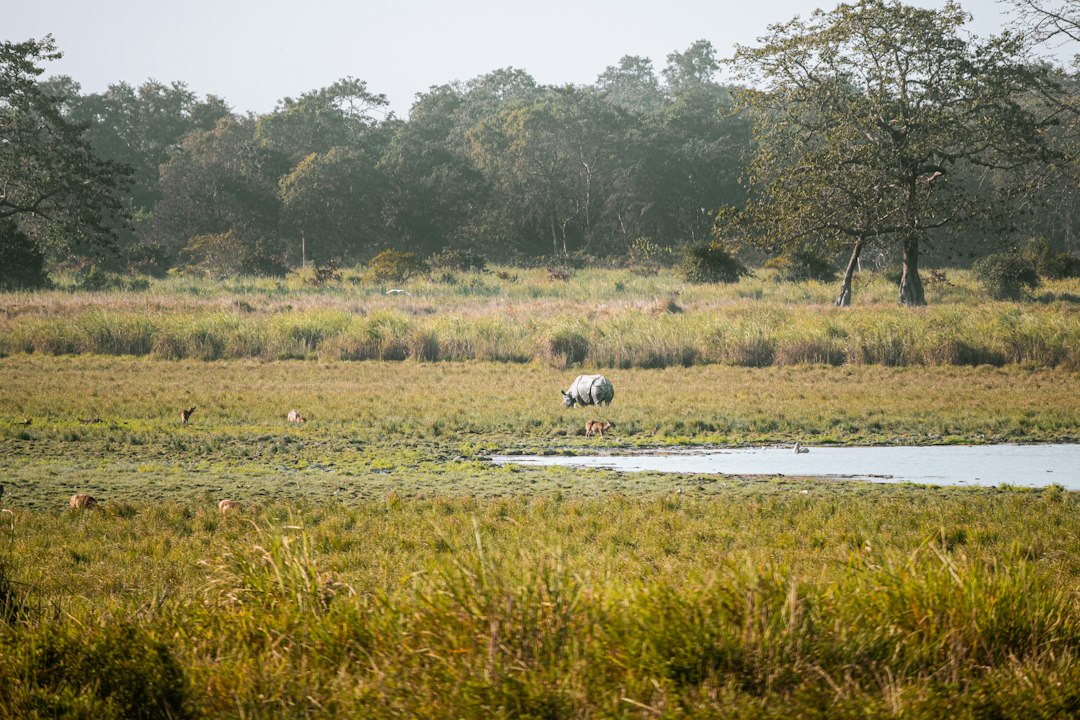
Kaziranga’s most recent published figure is 2,613 greater one-horned rhinos, from the March 2022 census, up from 2,413 in 2018.
The booking mechanics, which are genuinely confusing
Every state does this differently, and the differences cost people trips.
Madhya Pradesh — Kanha, Bandhavgarh, Pench, Satpura, Panna — runs a rolling 120-day window, released daily at 11:00 a.m. IST on the MP Forest portal. Maharashtra’s Tadoba is also 120 days, on its own portal. Corbett runs 45 days for Indian nationals and 90 days for foreign nationals.
Ranthambore is the one that catches people, because it is not a rolling window at all. Rajasthan is reported to release seasonal blocks — the October–December block opening on 1 August, January–March on 1 November, April–June on 1 February. I could not confirm those dates from the official Rajasthan portal, which blocks automated access, so verify before you plan around them. What is not in doubt is the consequence: the good Zone 3 gypsy slots go within minutes of release, and if you arrive at the portal in the week you want to travel, you are looking at cancellations.
Seasons and closures, which are the other trap:
- Ranthambore runs 1 October to 30 June. Core zones 1–5 close 1 July to 30 September; zones 6–10 stay open, which makes them the only monsoon option.
- MP reserves run core 1 October to 30 June, reopening on 1 October. They are closed on Wednesday afternoons, and closed on Holi and Diwali.
- Tadoba’s core is closed on Tuesdays and its buffer on Wednesdays, plus one day for Holi and two for Diwali, and the mornings of 26 January and 1 May.
- Corbett’s Dhikala and most core zones close from around mid-June to mid-November; Jhirna and Dhela stay open year-round.
Read the Diwali line again if you are planning around the November festival break. The Madhya Pradesh reserves close for Diwali. Every year, somebody books a Bandhavgarh trip for exactly the days it is shut.
And note the second collision: the reserves reopen on 1 October, which coincides with the Dussehra school break — the single most expensive domestic travel week of the Indian year.
What it costs
Rates change by government order and every aggregator quotes a slightly different bundle, so these are ranges rather than prices.
Ranthambore, per person: jeep or gypsy roughly ₹1,500–2,500 for Indian nationals, canter roughly ₹800–1,500. Two credible sources differ by about forty per cent on this, which tells you something about how the market publishes information. The price bundles the forest permit, the vehicle and the mandatory guide fee — there is no separate park ticket.
Bandhavgarh core zone entry: Indians around ₹2,450 on a weekday and ₹3,350 on weekends and holidays; foreign nationals around ₹5,350 and ₹6,650. Full jeep hire in the core runs roughly ₹3,500–4,500 per safari and in the buffer ₹4,000–5,000. A standard guide is around ₹1,000, a professional guide around ₹3,000. GST and service charges sit outside. Night safari has been banned since December 2025.
I could not obtain current official tariffs for Kanha, Pench, Tadoba or Corbett and will not guess at them.
Jeep or canter, elephant or not
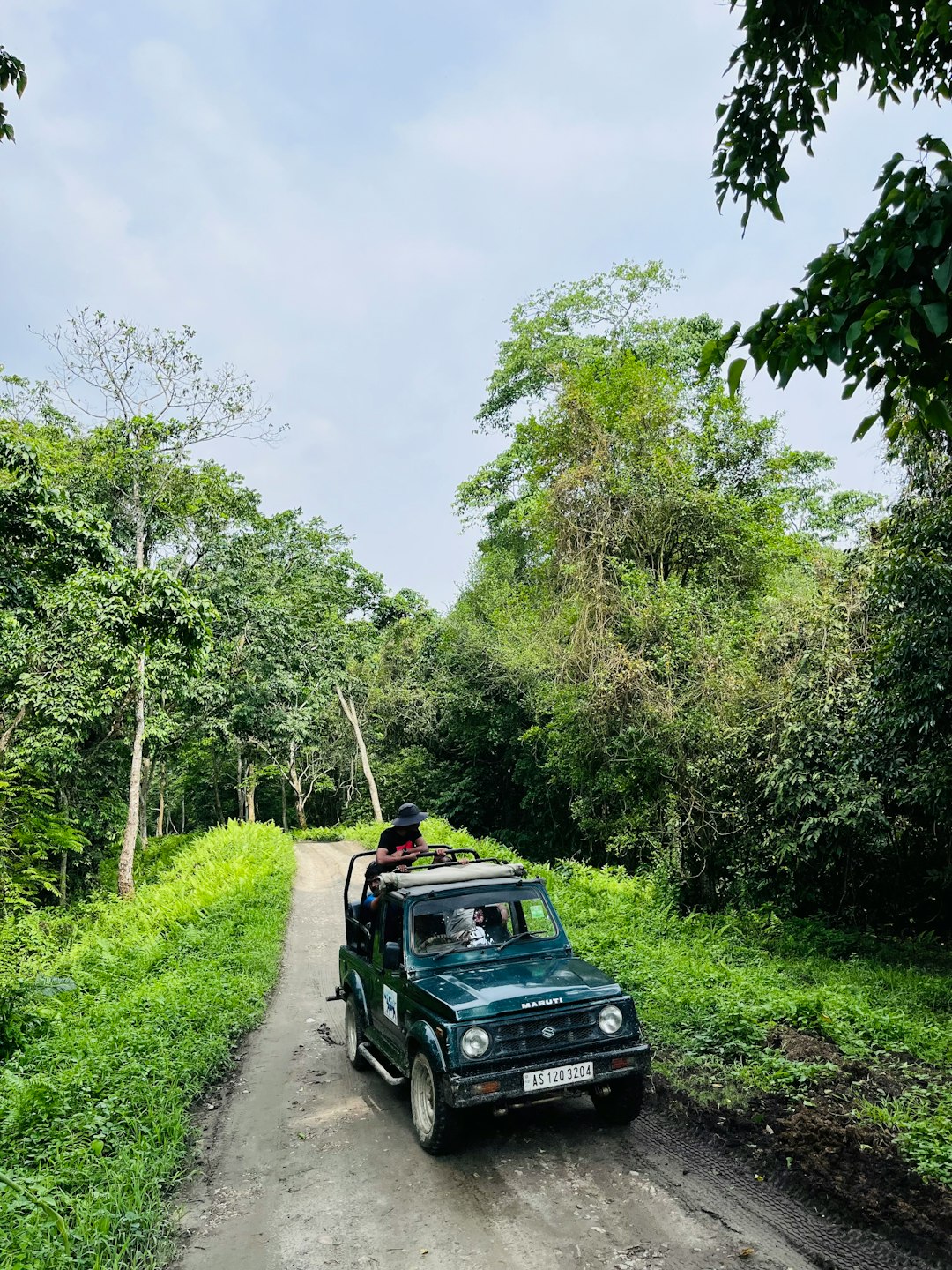
For photography, the gypsy, without qualification. In a twenty-seat canter you cannot change your side, cannot lower yourself, and share a rail with nineteen other people; the routing is fixed. The difference in cost is a few hundred rupees against the entire purpose of the trip.
On elephant safaris, the honest position: a jeep covers more ground and shows you more species; an elephant gets closer to rhino in the tall grass at Kaziranga where a vehicle cannot go. But elephant-back tourism raises real welfare questions, its availability is being curtailed across Indian parks, and the rules change annually. I recommend the jeep, and I say why rather than pretending the choice does not exist.
The last thing
The best sighting I have had in twenty years lasted four minutes and produced no photographs worth keeping. A tigress and two cubs, at distance, in poor light, doing nothing of any consequence. Three vehicles, all of which held position. Nobody said thoda aage.
She walked her cubs across the track and into the grass at her own pace, and we watched, and then we left.
That is what it looks like when it goes well. It looks like almost nothing. It is worth everything.
Frequently asked questions
How many tigers are there in India?
The most recent official all-India figure is 3,682, from the 2022 All India Tiger Estimation published by the NTCA — roughly seventy per cent of the world’s wild tigers. The sixth estimation cycle is being counted now, with the national report expected in 2027. Figures above 4,000 that circulate in travel writing are not supported by any official source.
How far in advance can I book an Indian tiger safari?
It depends on the state. Madhya Pradesh — Kanha, Bandhavgarh, Pench, Satpura, Panna — opens a rolling 120-day window daily at 11:00 a.m. IST. Maharashtra’s Tadoba also runs 120 days. Corbett runs 45 days for Indians and 90 for foreign nationals. Ranthambore is different: Rajasthan is reported to release seasonal blocks rather than a rolling window, with the October–December block opening on 1 August, January–March on 1 November and April–June on 1 February. Verify those block dates before planning around them.
When are Indian tiger reserves open and closed?
Ranthambore runs 1 October to 30 June, with core zones 1–5 closed from 1 July to 30 September while zones 6–10 stay open. Madhya Pradesh reserves run core season 1 October to 30 June and are closed on Wednesday afternoons — and, importantly, on Holi and Diwali. Tadoba closes its core on Tuesdays and its buffer on Wednesdays, plus one day for Holi and two for Diwali. Corbett’s Dhikala and most core zones close from around mid-June to mid-November, while Jhirna and Dhela remain open year-round.
How much does a tiger safari cost?
At Ranthambore, roughly ₹1,500–2,500 per person for a jeep and ₹800–1,500 for a canter for Indian nationals, bundling the permit, vehicle and guide. At Bandhavgarh, core zone entry runs around ₹2,450 on weekdays and ₹3,350 on weekends and holidays for Indians, with full jeep hire ₹3,500–4,500 in the core, a standard guide around ₹1,000 and GST additional. Published rates vary substantially between sources and change by government order, so treat these as ranges and confirm at booking.
Should I take a jeep or a canter?
A jeep, if photography or a good sighting matters to you. A canter seats twenty on fixed benches with a fixed route, so you cannot change your side or your angle and you share a rail with nineteen people. The cost difference is a few hundred rupees per person. The canter is a reasonable choice only if budget is genuinely the deciding factor.
What should I do if my driver gets too close to an animal?
Say so, out loud, at the time. Drivers and guides depend on guest satisfaction and will generally do what they believe the vehicle wants, so a guest who says “this is close enough” or “let’s hold here” changes what happens. Set the expectation before you enter the gate rather than during a sighting. The working test is whether the animal changed what it was doing because of you — if it did, you were too close, regardless of what the rules permitted.
Our Kanha and Bandhavgarh journey is booked against the 11 a.m. release rather than after it, and our Ranthambore tiger photography journey is built around zone choice and gypsy seats rather than a number of safaris. For rhino and grassland, Kaziranga and Majuli.
Tell us at the thumbprint what you want from a sighting. If the answer is a photograph at any cost, we are probably not the right people, and I would rather say so now.
Ready to plan your own journey?
Share your dates and interests. A Picknic curator will design it for you.

Written by
Ananya Kapoor
Lead Experience Designner
A passionate travel storyteller at PicknicGo, dedicated to crafting experiences that resonate long after the journey ends.
View all 22 articles by Ananya Kapoor →
Continue Reading
 Wildlife